

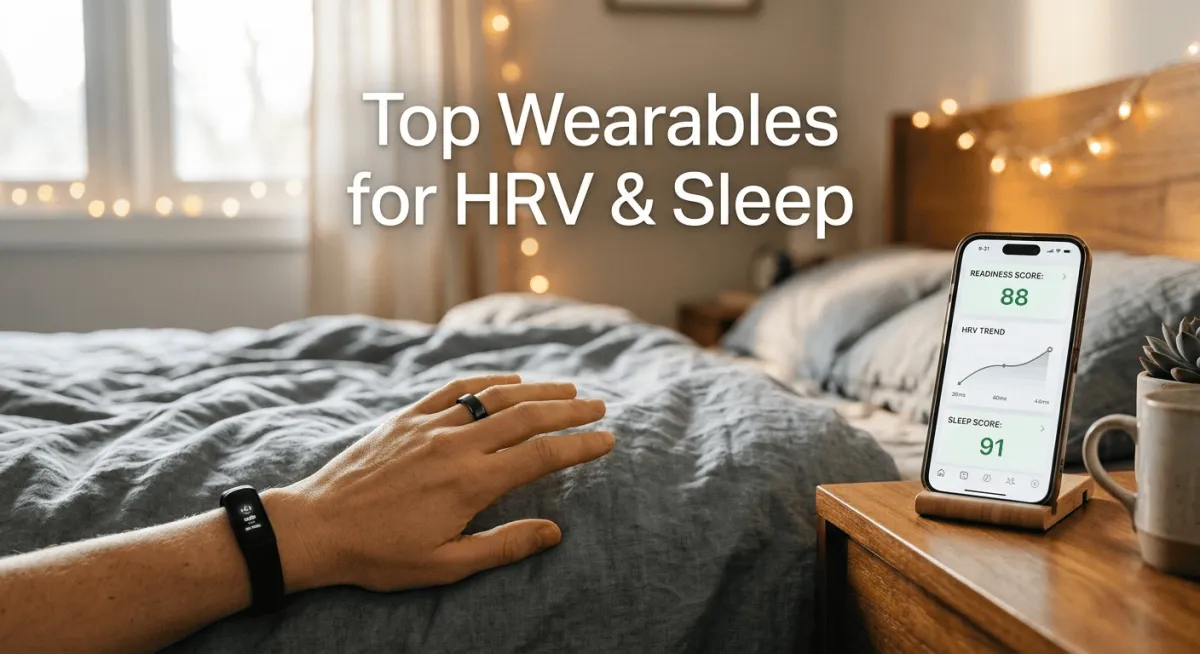
Top Wearables for Tracking Sleep, HRV, and Recovery at Home
Hey friend, if you’ve been diving into home recovery tracking, you’ve probably seen that wearables for HRV and sleep have become essential tools for anyone who wants to understand their body better.
Gone are the days when a fitness tracker only counted steps, now we can measure heart rate variability, sleep stages, and daily recovery scores without ever stepping into a lab.
Whether you’re a dedicated biohacker or just tired of waking up groggy, these little gadgets offer a window into your nervous system that was once reserved for elite athletes.
I’ve personally tested and researched the top devices, and I’m here to share what actually works, what feels like a friendly nudge, and how you can use this data to truly recover better at home.
Why Home Recovery Tracking Changes Everything
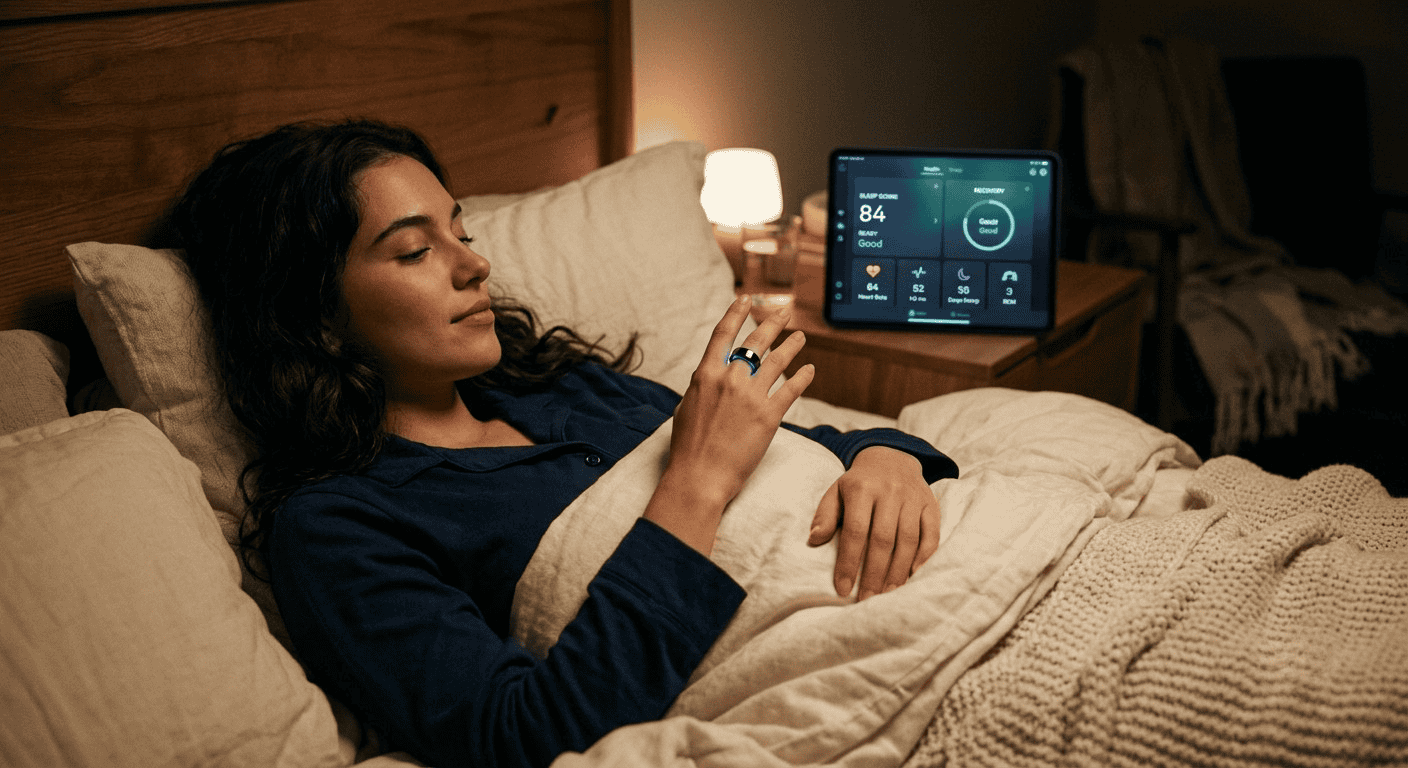
For years, understanding recovery meant subjective guesswork, “I feel tired” or “my legs are heavy.” Now, home recovery tracking puts lab-grade insights on your wrist or finger, and it’s reshaping how we approach rest.
Instead of waiting for a doctor’s visit or an expensive sleep study, you can wake up every morning with a readiness score that tells you whether to hit the gym hard, go easy, or simply honour a rest day.
The secret sauce? Heart rate variability (HRV). When you track HRV overnight along with sleep, you’re eavesdropping on the balance between your sympathetic (fight-or-flight) and parasympathetic (rest-and-digest) nervous systems.
A higher HRV typically signals that your body is relaxed, recovered, and ready to handle stress, while a dip can hint at overtraining, illness, or mental burnout.
Combine that with sleep stage data, deep sleep, REM, light sleep, and you’ve got a real-time dashboard of how well your nightly reboot worked.
What makes biohacking wearables so exciting is that they close the loop. You don’t just observe; you experiment. You can tweak your dinner time, add a wind-down routine, or try breathwork and literally watch your HRV and sleep quality shift the next morning.
For anyone who’s ever felt lost in generic wellness advice, this is like having a personalized coach that never sleeps, ironically.
If you’re just getting started with the biohacking mindset, we’ve got a whole guide on biohacking 101 that walks you through the philosophy and first steps.
What to Look For in Wearables for HRV and Sleep
Not all wearables for HRV and sleep are created equal, and the sheer number of options can feel overwhelming. Here’s what I tell my friends to focus on before clicking “buy.”
First, overnight HRV accuracy. Some devices take sporadic daytime readings, but the gold standard for recovery is a consistent overnight average. Look for wearables that automatically measure HRV while you sleep, this reduces noise from movement, meals, and sudden stressors.
The sensor type matters too; optical heart rate sensors have improved enormously, but pairing them with an ECG-capable device can give you research-grade data.
Second, sleep stage detection. You want more than “you slept 7 hours.” The best trackers use a combination of movement, heart rate, and sometimes temperature to estimate time spent in deep, REM, and light sleep, then translate that into a recovery metric.
Devices that track skin temperature variation add another layer, because a spike can signal the early stages of illness or overreaching.
Third, battery life and comfort. If a gadget is bulky, requires daily charging, or feels annoying on your wrist at night, you’ll stop wearing it.
The whole point of home recovery tracking is consistency, so pick something you genuinely forget you’re wearing. Ring-based wearables and slim bands have a real advantage here.
Finally, actionable insights. Raw numbers are fun, but you’re not a data scientist. The app should interpret your HRV and sleep trends, showing you a simple readiness or recovery score that helps you decide what to do today.
I dive deeper into the science of heart rate variability in our HRV basics article if you want to nerd out on rMSSD and frequency domains, but for now, know that the best devices make the complex feel simple.
The Best Wearables for HRV and Sleep Right Now
Alright, let’s get to the good stuff. These are the devices I’ve either used personally or have watched close friends swear by. Every one of them nails the fundamentals of wearables for HRV and sleep, but each has a unique flavour that might fit your lifestyle better.
Oura Ring Gen3
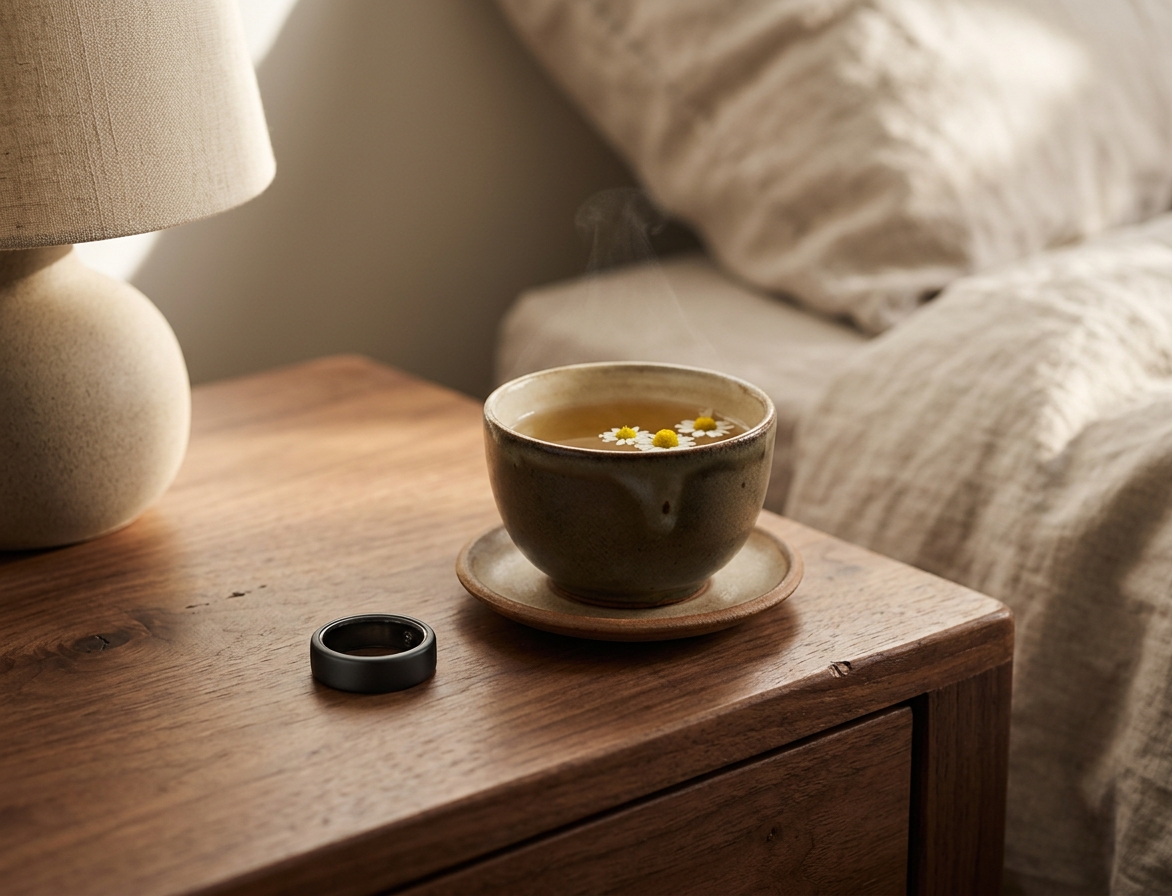
The Oura Ring Gen3 is the sleek, subtle powerhouse that turned many of us into sleep evangelists. It’s a ring (titanium, lightweight) with infrared photoplethysmography sensors that measure heart rate, HRV, body temperature, and respiratory rate.
Because you wear it on your finger, the signal is often cleaner than wrist-based devices, leading to some of the most accurate overnight HRV readings you can get at home.
Oura’s “Readiness Score” combines your sleep quality, HRV balance, resting heart rate, and temperature to give you a single number from 0 to 100. It’s eerily good at catching when you’re about to get sick, a subtle temperature increase will lower your score before you even feel symptoms. The sleep staging (deep, REM, light) is well-validated against polysomnography.
If you want a discreet, fashion-forward wearable that puts sleep and recovery front and centre, Oura is a top-tier choice. Battery life stretches 5–7 days, so you barely think about charging it.
Whoop 4.0
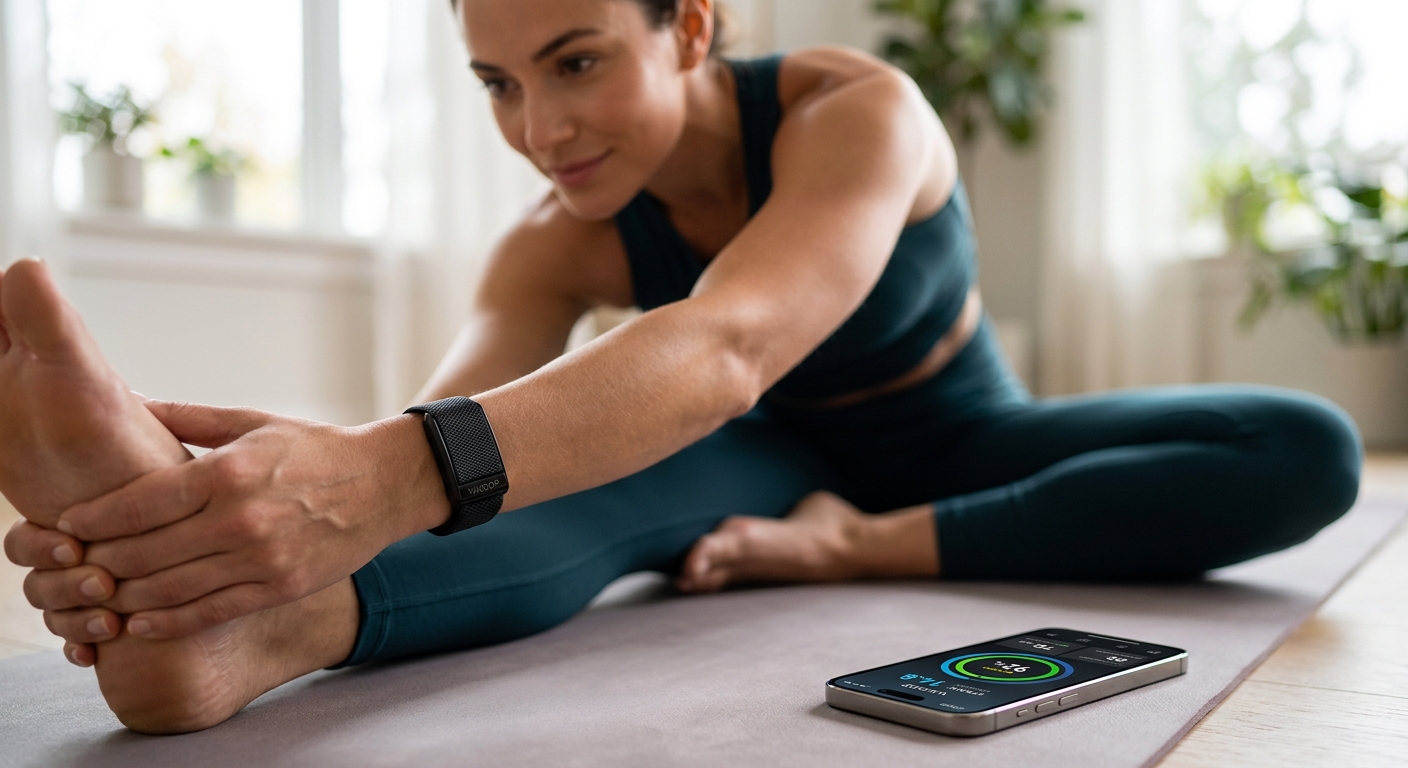
Whoop 4.0 takes a different approach, it’s a screen-free band that lives on your wrist 24/7, and the membership model means you’re buying into a whole recovery platform.
It measures HRV, resting heart rate, sleep performance, and a unique “Strain” score based on cardiovascular load. Every morning, Whoop gives you a Recovery score (green, yellow, or red) that tells you how ready your body is to take on strain.
What I love about Whoop is how deeply it integrates behaviour tracking. You can log activities like sauna, breathwork, caffeine, or late meals, and over time it will show you exactly which habits move your HRV and sleep in the right direction.
For the true biohacker, this feedback loop is gold. The battery pack slides on without removing the band, so it’s truly 24/7 wear. The sleep tracking is detailed, and the journal feature turns your data into real biohacking wearables experiments.
If you’re serious about home recovery tracking and don’t mind a subscription, Whoop is hard to beat. We compared it head-to-head with other trackers in our recovery wearables review, if you want a deeper comparison.
Apple Watch Series 9
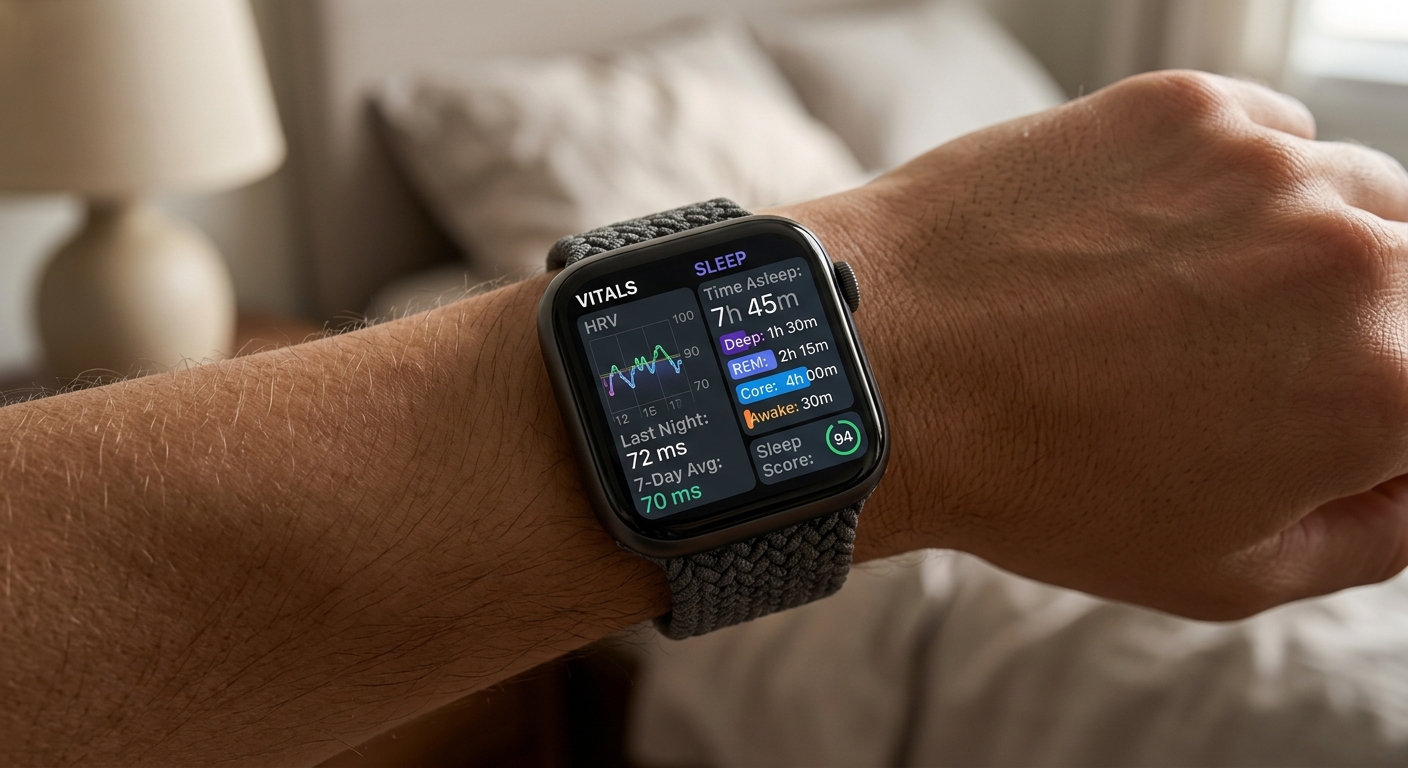
Don’t sleep on the Apple Watch (pun intended). While it wasn’t originally built for recovery athletes, recent watchOS updates have transformed it into a legitimate wearable for HRV and sleep.
The Series 9 uses an always-on optical heart sensor and an ECG app to collect HRV data throughout the day and night. With the Vitals app, it now aggregates overnight heart rate, respiratory rate, wrist temperature, and sleep duration into a single weekly snapshot, flagging when something’s off.
The sleep staging uses the accelerometer and heart rate to estimate time in REM, core, and deep sleep, and it’s quite accurate according to external validation. Because it’s a full smartwatch, you also get fall detection, workout tracking, and seamless integration with Apple Health.
The trade-off? Battery life is about 18 hours, so you’ll need to charge it daily, usually while you shower. If you already live in the Apple ecosystem and want a device that does a bit of everything, this is a brilliant all-rounder with a growing focus on recovery.
Fitbit Charge 6
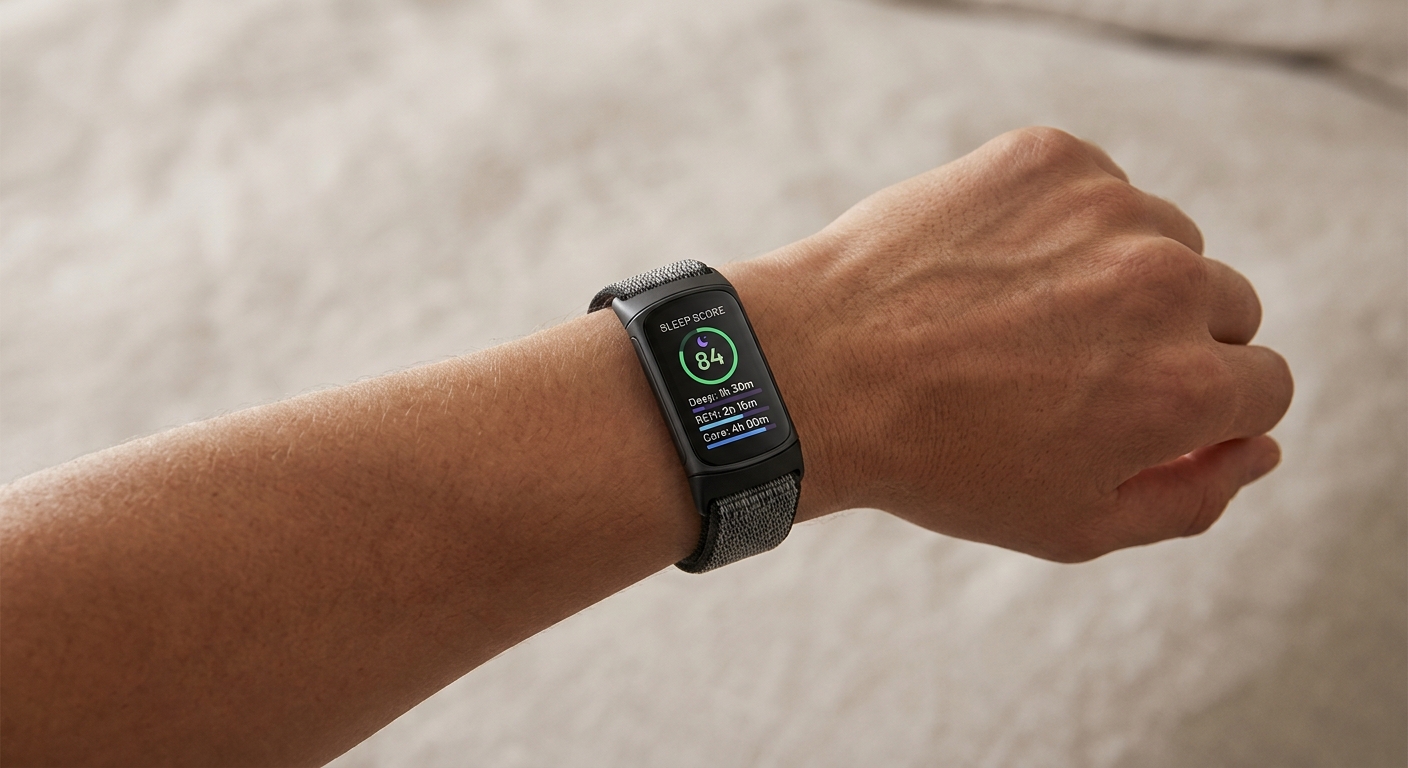
If you’re after solid home recovery tracking without breaking the bank, the Fitbit Charge 6 delivers impressive value. It includes built-in GPS, an ECG app, and a multi-path optical heart rate sensor that feeds into Fitbit’s Daily Readiness Score. This score combines your activity, sleep, and HRV so you know whether to prioritize recovery or push ahead.
Fitbit’s sleep tracking is some of the most user-friendly around, giving you a Sleep Score out of 100 with a breakdown of sleep stages, restoration, and a nightly HRV value (measured as “heart rate variability” in the app).
The readiness feature requires a Premium subscription, but even without it, you get deep sleep insights. Battery life lasts around 7 days, and the slim profile is great for overnight wear.
It’s an ideal entry point for anyone curious about biohacking wearables who doesn’t want to commit to a high monthly fee.
Garmin Venu 3
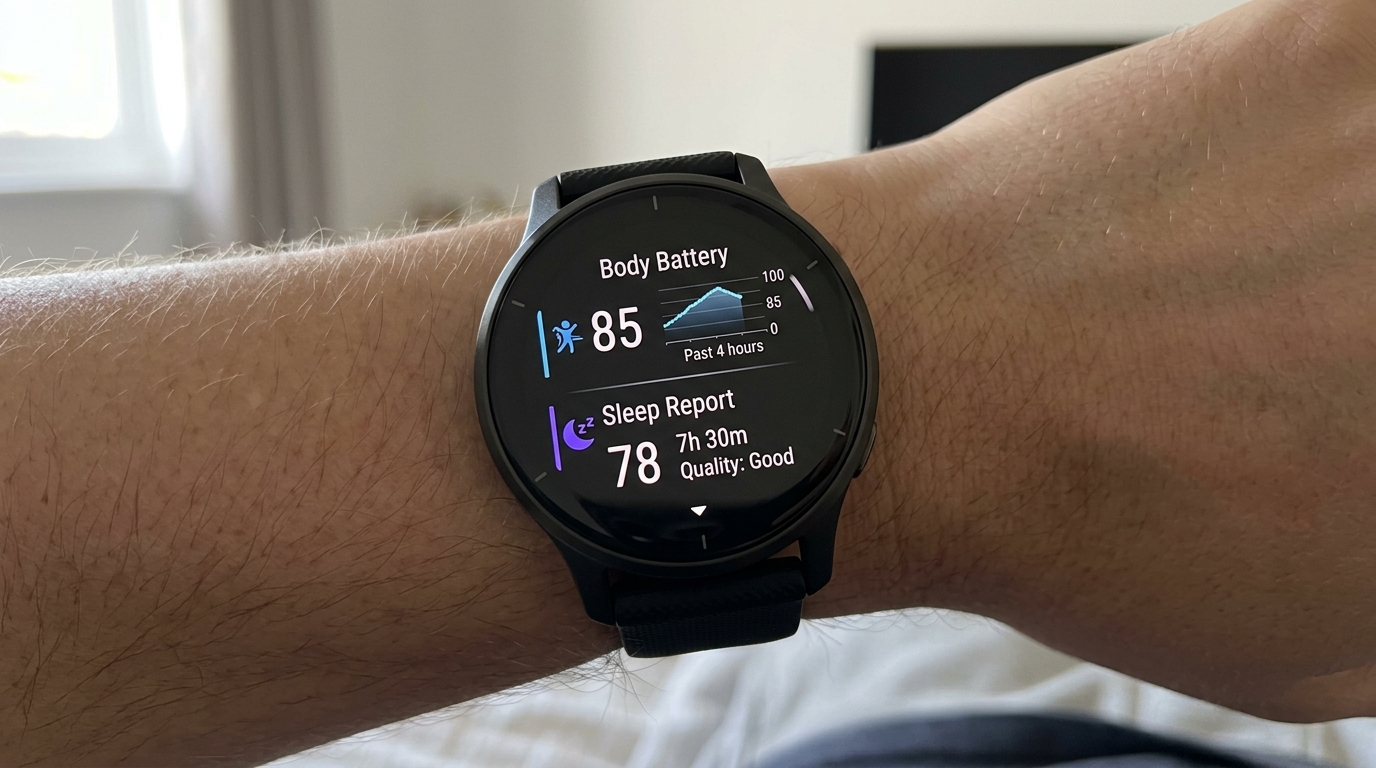
Garmin has quietly built one of the most comprehensive recovery ecosystems, and the Venu 3 is its most polished lifestyle watch yet. It tracks HRV status overnight using Firstbeat Analytics, which compares your 7-day average against your personal baseline to detect meaningful changes.
That feeds into Body Battery, a single number that represents how much energy you have right now, and Sleep Score, which evaluates both duration and quality.
The Venu 3’s sleep tracking includes sleep stages, Pulse Ox, and a new sleep coach that actually gives you tailored advice. You can even see HRV data during sleep as a graph.
With up to 14 days of battery life, an AMOLED display, and automatic nap detection, this watch is for people who love data and want a recovery-first device that still looks like a normal watch.
For runners, cyclists, and anyone who wants deep training metrics alongside home recovery tracking, Garmin is a top contender.
How to Actually Use Your Data for Smarter Home Recovery
Owning a shiny device is step one; turning those numbers into better energy, mood, and performance is where the magic happens. The heart of home recovery tracking is learning to listen to your wearable without becoming a slave to it.
Start by establishing your personal baseline. Wear your device for at least two weeks, go about your normal life, and note the average HRV range and typical sleep score.
According to the Sleep Foundation, heart rate variability varies widely between individuals, so comparing your number to a friend’s isn’t helpful, trending up or down relative to your own normal is what matters.
Next, use your morning readiness score to adjust intensity. If your recovery is green (or your HRV is above baseline), go for that tough workout or demanding cognitive task.
If it’s yellow or red, swap in gentle movement like walking, yoga, or extra breathwork. This is the “biohacker’s edge”: you stop pushing through fatigue and start dancing with your nervous system.
A study published by the National Institutes of Health found that consistent sleep-wake timing and stress management can significantly improve HRV, reinforcing the power of habits NIH study.
Finally, look for patterns in the behavioural data. Did that glass of wine tank your deep sleep and drop your HRV by 10%? Did a late meal push your resting heart rate up all night?
Your wearable becomes a truth-teller. For actionable tips to improve those numbers, I’ve shared a whole resource on sleep optimization tips that pairs perfectly with the data you’re collecting.
Biohacking Wearables: Tiny Experiments That Lead to Big Wins
This is the playground. Once you’ve got a handle on your baseline, biohacking wearables empower you to run safe, personal experiments and see results in real numbers.
I’ve watched friends transform their energy by doing just one tweak at a time.
Try a cold exposure experiment. Take your normal shower and end with 30 to 60 seconds of cold water, then check the next morning’s HRV. Many people see a notable increase because cold exposure stimulates the vagus nerve, enhancing parasympathetic tone.
Apple even has a helpful support page explaining how the Apple Watch tracks HRV and what can influence it, so you can understand your hardware’s perspective.
Another experiment: breathwork before bed. A simple 5-minute session of 4–7–8 breathing (inhale 4 seconds, hold 7, exhale 8) often shows up as a higher overnight HRV and more time in deep sleep.
Your wearable’s journal or tagging feature lets you log the session and correlate it directly. Over weeks, you’ll build a personal playbook, not from a generic blog, but from your own nervous system’s feedback.
Meal timing is another classic. Try finishing your last meal three hours before sleep for a week. Many wearables will show a lower resting heart rate and a jump in recovery score, because digestion isn’t competing with overnight repair.
These are the kind of tiny, data-backed shifts that make home recovery tracking so addictive. And if you want to dive even deeper into the world of self-optimization, our biohacking 101 guide gives you a framework to design your own experiments safely.
A Quick Summary Before You Go
We covered a lot, friend, so let’s bring it home. Wearables for HRV and sleep give you a real-time window into your nervous system, showing whether you’re recovering or slowly running into the ground.
The best devices, Oura Ring, Whoop 4.0, Apple Watch Series 9, Fitbit Charge 6, and Garmin Venu 3, all deliver accurate overnight HRV and detailed sleep data, with different trade-offs in comfort, battery, and price.
Home recovery tracking turns that data into a daily readiness signal that guides your training, work, and rest, while biohacking wearables let you run fun, personal experiments that actually move the needle.
Oura Ring: discreet, best-in-class sleep and temperature sensing.
Whoop 4.0: subscription-based recovery coach with powerful behaviour tracking.
Apple Watch Series 9: versatile smartwatch with growing recovery smarts.
Fitbit Charge 6: budget-friendly, user-friendly, solid readiness scores.
Garmin Venu 3: data-rich, athlete-oriented with marathon battery life.
No matter which device you choose, the key is to wear it consistently, spot patterns, and let the data gently nudge your habits toward better recovery.
Let’s Talk About Your Perfect Recovery Setup
I hope this felt like a chat over coffee rather than a stuffy buyer’s guide. The world of wearables for HRV and sleep can get technical, but the goal is simple: wake up feeling genuinely rested and know exactly how to protect your energy.
Whether you’re an athlete juggling intense training or a busy parent just trying to function on less-than-ideal sleep, the right device can be a calm voice of reason on your wrist (or finger).
If you have questions about which wearable suits your lifestyle, need help interpreting your data, or just want to geek out about biohacking wearables, don’t be a stranger. We love these conversations.
You can reach us directly at [email protected] and we’ll happily share personal experiences, tips, and encouragement. Here’s to fewer groggy mornings and more days where you feel unstoppable.