

How to Start DIY Biohacking at Home: A Complete Beginner’s Guide
If you’ve ever wanted to feel sharper, sleep deeper, or just wake up with more energy, you’re not alone, and you don’t need a lab coat or a $10,000 gadget to start.
DIY biohacking at home is exactly what it sounds like: small, self-guided experiments you run on your own body, using the environment you already live in.
It’s a way to take everything from nutrition to focus into your own hands, one curiosity-driven tweak at a time. I’m going to walk you through exactly how to begin beginner biohacking safely, without hype, and with a warm, “let’s grab coffee and figure this out” vibe.
Whether you’re here to fix brain fog, improve your gym recovery, or simply learn what makes your body tick, you’re in the right place.
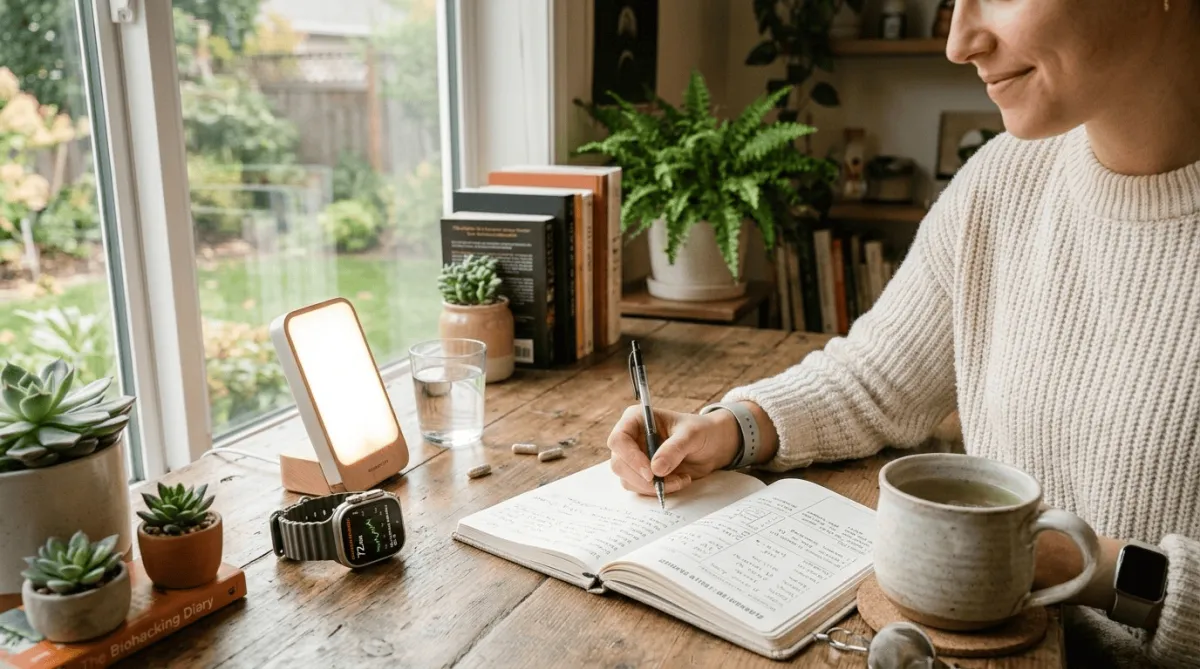
A cozy corner of a living room with a notebook, a smartwatch, a glass of water, and a sunlight lamp, representing a DIY biohacking at home setup for a beginner]
What Is DIY Biohacking at Home, Really?
At its core, DIY biohacking at home means making deliberate changes to your lifestyle, environment, or biology, then measuring the results. You’re essentially treating your own body as a friendly science project.
But don’t let the word “biohacking” intimidate you. This isn’t about implanting chips under your skin (though some folks do go there). For most of us, it’s things like adjusting meal timing, playing with cold showers, using a journal to track mood, or trying a new supplement after careful research.
When you start biohacking, you’re stepping into a practice that sits somewhere between self-care, citizen science, and optimized living.
You ask a question; “What happens if I cut out screens an hour before bed?”, and then you test it. You measure your sleep with a wearable or just a simple 1 to 10 score each morning. You note what changes. That’s it. That’s the entire game.
Beginner biohacking doesn’t require a degree in biology. It asks for curiosity, consistency, and a commitment to not doing anything reckless. The home part matters, too.
Your kitchen becomes a metabolic lab. Your bathroom can be a cold-thermogenesis station. Your bedroom transforms into a sleep-performance chamber. You already have the gear; you just need the method.
Why Start Biohacking as a Beginner?
There’s a reason people get obsessed with start biohacking once they dip a toe in. It flips a switch from “I guess I’m just tired all the time” to “I wonder what I can do about it.” That agency is powerful.
When you practice DIY biohacking at home, you build a unique map of your own body. Not a generic wellness plan from a magazine, but a personalized operating manual.
You’ll discover, for example, that you focus best after a protein-heavy breakfast but crash after cereal. Or that five minutes of morning sunlight plus a cold rinse cuts your grogginess in half. Those small wins stack up fast.
It’s also extremely low-cost to begin. Many of the most impactful biohacks: better sleep hygiene, breathwork, mindful eating, movement snacks, are completely free.
Once you’ve nailed the basics, you can layer on tools like continuous glucose monitors or red-light panels.
But right now, we’re keeping it simple. If you want to see what a starter kit could look like, I’ve written a separate guide on beginner biohacking tools that won’t break the bank that you can check out.
The Mindset for Safe Beginner Biohacking
Before you grab a thermometer and start downing butter coffee, let’s set some ground rules. Beginner biohacking is safest and most effective when you treat it like a gentle nudge, not a radical overhaul.
Change one variable at a time. If you start a new diet, a new exercise routine, and a new meditation practice all on Monday, you won’t know what caused that Tuesday headache, or the Wednesday surge in energy. Isolate your interventions.
Track a baseline first. Spend one week just observing. How do you sleep now? What’s your typical afternoon energy dip? Write it down without judgment. That baseline makes later changes meaningful.
Respect your body’s signals. More isn’t always better. A 30-second cold shower might feel invigorating; a 10-minute ice bath might land you in the ER if you have an undiagnosed condition. Ease in.
Consult professionals when in doubt. If you have a medical condition or are taking prescription medications, talk to your doctor before experimenting with supplements or extreme temperature exposure. I’m your friendly guide, not a physician.
That gentle, curious mindset will protect you from the “crash and burn” style of biohacking that sometimes gives the community a bad name. Good DIY biohacking at home feels sustainable. It energizes you, rather than wearing you down.
5 Low-Cost DIY Biohacking Experiments You Can Try at Home Today
Ready to get your hands dirty (metaphorically)? Here are five real experiments that embody how to start biohacking with almost zero equipment. Each includes a simple protocol, what to track, and what you might expect.
1. Morning Sunlight & Circadian Anchoring
Your circadian rhythm loves consistency and bright light early in the day. Go outside within 30 minutes of waking, even if it’s cloudy, and face the daylight for 5 to 10 minutes. Don’t wear sunglasses (glasses and contacts are fine). This simple act signals to your brain that the day has begun, which can improve sleep onset and mood.
Track: Time you fell asleep, sleep quality rating (1 to 10), and morning grogginess.
Why it’s DIY biohacking at home: You’re hacking light exposure, a primary timekeeper for your biology. It’s free and takes less time than scrolling social media.
2. The Caffeine Reset & L-Theanine Combo
If you’re a coffee lover, try a brief reset: for five days, delay your first cup until 90–120 minutes after waking. This lets your natural cortisol peak happen on its own and may reduce the afternoon crash.
Later, experiment with adding L-theanine (a compound found in green tea) to your coffee. A common ratio is 100 to 200 mg of L-theanine per cup of coffee.
Track: Energy levels at 9 a.m., 2 p.m., and 7 p.m., plus any jitters or anxiety.
External source: Examine.com offers a deep, evidence-based breakdown of [L-theanine’s effects](https://examine.com/supplements/theanine/) if you want to dig into the research.
Safety note: L-theanine is generally well tolerated, but start with a low dose and check with a doctor if you’re on blood pressure meds.
3. Breathwork Before Screen Time
Instead of reaching for your phone the second you open your eyes, try 2–5 minutes of slow, rhythmic breathing.
A popular beginner pattern is box breathing: inhale for 4 counts, hold for 4, exhale for 4, hold for 4. This can shift your nervous system toward a calm, alert state.
Track: Morning stress score (subjective), heart rate if you have a wearable, and task focus in the first hour.
Why this fits beginner biohacking: It requires zero gear and can noticeably change how you react to morning stress. For a deeper dive into breath techniques, our sleep optimization guide covers evening breathwork, too.
4. The Simple Protein-First Breakfast Experiment
For one week, build your breakfast around at least 25 to 30 grams of protein. Eggs, Greek yogurt, a quality protein shake, or even leftover chicken. Avoid refined carbs and sugar alone. Observe how your focus, satiety, and energy shift throughout the morning.
Track: Morning hunger levels, concentration at 10 a.m., and any brain fog.
External source: The National Institutes of Health has a useful page on [protein’s role in satiety](https://www.ncbi.nlm.nih.gov/books/NBK53568/) to understand the mechanisms.
5. Temperature Contrast at the End of a Shower
You don’t need a dedicated cold plunge. At the end of your normal warm shower, turn the water to cool (not ice-cold torture, just noticeably cool) for 15 to 30 seconds. Over a few weeks, gradually extend to 1 to 2 minutes. Focus on steady, calm breathing. This can boost alertness and train your mental resilience.
Track: Mood right after, warmth level in hands and feet 10 minutes later, and any change in post-shower energy dip.
Safety: Avoid if pregnant, have cardiovascular issues, or feel faint. Gentle cool, not painfully cold.
These five experiments are an ideal way to start biohacking without overcomplicating things. If you’re curious about adding supplements down the line, I’ve put together a resource on [smart nootropic use for beginners] that you might like.
How to Track Your DIY Biohacking at Home Progress
You can’t manage what you don’t measure, but that doesn’t mean you need spreadsheets galore. For beginner biohacking, the simplest methods often win.
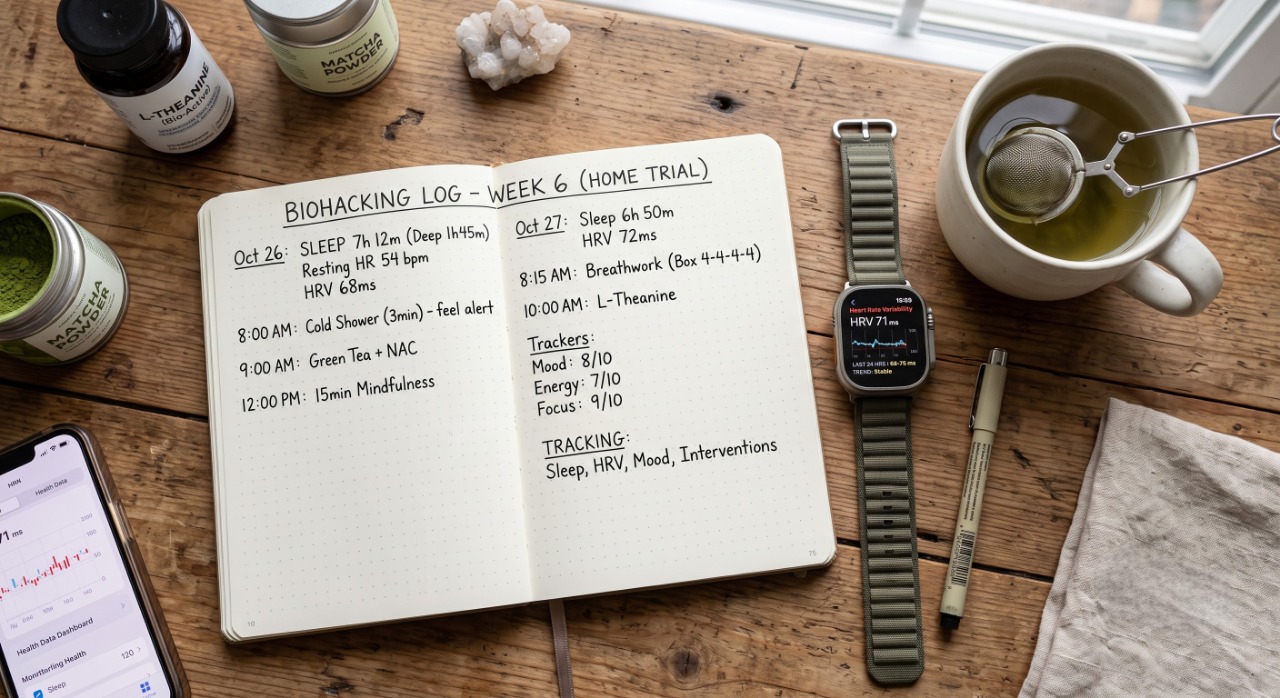
The 1–10 scale: Rate your energy, mood, sleep quality, and focus at the same times every day. Consistency matters more than precision.
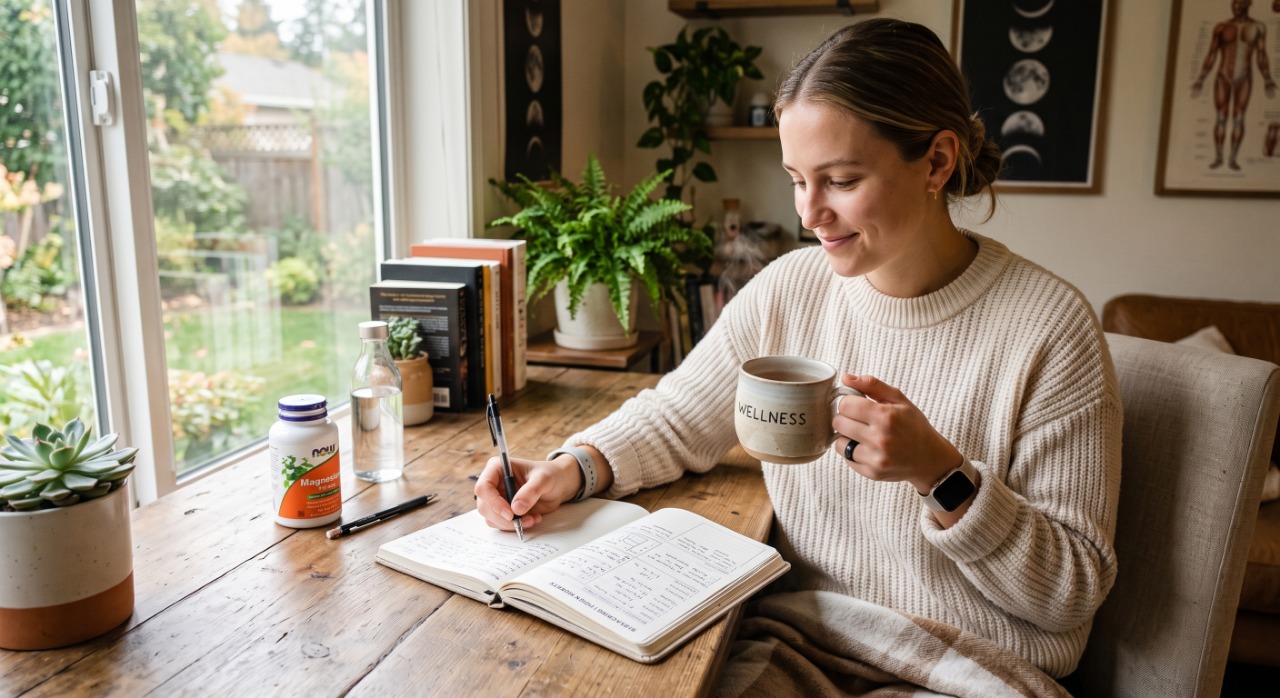
A dedicated notebook: Keep a “body log.” Write down your variable change, the date, and a few sentences of how you felt. This analog method is surprisingly powerful for spotting patterns.
Wearable basics: A smartwatch or fitness tracker can give you resting heart rate, heart rate variability (HRV), and sleep duration data. HRV is an especially insightful metric for recovery and stress.
Periodic photos: If you’re tracking skin changes, posture, or physical results, take weekly photos in the same lighting. It’s a low-tech but honest mirror.
Lab tests (eventual): After you’ve built some momentum, consider checking vitamin D, B12, iron, and fasting glucose. These biomarkers can ground your DIY biohacking at home in real data. Work with your doctor to interpret them.
The key is to track without obsessing. Data is a flashlight, not a prison. If logging starts stressing you out, strip it back to the one metric that matters most.
Common Beginner Mistakes When You Start Biohacking (And How to Avoid Them)
I’ve watched plenty of friends dive into beginner biohacking only to burn out or feel worse. Here’s what to watch for so your start biohacking journey stays joyful.
Changing everything at once. You start keto, intermittent fasting, cold plunges, and a new gym plan simultaneously. Two weeks later you’re exhausted and have no idea why. One variable at a time, remember?
Chasing perfection over consistency. Missing a day of your experiment isn’t a failure. Science is messy. Just pick it back up tomorrow.
Ignoring the basics. Fancy supplements won’t fix chronic sleep deprivation or a diet of ultra-processed foods. Prioritize sleep, nutrition, movement, and social connection first. The big levers are boring, but they work.
Not checking for medical causes. If you’re constantly exhausted, please see a doctor and rule out issues like sleep apnea, thyroid dysfunction, or anemia. DIY biohacking at home is complementary, not a replacement for proper medical care.
Underestimating placebo and nocebo effects. Your expectations color your results. If you believe a supplement will destroy your stomach, it might, just from anxiety. Approach experiments with curious neutrality.
For another angle on staying grounded, I wrote about [how to avoid biohacking hype and stay evidence-based](/blog/evidence-based-biohacking). It’s a quick read that might save you some cash and confusion.
Next-Level Beginner Biohacking: Building Your Home Lab Mindset
Once you’ve run a few successful experiments, you might want to deepen your DIY biohacking at home practice. This doesn’t mean buying a bunch of gear. It means refining your process.
Cycle your experiments. Try 2 to 4 weeks on a specific protocol, then take a week off to observe what fades and what stays. This helps you distinguish lasting benefits from temporary effects.
Introduce data tracking apps. Apps like Cronometer for nutrition, or Oura/Whoop for recovery, can add nuance. But don’t let the app control you.
Learn to read research. Start with PubMed and look for meta-analyses or systematic reviews. The CDC’s page on [sleep and sleep disorders](https://www.cdc.gov/sleep/index.html) is a trusted starting point for sleep hygiene facts. If you’re exploring supplements, cross-reference with databases like Examine.com.
Join a community. Sharing results with a like-minded friend or an online group keeps motivation high and helps you spot blind spots. Just steer clear of forums that recommend dangerous dosages or unapproved substances.
Remember, the best biohack is the one you actually do. A five-minute walk after lunch, done daily, beats an elaborate cold-plunge-and-red-light protocol that you never stick with.
Frequently Asked Questions About How to Start Biohacking
Is DIY biohacking at home safe for everyone?
Most gentle interventions, like prioritizing sleep, breathwork, and protein timing, are safe for the vast majority of people. If you plan to use supplements, extreme temperatures, or fasting, consult your healthcare provider first. Pregnant individuals, those with chronic illnesses, and people on medication need extra caution.
How much does it cost to start biohacking?
It can be completely free. Sunlight, breath, and journaling cost nothing. Even adding a few basics like a notebook, a cheap foam roller, and some blackout curtains stays well under $50. You don’t need a $500 wearable to benefit.
How long does it take to see results?
It depends on the experiment. Circadian adjustments like morning light often show sleep improvements within a few days. Metabolic or body composition changes may take 4–8 weeks. Keep a log to catch subtle shifts you’d otherwise overlook.
What’s the difference between biohacking and just healthy habits?
Biohacking adds deliberate measurement and self-experimentation. Instead of “eat healthy,” it’s “I’m going to test whether a protein-first breakfast improves my 10 a.m. focus rating over two weeks and document it.” The mindset shift from passive to active is the key.
Key Points Summary
DIY biohacking at home is about running safe, measurable self-experiments in your everyday environment.
Start with a curious, one-variable-at-a-time mindset and always log a baseline first.
Five free or low-cost experiments, sunlight anchoring, caffeine timing, breathwork, protein-first breakfast, and shower temperature contrast, are perfect for beginner biohacking.
Simple tracking methods like a 1 to 10 scale or a notebook outperform expensive gadgets when you start biohacking.
Avoid common mistakes like changing too many factors at once, ignoring the basics, or skipping medical check-ups.
Progress to a “home lab” mindset by cycling protocols, learning to read research, and joining a community, always with safety first.
If you have questions about putting together your own DIY biohacking at home plan or just want to say hi, I’d genuinely love to hear from you. Reach out for inquiries, thoughts, or friendly support at [email protected]. Let’s figure this out together, one small experiment at a time.