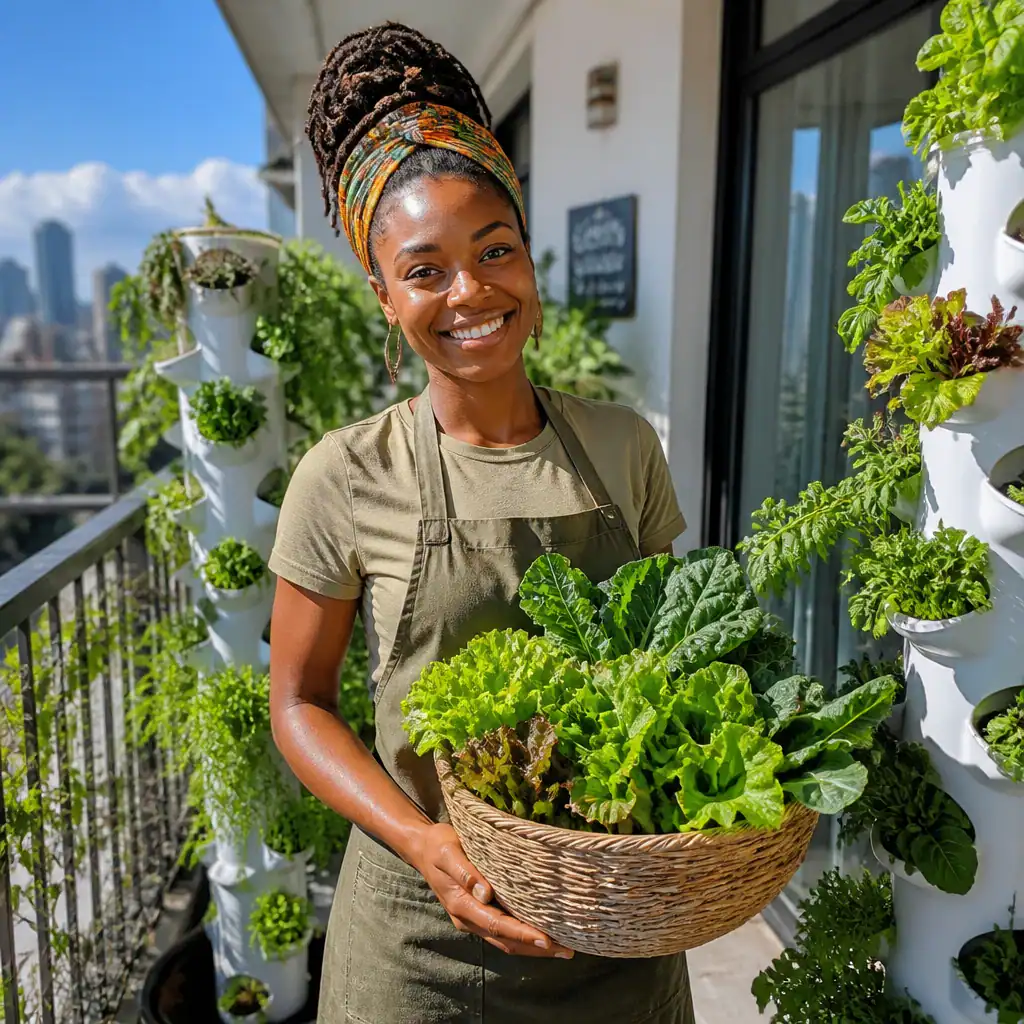


Urban Farming Guide: Grow Food in the City
Urban Farming, Sustainable Living, Beginner Urban Agriculture
Urban Farming for Beginners: A Practical Guide to Growing Food in the City
The first time Mia harvested a handful of cherry tomatoes from the fifth-floor balcony of her tiny apartment, she laughed out loud. The city roared beneath her—sirens, buses, distant music—yet in her palm sat a quiet miracle: food she had grown herself in the middle of all that concrete. If you have ever wondered whether you could grow food in the city too, this storytelling urban garden guide is for you.
From Concrete to Carrots: Why Urban Farming for Beginners Matters
Mia did not start out as a gardener. She was a tired commuter who bought wilted lettuce in plastic clamshells and tossed half of it away at the end of the week. One evening, after seeing a neighbor snip basil from a window box, she felt a quiet tug of curiosity. Could beginner urban agriculture really fit into her cramped schedule and even more cramped apartment?
Urban farming for beginners is not about owning land or having a perfect backyard. It is about reclaiming tiny pockets of space, balconies, windowsills, fire escape railings, community plots, and turning them into places where food and confidence grow side by side. When you grow food in the city, you are not just producing herbs and vegetables. You are crafting small acts of independence, resilience, and care in the middle of a fast-paced world that often forgets where dinner actually comes from.
Step One of Your Urban Garden Guide: Start with One Edible Plant
Mia’s journey began with a single pot of mint. She chose it because a friend told her, “You will have to work hard to kill mint.” That sounded like the kind of plant she needed. She tucked it into a clay pot, set it on the sunniest corner of her balcony, and waited. Within weeks, the mint spilled over the rim, perfuming her evenings with a cool, green scent. Suddenly, her tea tasted fresher, and her balcony felt less like a storage area and more like a tiny farm in the sky.
💡 Pro Tip: For absolute beginner urban agriculture, start with forgiving plants like mint, basil, chives, or leafy greens. Success with one plant builds the confidence you need to expand.
This is the heart of urban farming for beginners: you do not need a complicated setup or a dozen varieties of vegetables. You need one living plant that teaches you how soil feels, how often to water, and how the sun moves across your window or balcony. Once you have that relationship, you can begin to layer in more crops and more ambition.
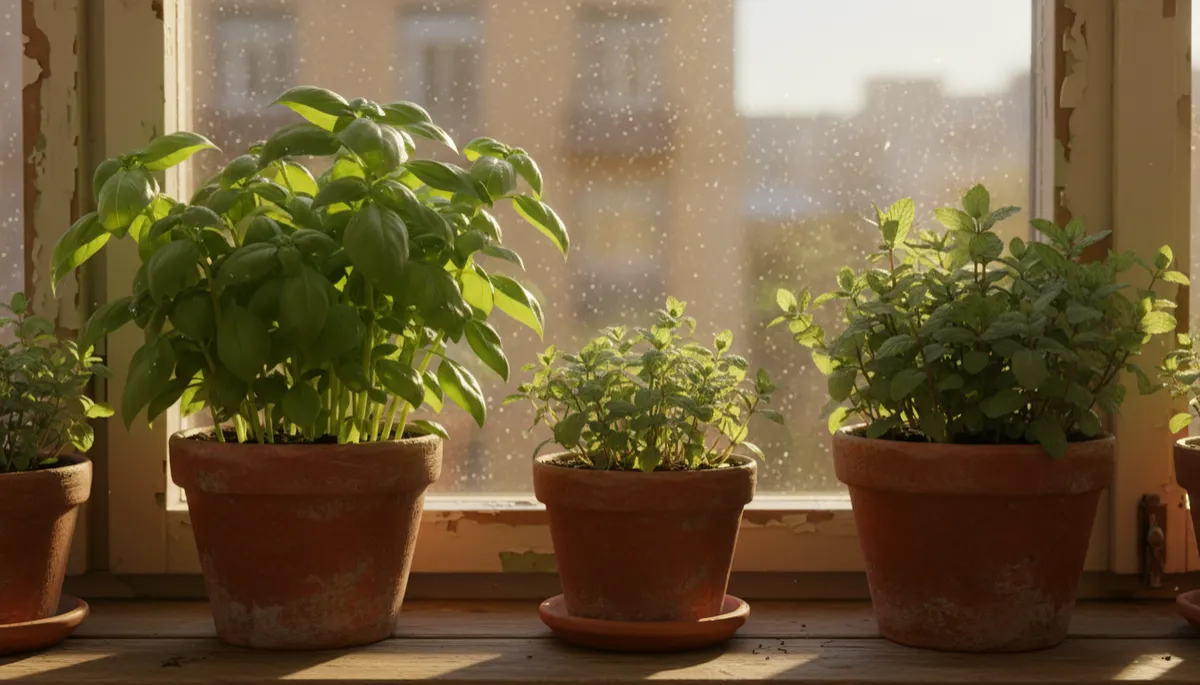
Simple potted herbs often become the gateway to a thriving city food garden.
Reading Your Space: Sunlight, Containers, and Creative Corners
One Saturday morning, Mia walked slowly from room to room with a cup of coffee in hand, watching where the light fell. She noticed that her kitchen window caught the morning sun, while the balcony blazed in the afternoon. The shady corner near her front door, once a forgotten spot for shoes, turned out to be perfect for leafy greens that prefer cooler conditions. This quiet survey became the foundation of her personal urban garden guide.
Sun lovers like tomatoes, peppers, and most herbs need at least 6 hours of direct light. Balconies, rooftops, and south-facing windows are their stages.
Shade-tolerant plants such as lettuce, spinach, and some herbs can thrive with 3–4 hours of gentle light, making them perfect for partial-shade fire escapes or east-facing windows.
Containers and vertical options from hanging baskets to stacked crates and railing planters, allow you to grow food in the city even when the only direction is up.
📌 Key Takeaway: Before buying seeds or soil, spend a day simply watching your space. The light, wind, and temperature shifts will quietly tell you what kind of garden wants to live there.
Soil, Water, and Patience: The Gentle Skills of Beginner Urban Agriculture
When Mia bought her first bag of potting mix, she did not realize she was also buying time. Good soil holds moisture but drains well, cradles roots yet lets them breathe. The first time she plunged her hands into that dark, crumbly mix, she felt oddly grounded, as if the noise of the city had dimmed for a moment. This, she realized, was the quiet rhythm beneath beginner urban agriculture: a series of small, attentive acts repeated over weeks and months.
Use high-quality potting mix, not heavy garden soil. Containers need light, airy media so roots can expand.
Water slowly and deeply until you see moisture at the drainage holes, then wait until the top inch feels dry before watering again.
Feed your plants with a gentle organic fertilizer every few weeks, especially in small containers where nutrients wash out quickly.
At first, Mia worried about every yellowing leaf, every droop on a hot afternoon. Over time, she learned to read the plants like neighbors: a little wilt meant they were thirsty, pale leaves hinted at hunger, and sudden holes signaled that some tiny city creature had discovered her buffet. Instead of panicking, she began to observe, adjust, and try again. That patient curiosity is at the heart of any meaningful urban farming for beginners journey.
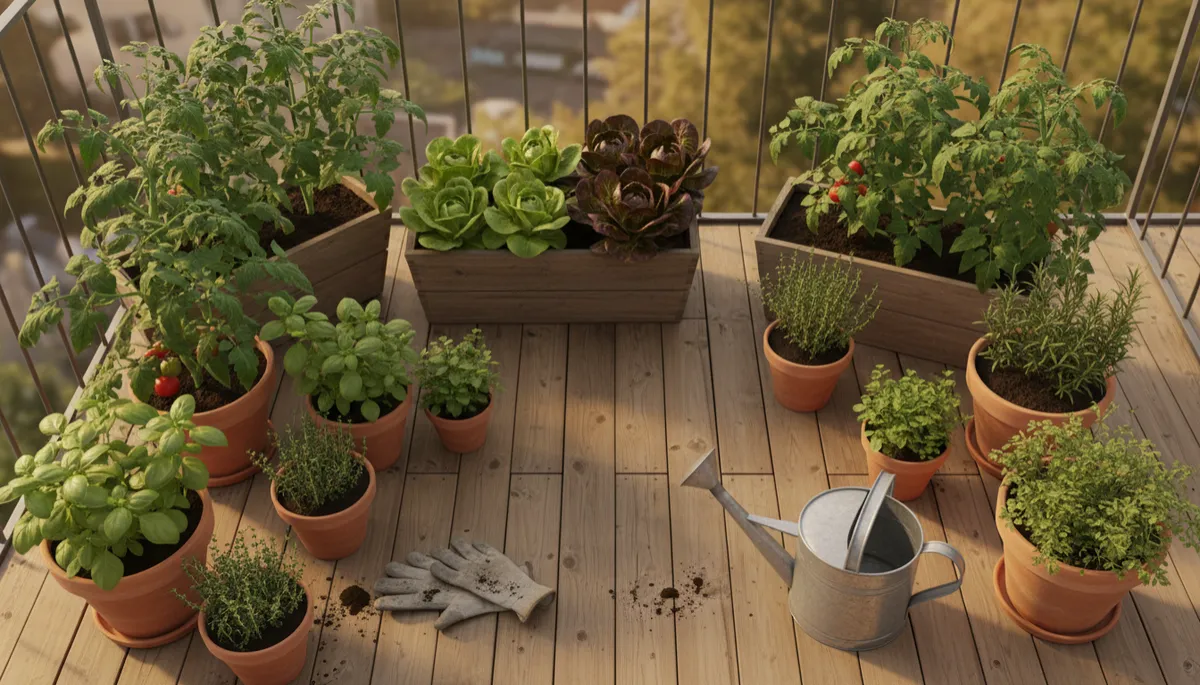
Even a few well-tended containers can turn a balcony into a productive mini-farm.
What to Grow First: A Simple Urban Farming for Beginners Plant List
One evening, as the sun slipped behind the buildings, Mia sat among her pots and made a list of what had worked best. She realized that some plants had been patient teachers, while others demanded more experience. Her notes evolved into a beginner-friendly urban garden guide that she shared with friends who wanted to grow food in the city too.
Plant | Why It’s Great for Beginners | Ideal Spot |
|---|---|---|
Basil & Mint | Fast-growing, fragrant, and forgiving of small mistakes | Sunny windowsill or balcony railing |
Lettuce & Spinach | Quick harvests and happy in cooler, partial shade conditions | Shady balcony corner or east-facing window |
Cherry Tomatoes | Abundant fruit in small spaces with enough sun and support | Large pot on a sunny balcony with a stake or trellis |
These plants are more than just crops; they are companions on your beginner urban agriculture adventure. Each one teaches a different lesson, about pruning, watering, or patience, without punishing you for learning as you go.
Community, Rooftops, and Shared Stories: Expanding Beyond Your Windowsill
As Mia’s balcony filled with life, she began to notice other gardens in her neighborhood: a row of buckets overflowing with kale on a nearby roof, a cluster of grow bags outside a corner café, a narrow strip of soil beside a bus stop dotted with marigolds and peppers. She realized she was not alone. Urban farming for beginners often starts in isolation, but it quickly weaves you into a quiet network of people who are also trying to grow food in the city, one pot at a time.
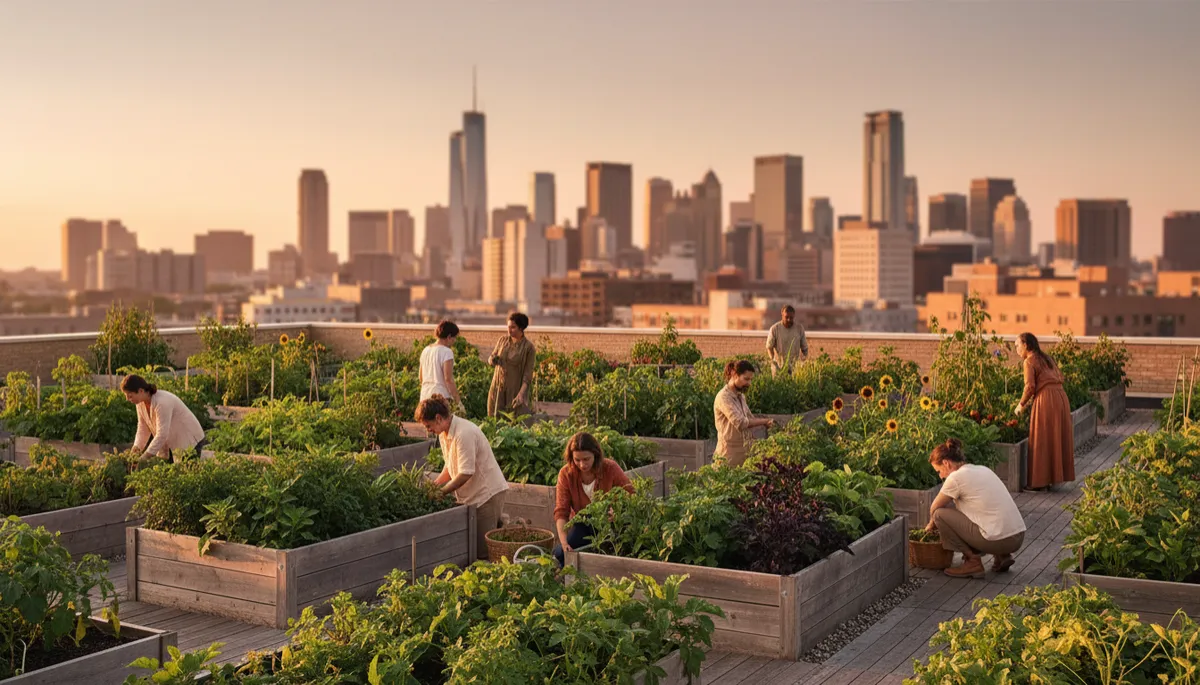
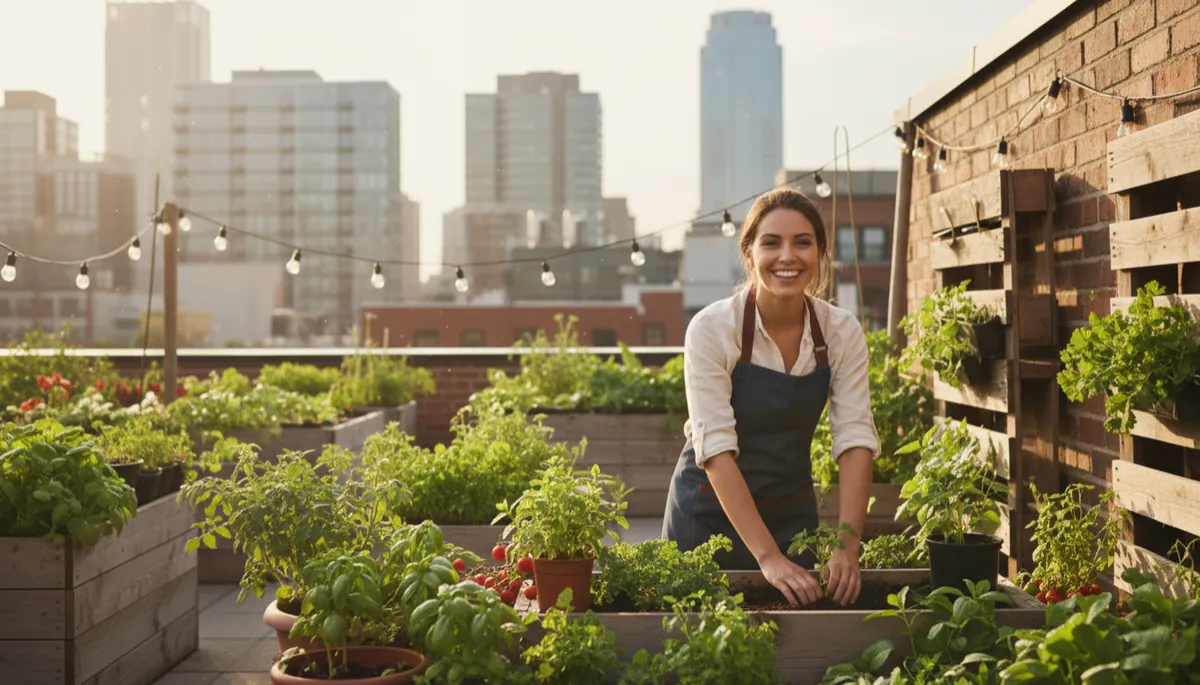
Community gardens turn unused rooftops into shared spaces for food, learning, and connection.
She joined a local community garden and was given a narrow raised bed. There, seasoned growers shared stories of their own first failures: tomatoes that never ripened, overwatered herbs, mysterious pests. Instead of feeling embarrassed by her mistakes, Mia felt welcomed into a long tradition of trial and error. That shared storytelling became an unexpected, essential chapter in her personal urban garden guide.
💬 Story Prompt: Ask your neighbors if they grow anything edible. A single conversation can reveal hidden rooftop gardens, community plots, or shared tools you never knew existed.
Harvesting More Than Food: How Urban Farming Changes the Way You See Your City
One late summer evening, Mia stood on her balcony with a bowl in her hands. Inside lay cherry tomatoes, a few curled peppers, a fistful of basil, and tender lettuce leaves. They were not perfect; some were oddly shaped, others smaller than store-bought versions. But as she assembled her salad, she realized something had shifted. The city no longer felt like a place that simply happened to her. It felt like a place she participated in, reshaping it one container at a time.
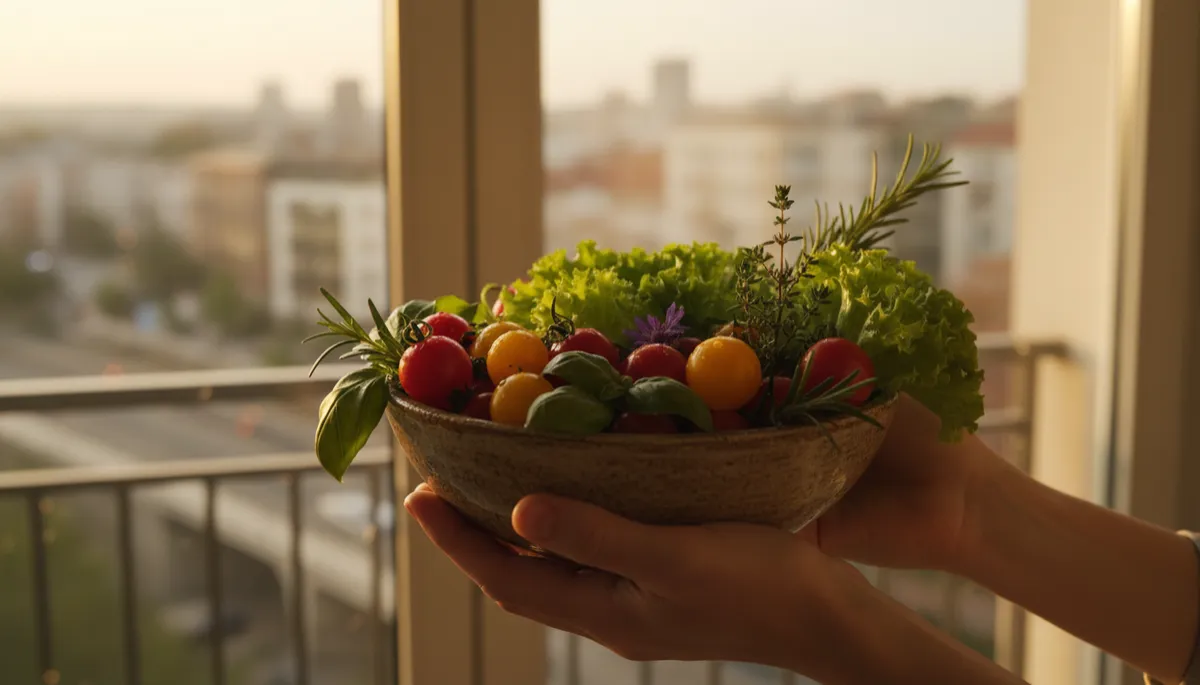
The first harvest, no matter how small, often transforms how growers feel about their city homes.
That is the quiet magic of urban farming for beginners. You start by wondering if you can keep a single herb alive and end up seeing your entire neighborhood differently. Rooftops become potential orchards. Empty lots hint at future community gardens. Even your own windowsill turns into a reminder that growth is possible in the most unlikely places.
Your Turn: Begin Your Own Story of Growing Food in the City
Somewhere in your home, there is a small patch of light waiting for a pot of soil and a handful of seeds. Maybe it is the ledge above your kitchen sink, a dusty balcony corner, or a forgotten spot on the stairwell that catches the afternoon sun. Your journey into beginner urban agriculture does not need to be grand. It just needs to begin.
Let this urban garden guide be the first chapter of your own story. Start with one plant. Notice how it changes your routines, your meals, and the way you look out your window. Then, when you are ready, add another pot, another variety, another small experiment. In time, you may find yourself standing where Mia stood, bowl in hand, city humming all around you, marveling at the simple, radical act of having grown your own food in the city.
The concrete is not the end of the story. It is just the backdrop. The real story begins the moment you decide that your city life can include roots, leaves, and harvests, and that even the smallest balcony can hold a thriving, delicious dream.