


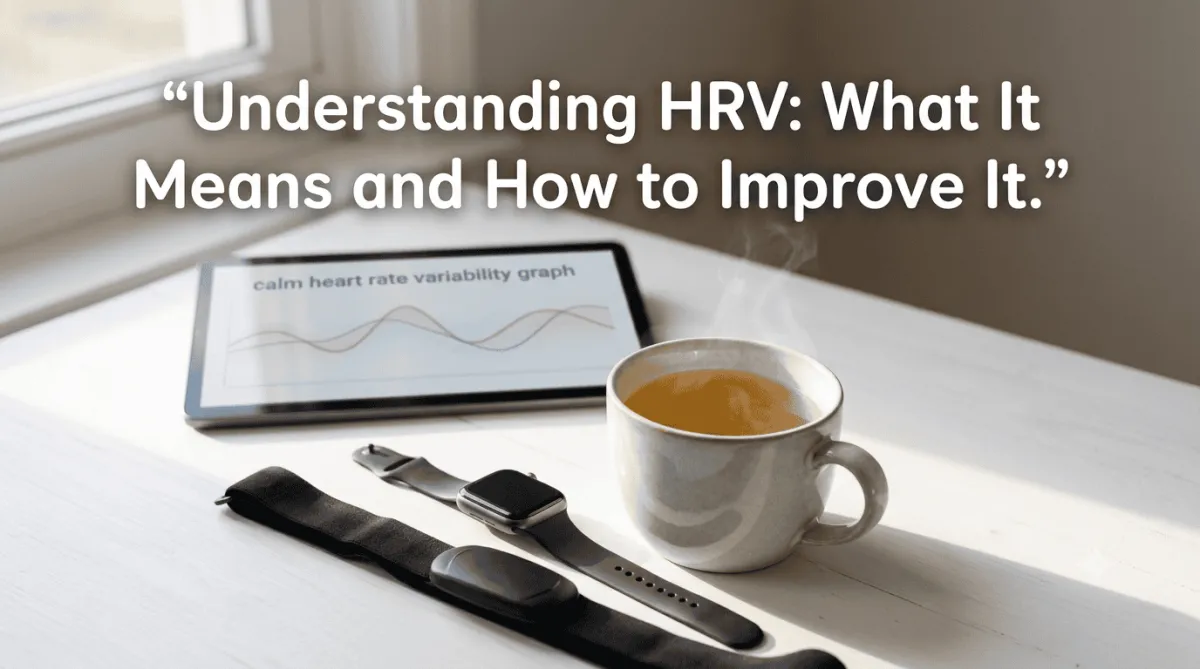
Understanding HRV: What It Means and How to Improve It
If you’ve landed here, you’re probably ready to start understanding HRV, and honestly, I’m so glad you are.
Heart rate variability might sound like a techy term reserved for pro athletes and biohackers, but it’s actually one of the most human, empowering metrics you can get to know.
Think of it as your body’s quiet daily report card, telling you how well you’re balancing stress and recovery.
In this post, I’ll walk you through exactly what heart rate variability is, why it matters, and the small, science-backed habits that can help you improve HRV, without making life feel like a chore.
Grab a cup of tea and let’s chat.
What Is Heart Rate Variability (HRV)?
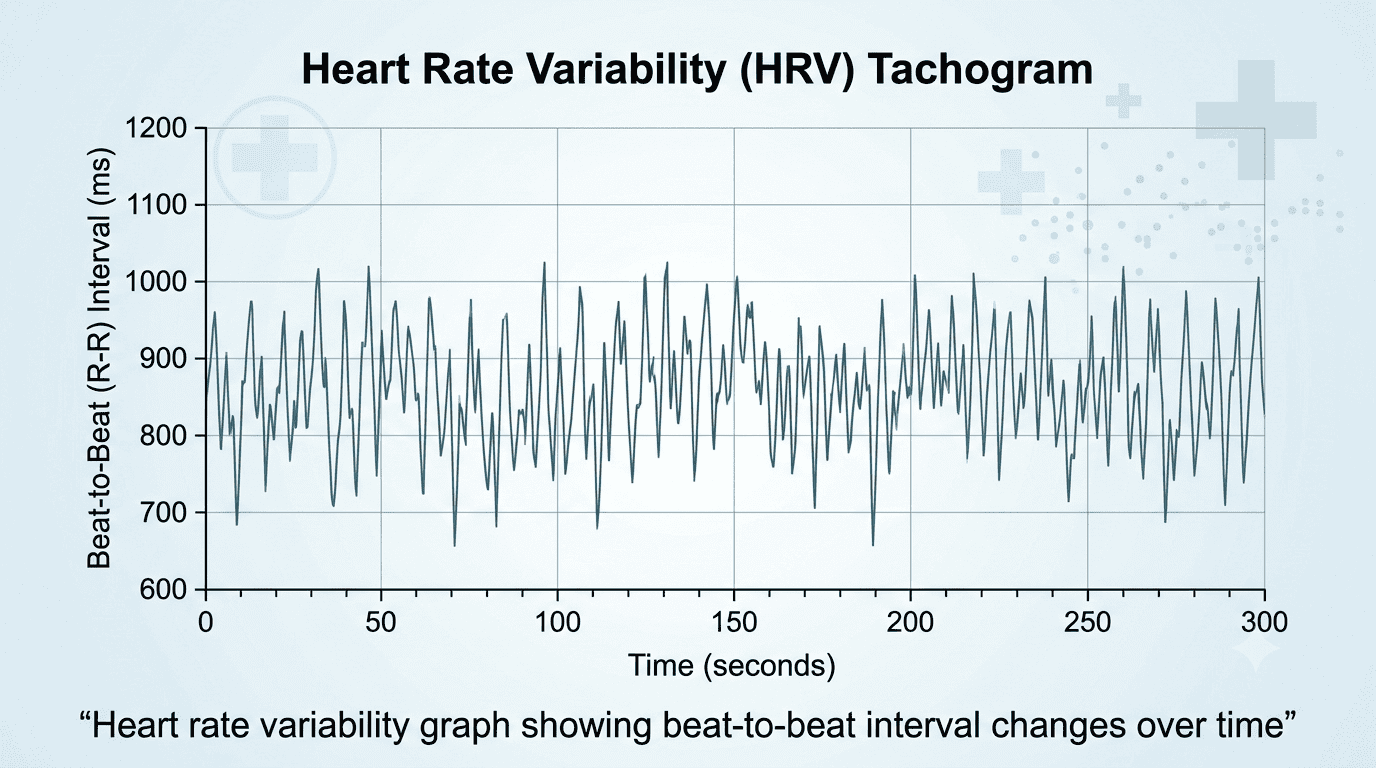
Okay, let’s break this down in the simplest way possible. Your heart doesn’t beat like a metronome. If your resting heart rate is 60 beats per minute, that doesn’t mean your heart ticks exactly once every second.
There are tiny fluctuations in the timing between each beat, sometimes 0.9 seconds, sometimes 1.1 seconds. That variation is your heart rate variability.
Behind the scenes, your autonomic nervous system is running the show. It has two branches that are constantly in a friendly tug-of-war.
The sympathetic branch is your “fight or flight” accelerator, ready to ramp you up when you’re stressed, exercising, or facing a deadline. The parasympathetic branch is your “rest and digest” brake, helping you relax, recover, and rebuild.
A higher HRV generally means the parasympathetic side is doing a good job of putting on the brakes, showing that your body is adaptable, resilient, and recovered. A lower HRV can be a sign that your system is stuck in “go” mode, maybe you’re run down, overtraining, or fighting off a bug.
So when people talk about heart rate variability, they’re really talking about the flexibility of your nervous system. It’s not about how fast your heart beats; it’s about how well your heart responds to life’s constant ebb and flow.
Why Understanding HRV Matters for Your Health
Here’s the thing: understanding HRV isn’t just a wellness trend, it’s a direct window into your body’s stress load and recovery status. Unlike how you “feel” which can be influenced by caffeine, mood, or that third cup of coffee, HRV gives you a relatively objective glimpse under the hood.
For anyone invested in fitness, heart rate variability can signal when you’re ready to crush a heavy workout and when you need to dial it back. Overtraining syndrome often shows up as a suppressed HRV before you even feel burnt out.
For those of us juggling work, family, and life’s mental load, a dropping HRV trend might be the nudge to prioritize sleep, boundaries, or breathwork before burnout hits.
Research also links higher heart rate variability to better cardiovascular health, emotional regulation, and even cognitive performance. It’s not that you can “hack” your way to a perfect number; it’s that tracking and interpreting the trend helps you make kinder, smarter choices for your body.
That’s why truly understanding HRV is less about chasing a score and more about learning to listen.
Internal link: If you’re curious about how stress impacts your whole system, check out our post on “Why Rest Is a Productivity Superpower”
The First Step in Understanding HRV: How to Measure It
You can’t work on what you don’t measure, right? The good news is that measuring heart rate variability has never been more accessible. The gold standard is still an electrocardiogram (ECG) in a lab, but for daily life, most of us turn to wearables and apps.
Chest strap monitors (like Polar H10) tend to be the most accurate consumer option because they pick up electrical signals directly.
Wrist-based devices (think Apple Watch, Garmin, Whoop, Oura ring) use optical sensors and are pretty solid for spotting trends, even if individual readings can be a little noisier.
What matters most is consistency, take your reading at the same time each day, ideally first thing in the morning, while lying down or sitting quietly. This gives you a clean, rested baseline.
The raw numbers you might see (RMSSD, SDNN, etc.) can feel overwhelming at first, but most apps simplify it into a score. The magic isn’t in one day’s number; it’s in the weekly and monthly trends.
In the journey of understanding HRV, comparing yourself to others is a trap, your physiology is unique. Your baseline is your baseline, and watching how it moves up or down tells the real story.
Internal link: For a deeper dive into gadgets and apps, read our guide “How to Track HRV Accurately Without Losing Your Mind”

What’s a “Good” HRV? (Spoiler: It’s Personal)
I get this question all the time. “My friend has an HRV of 100, and mine is 40, am I broken?” Nope. Heart rate variability is incredibly individual. Age, genetics, fitness level, and even the device you use can create wildly different numbers.
A healthy 25-year-old endurance athlete might have an RMSSD over 80 ms, while a healthy, active 55-year-old might sit happily at 30 ms. Both are perfectly normal.
Instead of chasing a universal “good” number, focus on your personal normal range and, more importantly, the direction of change. A slow upward trend over weeks suggests your nervous system is getting more resilient.
A sudden dip, especially if it lasts a few days, might mean you’re fighting off a cold, overly stressed, or not sleeping well. That’s the conversation your body is having with you. Learning to respect that dialogue is the heart of understanding HRV.
Factors That Influence Heart Rate Variability (Beyond What You’d Expect)
Before we jump into ways to improve HRV, it’s helpful to know what moves the needle. Some factors are fixed, age and genetics play a role. But so many others are within your control. Let’s peek behind the curtain.
Sleep quality and timing: Deep sleep and consistent bedtimes give your parasympathetic system a chance to dominate, raising HRV.
Physical activity: Regular, moderate exercise gently stresses your system so it becomes more adaptable over time. But intense training without rest tanks it.
Nutrition and hydration: Heavy late meals, alcohol, and even mild dehydration can suppress heart rate variability. Alcohol is a notorious HRV gremlin, even one glass can flatten your numbers overnight.
Stress and mental load: Chronic worry keeps your sympathetic nervous system idling high. Even subconscious stress shows up.
Breathing patterns: Slow, diaphragmatic breathing (around 5 to 6 breaths per minute) directly stimulates the vagus nerve and boosts parasympathetic activity.
Temperature and environment: Heat, cold exposure, and altitude all produce temporary changes.
Acknowledging these influences is a big part of understanding HRV as a holistic health signal, not just a fitness stat.
How to Improve HRV: Simple, Science-Backed Habits
Now for the part you’ve been waiting for, the actionable, “I can start tonight” kind of stuff. Remember, the goal isn’t perfection. It’s small, consistent shifts that help your nervous system find its rhythm again.
Breathe like you mean it. Your breath is the fastest remote control for your heart rate variability. Try a simple resonance breathing practice: inhale gently for about 4 seconds, exhale slowly for 6 seconds, without forcing. Do this for 5 to10 minutes in the morning or before bed. This rhythmic breathing amplifies the vagal brake and often produces a visible HRV bump within minutes. Over weeks, it trains your autonomic flexibility.
Guard your sleep fiercely. Nothing crashes heart rate variability like bad sleep. Aim for consistent bedtimes and wake times, keep your room cool and dark, and give yourself a wind-down routine free of screens. If I had to pick just one lever to improve HRV, it would be sleep, hands down.
Move your body, but dance with recovery. Both cardio and strength training build a more resilient heart. The key is balance. Incorporate low-intensity movement like long walks or easy cycling, which can actively raise HRV. And be honest about rest days. If your HRV is trending downward, swap that HIIT session for gentle yoga or a stroll.
Rethink your evening sip. I’m not here to tell you never to enjoy a glass of wine. But even moderate alcohol intake, especially close to bedtime, consistently lowers HRV. Try cutting back a few nights a week and watch how your numbers (and your sleep) respond.
Hydrate and nourish with love. Dehydration thickens your blood slightly, making your heart work harder and HRV drop. Sip water consistently. An anti-inflammatory diet rich in omega-3s, leafy greens, and fiber supports a healthy nervous system. And maybe don’t eat a massive meal right before you lie down.
Use cold exposure strategically. A brief cold shower or splashing your face with cold water can trigger the mammalian dive reflex and temporarily stimulate the vagus nerve. Some people find a short cold plunge a few times a week helps boost their baseline HRV over time. Start gently, this isn’t a toughness contest.
Practice mindfulness and gratitude. Stress isn’t just the big stuff; it’s the mental chatter too. Mindfulness meditation, journaling, or simply taking a few moments to list three things you’re grateful for can shift your nervous system toward restoration. This “mental floss” tends to show up in HRV trends.
[Internal link: If you want to pair breathwork with a calming nightly routine, check out “Evening Breathwork Routines to Calm an Overactive Mind”]
[External link: For a deeper dive into how breathing affects HRV, Harvard Health offers a great overview — https://www.health.harvard.edu/blog/heart-rate-variability-a-new-way-to-track-well-being-202111022579 ]
Putting It All Together: Your Daily HRV Routine
If you’re feeling a little “where do I start?”, here’s a gentle, real-life rhythm to try. In the morning, take your HRV reading right after waking, before coffee and before checking your phone. Jot it down or let your app log it.
Use that number as a gauge: if it’s at or above your baseline, your body is saying “I’m ready.” If it’s trending low, give yourself extra compassion, maybe swap the intense workout for a walk, and be extra protective of your bedtime.
During the day, sneak in two 3-minute breathing breaks. I love the 4-second inhale, 6-second exhale pattern. Before dinner, take a 10-minute stroll to help process stress.
An hour before bed, dim the lights, put your phone to sleep, and let your nervous system downshift. When you string together a few days of this, you’ll start seeing trends in your heart rate variability that make you feel more in tune with yourself.
[Internal link: Combine these habits with better recovery protocols in “How to Build an Active Recovery Day That Actually Works”]

Frequently Asked Questions About Understanding HRV
Is a higher HRV always better?
Not necessarily. An extremely high HRV can sometimes indicate an arrhythmia or other cardiac issue, especially if it comes with symptoms like dizziness. In healthy people, a gradual rise within a normal range is usually a sign of better recovery and adaptability. Always look at trends, not snapshots, and talk to your doctor if something feels off.
How quickly can I improve HRV?
Some habits, like slow breathing, can temporarily lift HRV within minutes. Meaningful, lasting changes usually take a few weeks of consistent sleep, stress management, and exercise. Be patient, this is about nurturing your nervous system, not forcing it.
Can I compare my HRV with my friends?
I’ll say it again: please don’t. Genetics, age, fitness history, and even the sensor you use make between-person comparisons nearly useless. Your HRV journey is beautifully yours.
What if my HRV suddenly drops and I feel fine?
A single-day drop without symptoms might just be noise. If it stays low for two or three days and you’re feeling tired, achy, or irritable, it could be an early warning sign of overtraining or illness. Use it as a prompt to rest a little more.
[External link: The Cleveland Clinic also provides an excellent plain-language explanation https://my.clevelandclinic.org/health/articles/23272-heart-rate-variability-hrv
[External link: For those who love the physiology, the European Heart Journal’s task force paper is a classic reference https://academic.oup.com/eurheartj/article/17/3/354/485572 ]
The Quiet Power of Listening to Your Heart
At its core, understanding HRV is about re-learning a language your body has always spoken. It’s not about adding another number to obsess over.
It’s about giving yourself permission to rest when you’re drained, to push when you’re capable, and to nourish the small daily habits that make a resilient life.
So, start slow. Pick one or two of the habits I shared, maybe the morning breathing and a consistent bedtime, and let those settle.
Over time, your heart rate variability will likely reflect what you’re doing, and more importantly, you’ll feel the difference in your energy, mood, and capacity to handle whatever life throws your way.
Key Points to Remember
Heart rate variability measures the tiny time differences between heartbeats, reflecting nervous system balance.
Higher HRV within your personal range generally signals good recovery and adaptability.
Measure consistently with a wearable or chest strap, focusing on trends over time.
Improve HRV through quality sleep, breathwork, balanced exercise, hydration, and stress management.
Personal baseline matters more than comparing numbers with anyone else.
If you have questions about understanding HRV, want to explore personalized strategies to improve HRV, or just feel like saying hello, I’d genuinely love to hear from you. Drop us a line at [email protected], think of it as reaching out to a friend who’s just as curious about this stuff as you are.