


Ultimate Plant Parent Checklist for Beginners
Home, Houseplants, Plant Parent Checklist
The Ultimate Plant Parent Checklist for New Houseplant Owners
Before the first leaf unfurls in your home, there’s a quiet moment when you decide: “I’m going to be a plant parent.” This guide is your story’s first chapter—a plant parent checklist to help you start with confidence, not guesswork.
The Day You Brought Home Your First Plant
Maybe it started the way it does for many new plant owners. You wandered into a plant shop “just to look,” and there it was: a glossy-leafed pothos or a tiny, determined succulent, sitting in a simple plastic pot, waiting for someone to notice it. You read the little care tag twice, turned it toward the light, and suddenly you were walking home with it, cradled like something fragile and full of possibility.
That first night, you set your new plant on the windowsill, stepped back, and admired how it instantly softened the room. But then the questions arrived: Is this the right window? How much water does it need? Do I need special soil? In that moment, you didn’t need another intimidating care manual, you needed a simple, story-shaped plant parent checklist to guide you from “I hope I don’t kill this” to “I know what I’m doing.”
💡 Pro Tip: Every thriving plant started with a beginner who was willing to learn. You don’t need perfection; you just need a plan.
Step One: Know Your Light Before You Pick Your Plants
Before you fall in love with every plant on the shelf, walk through your home the way a plant would. Morning light spills softly into an east-facing bedroom. A south-facing window blazes bright and warm all afternoon. That hallway you love? Cozy for you, but maybe a little dim for a sun-loving fiddle leaf fig. One of the most underrated new plant owner tips is this: choose plants that match the light you actually have, not the light you wish you had.
Low light corners: Snake plants, ZZ plants, and pothos quietly thrive where sunlight is shy.
Bright, indirect light: Peace lilies, philodendrons, and monsteras love filtered sun through sheer curtains.
Sun-soaked spots: Succulents, cacti, and some herbs bask happily in direct light.
When you match plant to light, you’re not just checking a box on your plant parent checklist—you’re setting the stage for an easy, low-drama relationship with your new green roommate.

Mapping light in your home helps you choose plants that naturally thrive.
Houseplant Essentials: The Starter Kit Every New Plant Parent Needs
Once you’ve met your light, it’s time to gather your houseplant essentials. Think of this as packing a diaper bag before bringing home a baby, only greener, quieter, and far less dramatic at 3 a.m. These are the indoor plant supplies that turn good intentions into consistent care.
Well-draining potting mix: Regular garden soil is too heavy for most houseplants. A high-quality indoor potting mix lets roots breathe and excess water escape, preventing root rot, every plant parent’s quiet fear.
Pots with drainage holes: That gorgeous ceramic pot with no hole in the bottom? It’s a decorative cachepot, not a long-term home. Start with simple nursery pots or planters that let water flow through, then slip them into prettier covers if you like.
Watering can with a narrow spout: It doesn’t need to be fancy, but a gentle, precise pour keeps soil from flooding and leaves from getting unnecessarily wet.
Moisture meter or wooden chopstick: Your finger works in a pinch, but these help you check how wet the soil is below the surface, where roots are actually living their lives.
Soft cloth or small brush: Dust builds up on leaves, blocking light. A quick wipe or gentle brush keeps them shining and photosynthesizing like tiny solar panels.
📌 Key Takeaway: The right indoor plant supplies don’t have to be expensive, they just need to support healthy roots, proper drainage, and gentle, consistent care.
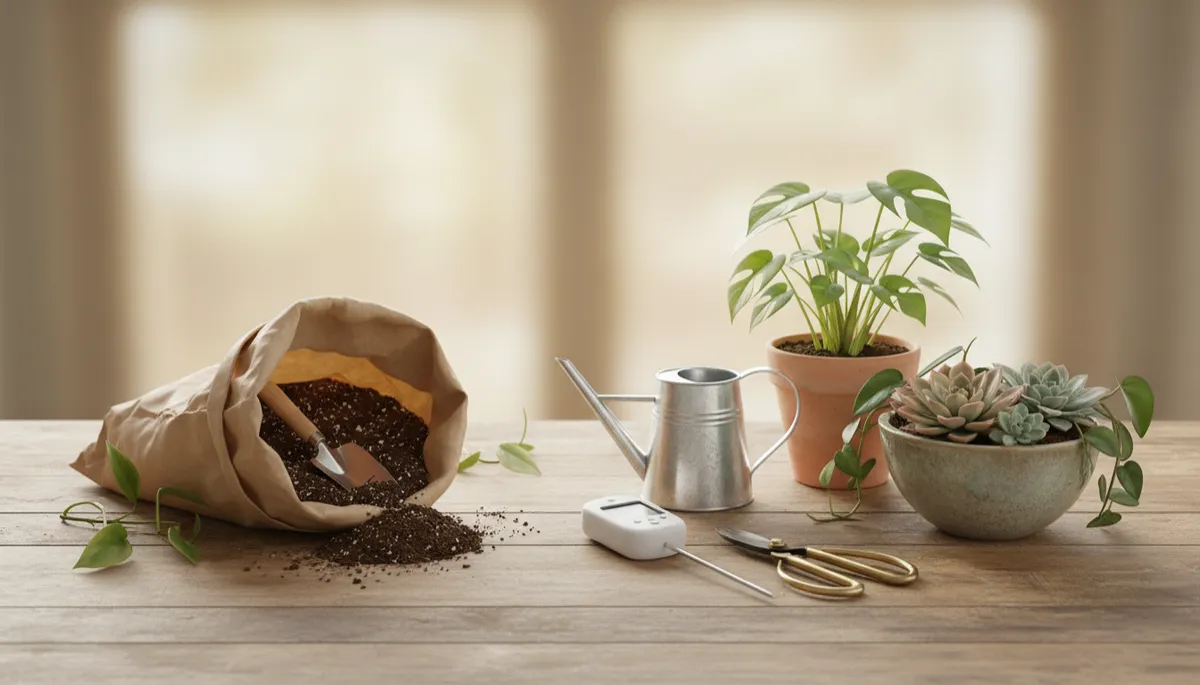
A simple starter kit covers most daily needs for new houseplant owners.
Watering, Feeding, and Other Quiet Rituals of Plant Care
Every plant parent eventually learns that most houseplants are lost not to neglect, but to love expressed as overwatering. One of the most powerful new plant owner tips is to trade a strict watering schedule for a simple habit: check, then water. Dip your moisture meter or a clean wooden chopstick a couple of inches into the soil. If it comes out mostly dry, it’s time for a drink. If it’s still dark and damp, wait a few days and check again.
Feeding is gentler still. During spring and summer, when your plants are stretching out new leaves, a diluted liquid fertilizer once a month is usually enough. Think of it as a quiet Sunday brunch for your plants, not a daily buffet. In fall and winter, when growth slows, most plants are happy to rest with little or no extra food.
Water thoroughly until it drains from the bottom, then empty saucers so roots aren’t sitting in a puddle.
Use room-temperature water to avoid shocking tender roots.
Always follow fertilizer instructions, and when in doubt, dilute more rather than less.
Over time, these small rituals begin to anchor your days. You’ll find yourself checking leaves with your morning coffee, turning pots a quarter turn so they grow evenly, noticing a new leaf unfurling like a secret message that says, “You’re doing just fine.”
Your Plant Parent Checklist: From Panic to Peace of Mind
As your collection grows, from one brave pothos to a sun-loving succulent on the windowsill and a trailing ivy over the bookshelf, so does the quiet responsibility you feel. To keep the overwhelm at bay, turn your care routine into a simple, repeatable plant parent checklist you can mentally walk through each week.
Check the light: Has anything changed? New curtains, moved furniture, or shifting seasons can affect how much light reaches your plants.
Test the soil: Use your moisture meter or chopstick on each plant. Water only those that are truly ready, instead of watering everyone “just because it’s Sunday.”
Inspect the leaves: Look for yellowing, brown tips, drooping, or spots. These are early whispers of what your plant needs: less water, more light, or a little more humidity.
Dust and tidy: Wipe leaves gently, trim dead or damaged growth, and rotate pots so plants grow evenly toward the light.
Check pots and roots: If roots are circling the bottom or poking out of drainage holes, it may be time to repot into a slightly larger home with fresh mix.
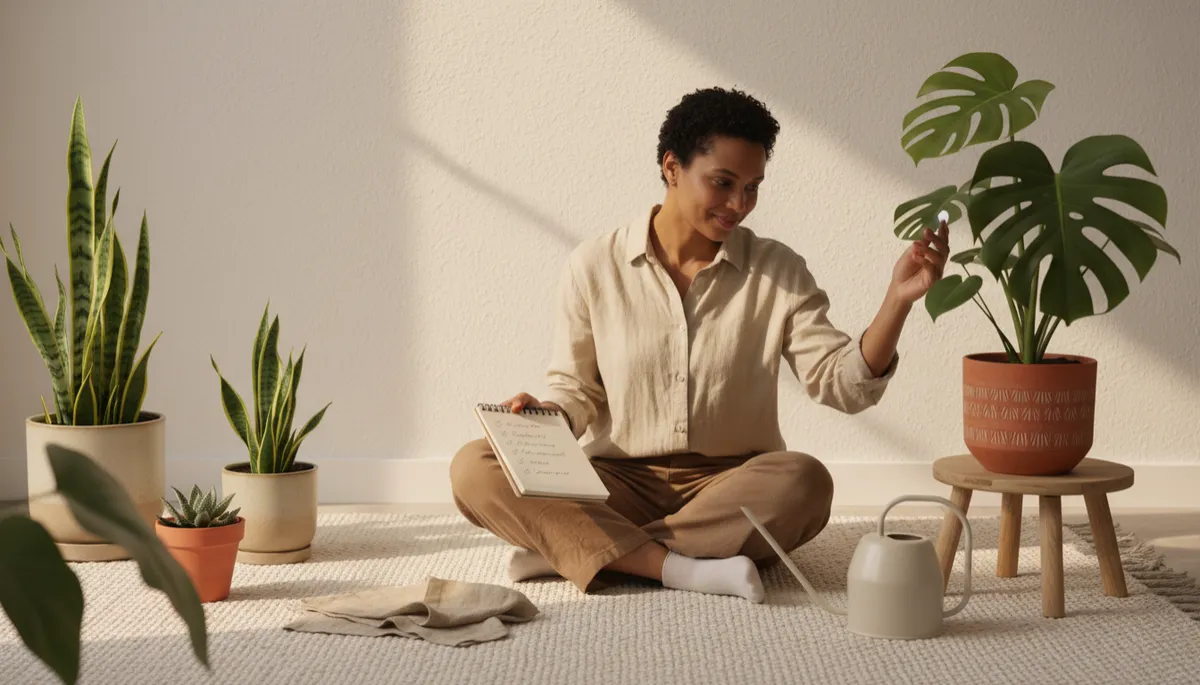
A simple weekly checklist turns plant care into a calm, joyful ritual.
When Things Go Wrong (And What That Really Means)
Even with the best plant parent checklist and the right indoor plant supplies, there will be moments when a leaf crisps at the edges, or a once perky stem leans dramatically toward the floor. This isn’t failure; it’s a conversation. Your plant is telling you something in the only language it has, and you’re learning to listen.
Yellow leaves: Often a sign of overwatering or poor drainage. Check the roots, adjust your watering rhythm, and make sure pots have drainage holes.
Brown, crispy tips: Could be low humidity, underwatering, or a bit too much direct sun. Try moving the plant slightly away from the window or adding a small tray of water and pebbles nearby to boost moisture in the air.
Dropped leaves: Sudden changes in temperature, drafts, or a recent move can stress plants. Give them time, stable conditions, and gentle care.
The longer you live with plants, the more you realize that “mistakes” are simply part of the story. The plant you overwatered teaches you patience. The fern that crisped in the sun reminds you to read those care tags a little more closely. Each adjustment, each new leaf, is proof that you and your plants are learning together.
Growing Into Your New Role as Plant Parent
One day, almost without noticing, you’ll realize that you no longer feel nervous every time you pick up the watering can. You’ll catch yourself instinctively turning a plant toward the light or reaching for your houseplant essentials before repotting without needing to Google each step. Friends will step into your home and say, “Your plants look amazing,” and you’ll smile, remembering the first time you whispered, “Please don’t die” to that original pothos.
That’s the quiet magic of plant parenthood. It begins with a single decision and a simple checklist, then grows into a living, breathing relationship that changes the way your home feels—and the way you move through it. With the right new plant owner tips, a handful of indoor plant supplies, and a gentle, forgiving plant parent checklist to guide you, you ’re not just keeping plants alive. You’re growing something softer and steadier in yourself: patience, observation, and the joy of watching life unfold one new leaf at a time.
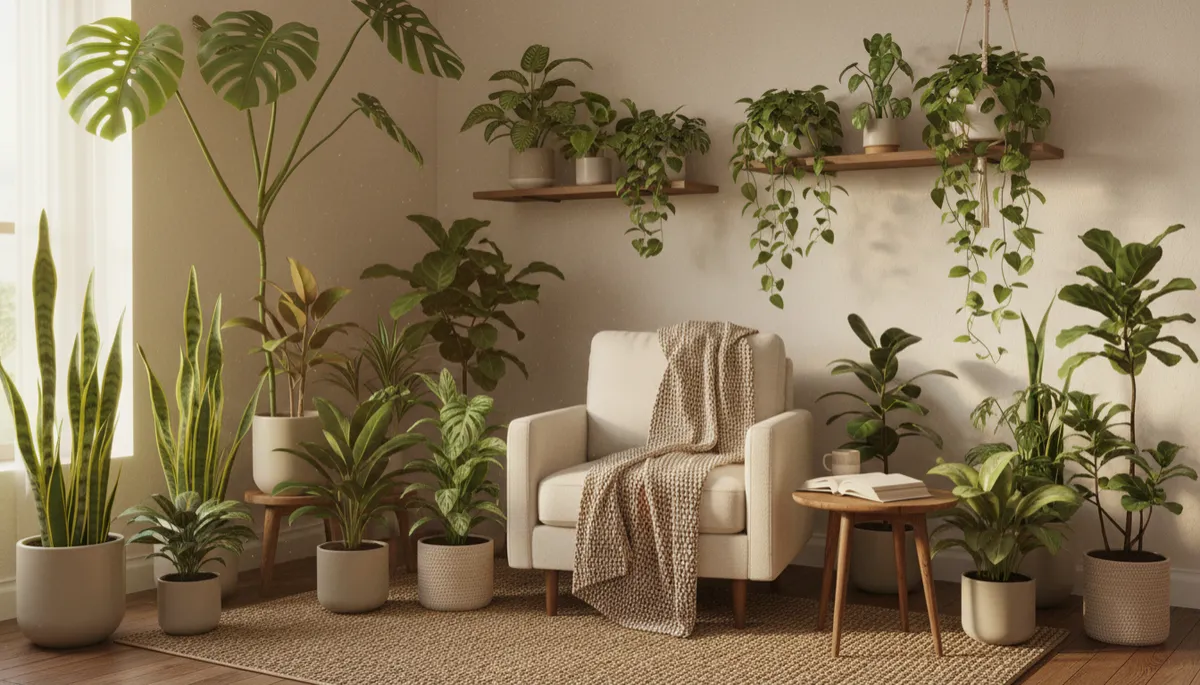
Over time, small daily habits transform your home into a thriving indoor jungle.