



Track Health Biomarkers with DIY At-Home Devices
Health, Biomarkers, At-Home Devices
How to Track Your Health Biomarkers with At-Home DIY Devices
Curious about what’s really going on inside your body, without constant trips to the doctor? Thanks to affordable gadgets and simple tools, you can now track health biomarkers at home and turn your daily routine into a gentle, data-informed self-care practice.
What Are Health Biomarkers, and Why Should You Care?
Health biomarkers are measurable signs that give you clues about how your body is doing. Think of things like heart rate, blood pressure, blood sugar, sleep quality, or inflammation markers. They don’t tell the whole story on their own, but together they paint a helpful picture of your overall well-being.
In the past, you mostly learned about these numbers during an annual checkup. Now, with at-home biohacking devices and simple DIY tools, you can monitor them more often, notice patterns, and have better conversations with your healthcare provider. You’re not trying to replace professional care; you’re becoming an informed partner in it.
Getting Started: A Friendly DIY Biomarker Tracking Setup
You don’t need a lab in your living room to start DIY biomarker tracking. In the USA, many people begin with a small toolkit of affordable devices and build from there. Here’s a simple starter setup you can assemble over time, based on your budget and interests.
Smartwatch or fitness tracker: Monitors steps, heart rate, sometimes heart rate variability (HRV), sleep stages, and activity levels.
Blood pressure cuff: A simple arm cuff gives you blood pressure and resting heart rate at home in under a minute.
Glucometer: A finger-prick meter that lets you check blood glucose, especially helpful if you’re watching carbs, energy crashes, or metabolic health.
Smart scale: Tracks weight and often estimates body fat, muscle mass, and water percentage (estimates, but useful for trends).
Notebook or health tracking app: Where you log numbers, how you feel, sleep, stress, and any lifestyle changes.
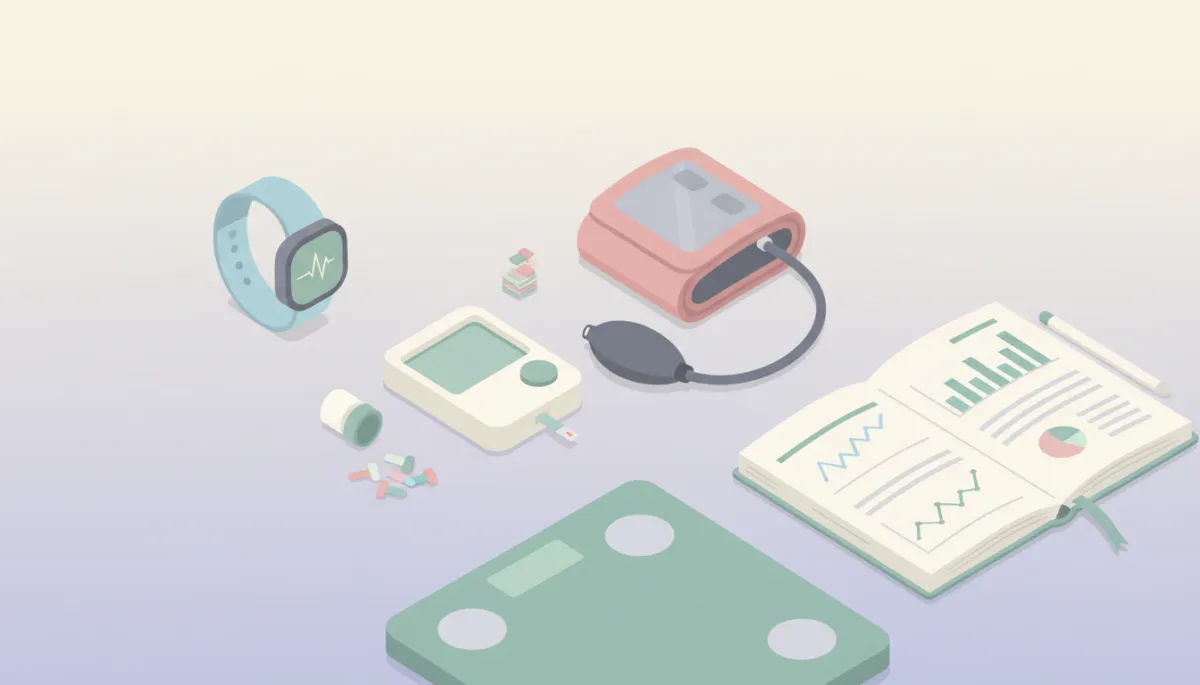
A simple DIY health station makes daily tracking feel easy and inviting.
Key Biomarkers You Can Track at Home
1. Heart Rate and Heart Rate Variability (HRV)
Most wearables measure heart rate all day. A lower resting heart rate often suggests better cardiovascular fitness. Heart rate variability (the tiny changes between beats) can hint at how well your nervous system is handling stress and recovery. You don’t need to obsess over every point; just watch for trends over weeks instead of single days.
2. Blood Pressure
With a home cuff, you can track your blood pressure in a calm setting, which may be more accurate than “white coat” readings at a clinic. Try measuring at the same time each day, seated, feet on the floor, and relaxed for a few minutes beforehand. Bring your log to your next appointment so your provider can see your real-life numbers.
3. Blood Glucose
A basic glucometer lets you see how your body responds to meals, snacks, and fasting. Many people in the USA use this form of DIY biomarker tracking to notice which foods keep their energy stable versus which cause big spikes and crashes. Always follow the instructions carefully, and talk with a professional if your readings are consistently high or low.
4. Sleep Quality and Duration
Many at-home biohacking devices track sleep automatically. You’ll see bedtime, wake time, awakenings, and estimated sleep stages. Instead of chasing “perfect” scores, use the data to ask gentle questions: Does going to bed 30 minutes earlier help your mood? Does late-night screen time show up as restless sleep?
5. Weight, Body Composition, and Measurements
A smart scale plus a measuring tape can reveal slow, steady changes that you might not notice in the mirror. Weighing in once or twice a week and logging waist or hip measurements can help you see if your nutrition and movement habits are nudging you in the direction you want to go, without turning the scale into a daily stressor.
💡 Friendly Tip: Choose a few biomarkers that matter most to you and start there. You can always add more later once tracking feels comfortable.
How to Track Health Biomarkers at Home Without Overwhelm
It’s easy to get excited and try to track everything. But the real magic happens when you build a calm, sustainable routine. Here’s a simple daily and weekly rhythm you can adapt.
Morning check-in: Measure resting heart rate, blood pressure, and, if needed, fasting blood glucose. Log your sleep duration and how rested you feel.
Daytime notes: Let your wearable passively record steps, activity, and heart rate. Jot down anything notable like a new workout, a very stressful day, or a big meal.
Evening reflection: Quickly review your data and rate your overall mood, energy, and stress on a simple 1–5 scale.
Weekly review: Once a week, look at trends instead of single numbers. Are your averages moving in a direction that feels healthier for you?

Weekly trend reviews help you focus on progress, not perfection.
Using At-Home Biohacking Devices in a Gentle, Balanced Way
The term “biohacking” can sound intense, but it doesn’t have to be. At-home biohacking devices can simply be tools that help you experiment with healthy habits in a low-pressure way. For example, you might:
Try a week of earlier bedtimes and see how your sleep score and morning mood respond.
Experiment with a daily walk after dinner and watch what happens to your blood glucose readings.
Add a simple breathing practice and notice whether your HRV trends upward over several weeks.
In the context of DIY biomarker tracking USA enthusiasts often talk about “n=1 experiments,” which just means gently testing what works for your unique body. The key is to change one thing at a time, track how you feel and what your numbers do, and avoid making drastic shifts based on a single reading.
📌 Key Takeaway: Data is a conversation starter with your body, not a judge. Use your numbers to support curiosity, not criticism.
Safety, Boundaries, and When to Call a Professional
While it’s empowering to track health biomarkers at home, it’s just as important to know the limits. Home devices are great for trends, but they’re not perfect, and they don’t replace medical advice or diagnostic testing. If you see consistently abnormal numbers, or if something simply doesn’t feel right, reach out to a healthcare professional promptly.
It’s also wise to protect your mental health. If checking your stats multiple times a day makes you anxious, scale back. You’re allowed to take breaks, mute notifications, or simplify your routine. Remember: the goal of at-home tracking is to support your well-being, not to create a new source of stress.

Healthy tracking includes knowing when to pause, rest, and ask for help.
Bringing It All Together: Building Your Personal Health Dashboard
When you combine a few simple devices with a gentle routine, you create a personal health dashboard that actually feels supportive. Over time, you’ll learn how your sleep, movement, food choices, and stress levels show up in your biomarkers. You’ll notice which habits genuinely help you feel better, not just which ones sound good on paper.
Whether you’re just curious, managing a specific condition, or exploring at-home biohacking devices as a hobby, you can start small and stay kind to yourself. Choose one or two biomarkers, track them for a few weeks, and see what you learn. As you grow more comfortable, you can expand your toolkit and refine your approach.
In the end, DIY biomarker tracking at home isn’t about chasing perfect numbers. It’s about building a friendly relationship with your body, listening to its signals, and using simple, accessible tools to support the healthiest version of you, right from the comfort of your own home.