



Top Home Fermentation Kits for Gut‑Health Biohacking in 2026
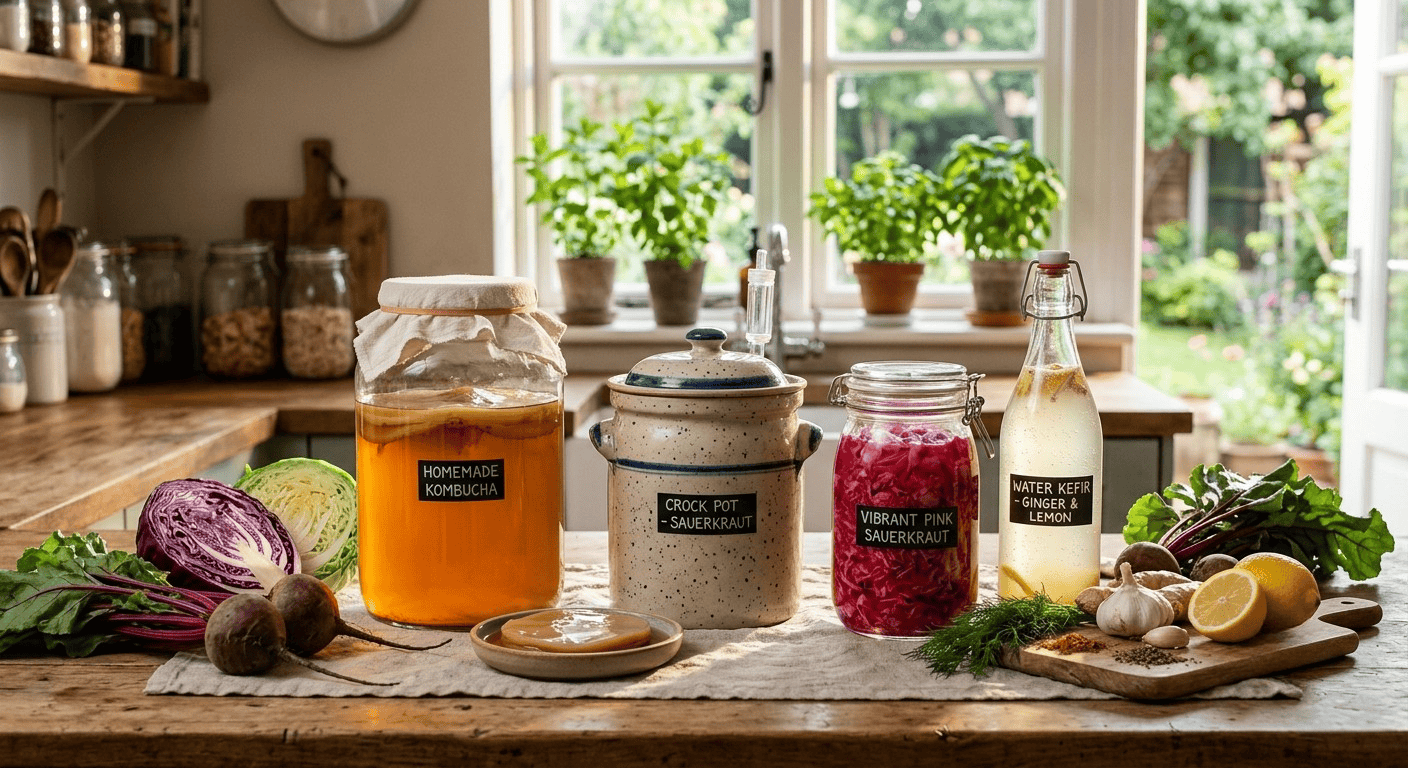
Ever feel like your gut is trying to send you a message in a language you don’t quite speak? Maybe it’s the afternoon bloat, that 3 p.m. brain fog, or the constant game of “what will my stomach do today?” I’ve been there.
And honestly, no amount of store‑bought probiotic capsules ever felt like a real conversation with my microbiome. That’s where home fermentation kits came in and completely changed my relationship with food, energy, and digestion.
If you’re diving into gut health biohacking, these simple DIY setups are the closest thing I’ve found to a reset button. They let you grow living, diverse probiotics right on your countertop, tailored to you, your taste buds, and your body.
Today I’m walking you through everything: why fermentation is the ultimate biohack, how to pick the best home fermentation kits for your lifestyle, and my top kits that actually deliver. Grab a cup of something bubbly, and let’s do this together.
Why Home Fermentation Kits Are a Gut‑Health Biohacker’s Secret Weapon
Before we jump into the kits, let’s get honest about what gut health biohacking really means. It’s not about chasing a single fancy ingredient or running out to buy the latest powdered mushroom blend.
It’s about systematically creating an environment in your digestive system where the trillions of microbes living in you can thrive, communicate, and support everything from your mood to your immune system. And the most powerful tool for that? Living, enzyme‑rich fermented foods that you make yourself.
When you use home fermentation kits, you’re crafting DIY probiotics that are fresher, more diverse, and often far more potent than anything on a shelf. Commercial probiotics might contain a handful of strains in a dried, dormant state.
A spoonful of your own live sauerkraut or a shot of homemade water kefir can deliver dozens of bacterial and yeast strains that have multiplied actively in a thriving ecosystem, exactly the kind of biodiversity your gut craves. Plus, you control the salt, the sugar source, the fermentation time, and the flavor. You literally get to biohack taste.
If you’re new to this world, you might want to bookmark our Beginner’s Guide to Lacto‑Fermentation for a deeper dive into the science and first steps. But right now, let’s focus on the gear that makes it all feel safe, easy, and fun rather than a science experiment gone wrong.
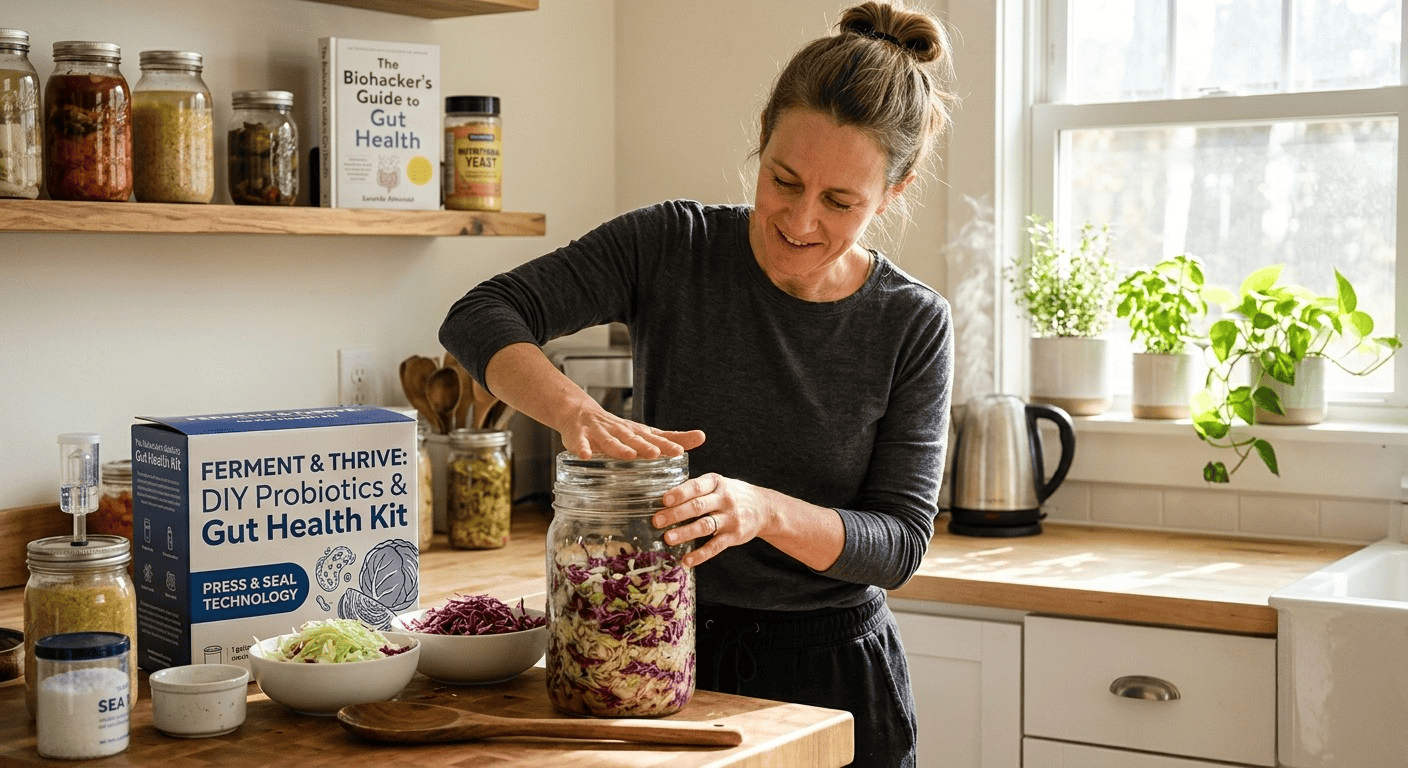
What to Look for in a Home Fermentation Kit
There’s no single “best” home fermentation kit because the right one depends entirely on what you want to eat, drink, and nurture. When I chat with friends who are just starting their gut health biohacking journey, I always ask these five questions to point them toward the perfect kit:
What flavors call to you? Are you a tangy, pickle‑obsessed human, or does a fruity, fizzy kombucha sound like your soulmate? Your palate should lead the way. Kits are often designed for specific ferments.
How much time do you have? Some ferments require daily attention (kefir grains need regular feeding), while others like sauerkraut are a “set it and forget it” affair for weeks. A good kit matches your rhythm.
How much space is on your counter? A giant ceramic crock demands a permanent spot, while a slim mason jar setup can tuck into a corner.
What volume do you actually need? If you’re the only person in the house drinking kombucha, a one‑gallon kit will keep you swimming in tea. Start with the batch size that won’t overwhelm you.
Do you want a full system or just the missing piece? Some kits give you everything, including the culture. Others supply the vessel and tools, assuming you’ll buy your own SCOBY or kefir grains separately. Both approaches work brilliantly.
With that in mind, let’s explore the top home fermentation kits that transform ordinary vegetables, tea, and legumes into gut‑loving DIY probiotics you’ll actually crave.
Top 5 Home Fermentation Kits for Crafting DIY Probiotics
I’ve tested enough jars, crocks, and bottles to know that a well‑designed kit makes the difference between a lifelong habit and a dusty box in the cupboard. Here are the home fermentation kits that I genuinely recommend to friends, each built for a different kind of biohacker.
The Classic Vegetable Fermentation Kit – For Kraut, Kimchi & Pickles
If you only ever buy one home fermentation kit, let it be the type that turns humble cabbage into supercharged sauerkraut. Vegetable fermentation is arguably the most approachable gateway to gut health biohacking, because the lactic acid bacteria naturally present on the veggies do all the work. You just provide the anaerobic environment.
Look for a kit that includes a ceramic or glass jar with an airlock lid and a weight. The weight keeps your vegetables submerged under brine, which is the number one rule for safe, mould‑free ferments. The airlock lets carbon dioxide escape without letting oxygen in.
My favourite setups use a wide‑mouth mason jar base with a silicone lid and a glass weight. They’re affordable, see‑through (so you can marvel at the bubbles), and easy to clean. If you want to go big, a traditional water‑seal ceramic crock is a beautiful, heirloom‑quality choice that your kitchen will adore.
Making your own kraut means you get far more live lactic acid bacteria than heat‑pasteurised store versions. Every forkful is a DIY probiotic bomb. And the flavour? You can go classic with caraway, fiery with gochugaru, or bright with ginger and turmeric. To see how these foods compare to other gut‑health tools, you might like our post Fermented Foods vs Probiotic Supplements: What Science Says.
The Complete Kombucha Brewing Kit – A Living Tea Bar
Kombucha is the sparkly, slightly tart drink that turned fermentation into a mainstream obsession, and for good reason. A continuous‑brew home fermentation kit gives you an endless supply of probiotic‑rich soda without the single‑use bottles or the £4 price tag.
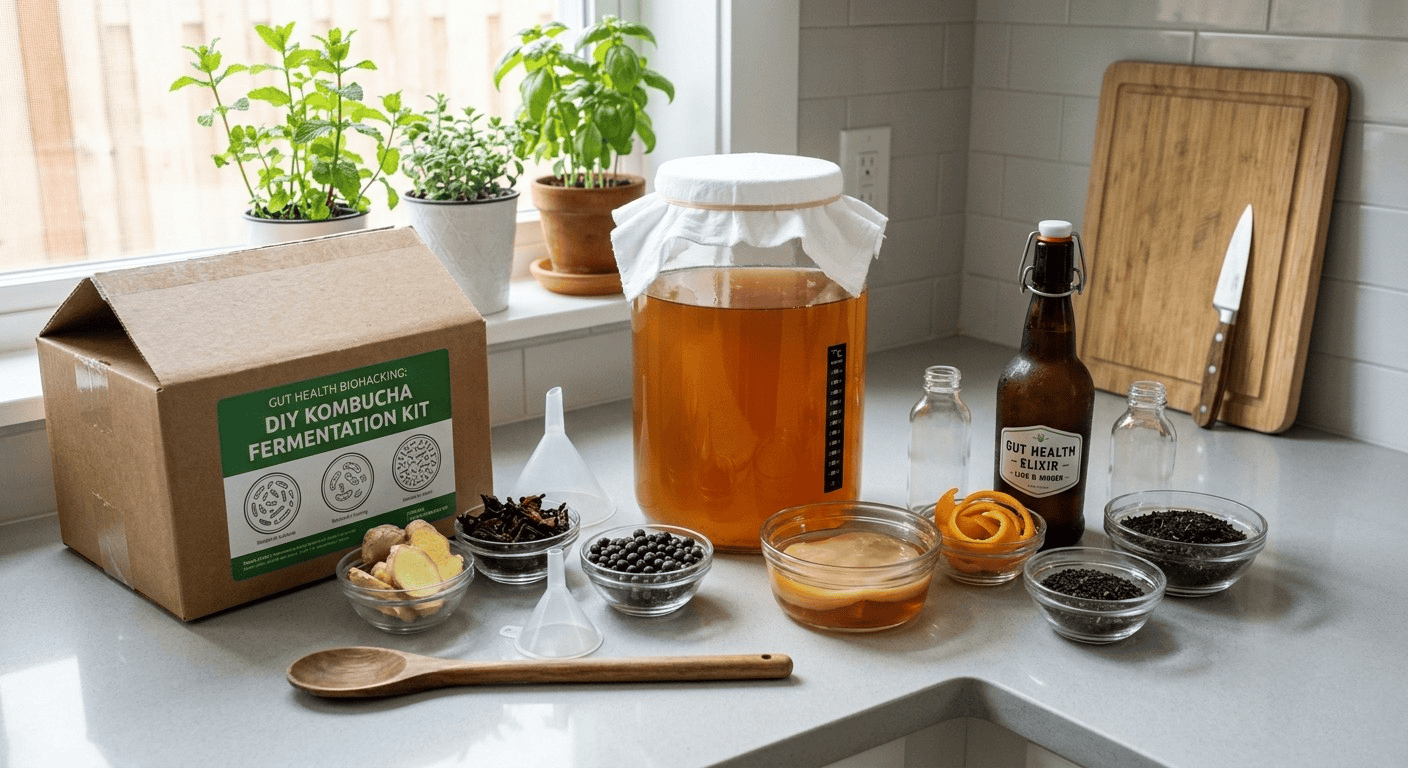
The kit typically includes a one‑gallon glass jar, a tightly woven cloth cover (to keep fruit flies out while letting the SCOBY breathe), a temperature strip, and a SCOBY with starter liquid.
What I love about kombucha kits is how they become a living part of your kitchen. You’ll find yourself saying “I need to feed the SCOBY” like you’re talking about a pet. Each batch can be flavoured with fresh fruit, herbs, or spices during a second fermentation, allowing you to biohack the taste and boost specific polyphenols.
For a full walkthrough on getting that perfect fizz, check out our guide How to Make Kombucha Without a Kit, which uses basic kitchen gear but really makes you appreciate the convenience of a dedicated setup.
External link opportunity: For a scientific look at how kombucha impacts the gut, Harvard Health has a balanced overview of fermented foods for gut health (https://www.health.harvard.edu/staying-healthy/fermented-foods-for-gut-health).
Water Kefir and Milk Kefir Kits – Liquid Probiotic Powerhouses
If you’re looking for the fastest turnaround and an absurd level of microbial diversity, kefir grains are your best friend. Water kefir kits produce a light, fizzy probiotic drink in 24–48 hours, while milk kefir kits turn dairy or plant milk into a thick, yogurt‑like tonic teeming with beneficial bacteria and yeasts. Both are champions of gut health biohacking because the grain‑based cultures can contain 30 to 50 different microorganisms, far more than most supplements.
A solid home fermentation kit for kefir provides a fine‑mesh plastic strainer (metal can react with the grains), a fermentation jar with a breathable lid, and active, healthy grains. Some kits also include sugar or specific minerals to keep the grains thriving.
The beauty of kefir is its rhythm: you’re constantly harvesting and re‑feeding, which means your supply of fresh DIY probiotics never runs out. It’s hands‑on in the best possible way, and you can share the multiplying grains with friends, spreading the gut love.
External link opportunity: The National Institutes of Health has fascinating research on the microbiome benefits of fermented dairy; one accessible gateway is their [probiotics fact sheet](https://ods.od.nih.gov/factsheets/Probiotics-HealthProfessional/).
The Plant‑Based Yogurt Maker – Controlled Warmth for Precision Biohacking
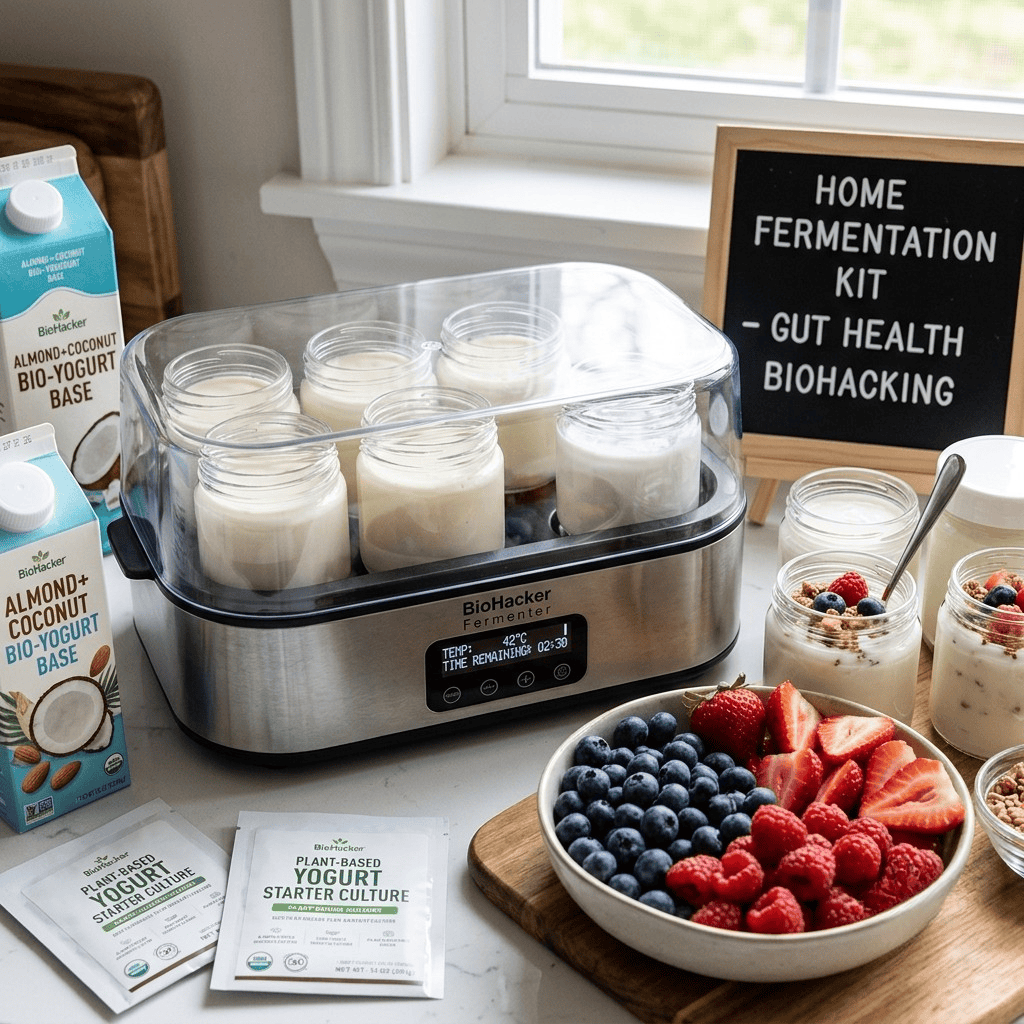
Sometimes you want a thick, creamy, protein‑rich ferment that you can spoon into a bowl with berries and granola. A yogurt maker might look like a simple electric incubator, but it’s a precision instrument for gut health biohacking.
The steady low heat is perfect for cultivating specific bacterial strains in dairy or plant milks, and many home fermentation kits now come with multiple strain packets so you can experiment with L. reuteri, L. gasseri, or Bifidobacterium.
I recommend kits that let you use your own jars rather than tiny plastic cups, it reduces waste and gives you full control over ingredients. With a reliable yogurt kit, you can make a week’s worth of cashew‑based or coconut yogurt that’s free from thickeners and added sugars. It’s also an excellent way to introduce kids to DIY probiotics because the result is familiar and undeniably delicious.
Tempeh Fermentation Kit – Protein Meets Probiotics
Tempeh is the unsung hero of home fermentation kits. Made from whole soybeans (or other legumes and grains) bound together by a fluffy white mycelium, tempeh isn’t just a probiotic, it’s a complete, high‑protein food that’s a dream for meal prep.
Fermenting it yourself is a slightly more advanced biohack, but a dedicated kit with a temperature‑controlled incubator and perforated bags or trays makes it infinitely easier.
The mycelium (Rhizopus) produces enzymes that break down the beans, making nutrients more bioavailable and easier to digest. The result is a nutty, savoury cake you can slice, marinate, and cook.
Including tempeh in your rotation diversifies the types of microorganisms entering your gut and adds substantial fibre, which your good bacteria feed on. If you’re serious about using food as medicine, a tempeh kit deserves a spot on your counter.
The Science That Links DIY Probiotics to Gut Health
Why does all this bubbling and chopping matter so deeply for gut health biohacking? The emerging science of the gut‑brain axis tells us that the metabolites produced by microbes in our large intestine influence mood, inflammation, metabolism, and even cognitive clarity. When you eat fermented foods you’ve made with your own home fermentation kits, you introduce a living workforce directly to your digestive tract.
Unlike freeze‑dried capsules, your DIY probiotics arrive in a food matrix of fibre, organic acids, and bioactive peptides that help them survive the stomach and thrive in the gut. The fermentation process itself reduces anti‑nutrients like phytic acid and increases vitamins such as K2 and certain B vitamins.
Every batch of kraut or kefir is a complex ecosystem, a liquid symphony that strengthens your gut barrier and nudges the immune system toward balance. And because you make it yourself, you avoid the emulsifiers, preservatives, and sneaky sugars that undermine gut integrity.
External link opportunity: For a deeper dive, the Wild Fermentation portal run by Sandor Katz offers a wealth of knowledge that beautifully complements any kit; you can explore it at [https://www.wildfermentation.com/](https://www.wildfermentation.com/). It’s a trusted resource I return to constantly.
Tips to Maximize Your Home Fermentation Kits
Even the best home fermentation kit benefits from a few biohacker tricks. These little habits will skyrocket the probiotic content and the joy you get from the process:
Source the best ingredients you can afford. Organic vegetables, unrefined cane sugar, and non‑chlorinated water give your microbial cultures the clean fuel they need to outcompete undesirable bugs.
Keep a fermentation log. Track the date, temperature, and tasting notes. You’ll quickly learn that your kimchi is perfect at day five in summer and day eight in winter. This data turns you into a true gut‑health biohacker.
Rotate your ferments. Don’t just drink kombucha. Mix sauerkraut, kefir, and small tastes of fermented hot sauce throughout your week. Different ferments nourish different bacterial families, building resilience.
Use your ferments as a base. Stir kraut into salad dressings, blend kefir into smoothies, or brush tempeh with miso. Weave your DIY probiotics into meals so your gut receives a constant, gentle flood of living foods.
For a full list of ingredients that turn a good ferment into a great one, our post Best Probiotic Foods for Immune Health will give you a pantry roadmap.
Mistakes Even Smart Biohackers Make (And How to Avoid Them)
When I first started filling my kitchen with home fermentation kits, I made every mistake in the book. Don’t let these speed bumps derail your journey:
Failing to submerge. If your vegetables or fruit float above the brine, mould might visit. Always use a weight, and don’t be tempted to skip it.
Using chlorinated tap water. Chlorine can kill the delicate bacteria and yeasts you’re trying to cultivate. A simple charcoal filter solves this instantly.
Opening the jar every day to “check.” Oxygen is the enemy of lactic acid fermentation. Trust your airlock and peek only when necessary.
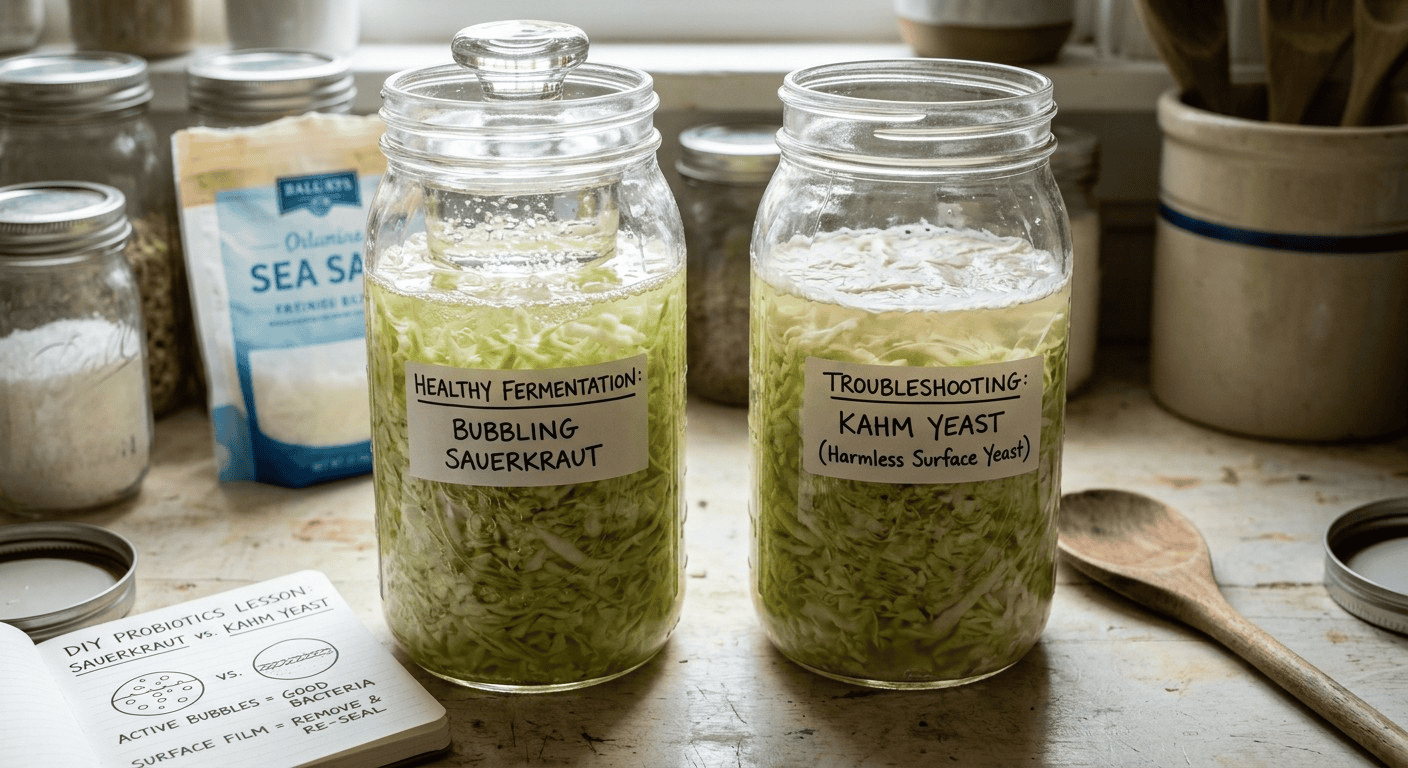
Giving up after one cloudy batch. Ferments are alive. Sometimes they’re extra bubbly, sometimes they get a harmless film of kahm yeast. Learning to read your brew is part of the gut health biohacking adventure.
Start Your Gut‑Health Biohacking Journey Today
Here’s what I want you to take away: home fermentation kits aren’t just gadgets, they’re bridges to a more resilient, in‑tune body.
Whether you start with a jar of sauerkraut on your countertop or a full kombucha brewery, you’re stepping into the role of a gut‑health biohacker who understands that true wellness is grown, not purchased. Each spoonful of your DIY probiotics tells your microbiome, “I’ve got you.”
Key points to remember:
Fermented foods made at home deliver live, diverse probiotics that surpass most supplements.
The right kit matches your taste, schedule, and space.
Rotate ferments like sauerkraut, kefir, kombucha, yogurt, and tempeh for maximum microbial diversity.
Small habits, like using filtered water and keeping a fermentation log, dramatically improve results.
You don’t need to be a scientist or a chef. You just need a little curiosity and a trustworthy home fermentation kit to get started. Imagine, a month from now, opening your fridge to jars of vivid, alive food that you brought into being. That’s the kind of self‑experimentation that makes gut health biohacking a daily joy.
Ready to take the next step but have a burning question? I’d genuinely love to hear from you. Whether you’re trying to pick between a water kefir kit and a kimchi crock, or you’ve hit a hiccup with your first batch, drop us a line. We’re all learning this together. For personalized recommendations, troubleshooting, or just to share your fermentation wins, contact us at [[email protected]]Your gut will thank you.