

Start Your Urban Micro-Farm: A Backyard Story
Urban Farming, Micro-Farming, Sustainable Living
How to Start an Urban Micro-Farm in the United States: A Story from One Small Backyard
On a warm April afternoon in a quiet American city neighborhood, Maya stood at the edge of her cracked concrete patio and tried to imagine tomatoes where the trash cans used to sit. She didn’t look like a “farmer,” at least not the way she pictured farmers in old photos: no overalls, no fields, no tractor. Just a small backyard, a second-floor apartment, and a stubborn feeling that she could grow more of her own food. This is the story of how she learned how to start an urban micro-farm in the United States, and how you can, too, even if all you have is a balcony, a side yard, or a sunny fire escape.
The Moment You Decide to Grow More Than a Houseplant
For Maya, the turning point came at the grocery store. She held a plastic-wrapped head of lettuce in one hand and her receipt in the other, wondering how something so simple had become so expensive, and why it tasted like nothing at all. That night, she typed “urban farming for beginners” into a search bar and fell into a world of balcony gardens, rooftop beehives, and tiny backyards bursting with food. It was the first time she understood that a small urban farm could exist right where she lived, between brick walls and chain-link fences, under the constant hum of traffic and sirens.
If you’re reading this, you might be standing in your own version of that moment. Maybe you’re tired of limp greens and tasteless tomatoes. Maybe you want your kids to know that carrots come from soil, not plastic bags. Or maybe you just want to see something alive and vibrant when you look out your window. Whatever your reason, learning how to start an urban micro-farm in the United States begins the same way Maya’s did, with a decision to look at your space differently.
💡 Pro Tip: Before you buy a single seed, walk your space at different times of day. Notice where the sun lingers, where the wind tunnels, and where water tends to pool after rain. Your story as a city farmer starts with observation.
Step 1: See Your City Space as a Farm, Not a Limitation
At first, Maya only saw obstacles: a narrow strip of yard, an old concrete pad, and a fence that cast long shadows. But as she read more about city farming, she realized that most urban growers start with less than perfect conditions. Some farm from balconies, some from rooftops, some from windowsills lined with pots. What they share is the ability to see vertical space, containers, and creativity as their main tools.
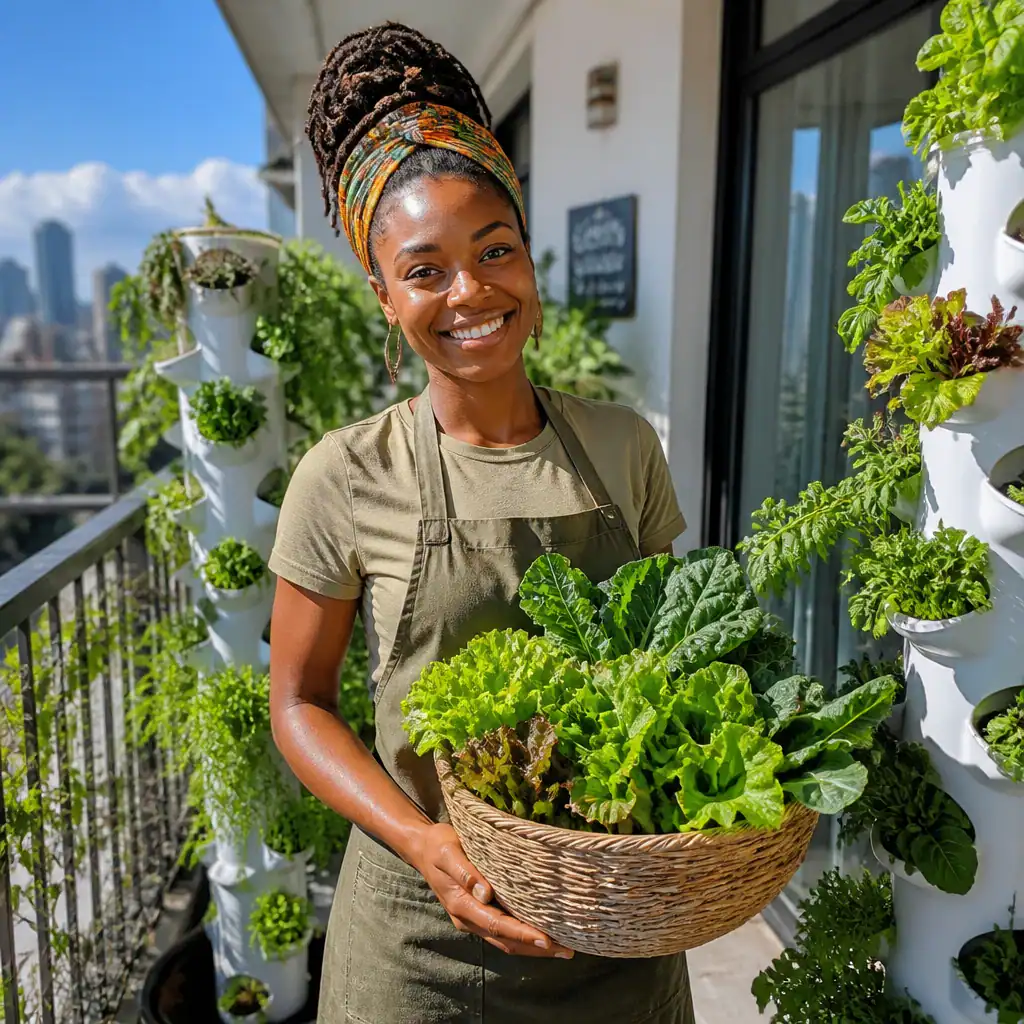
A south-facing balcony can become a vertical wall of herbs and salad greens.
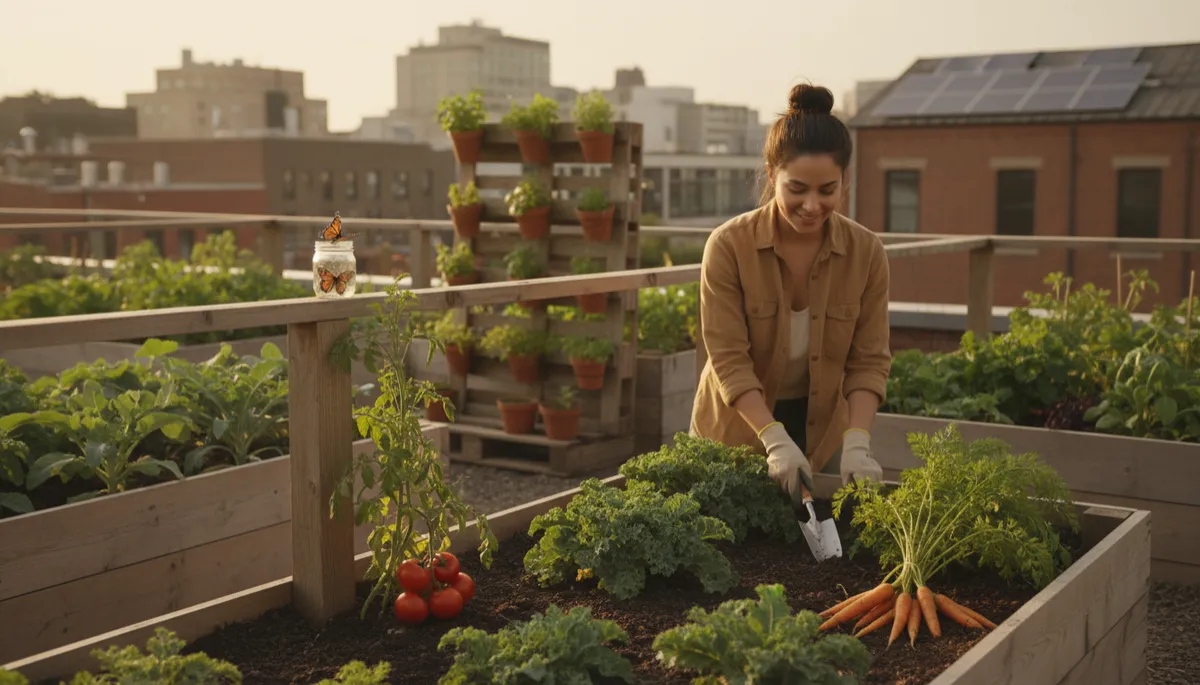
A tiny backyard can hold raised beds, trellised cucumbers, and a compost bin tucked in a corner.
Even a sunny window can host pots of basil, chives, and cherry tomatoes.
To start your own small urban farm, sketch your space on a piece of paper. Mark where the sun hits for at least six hours a day, that’s prime real estate for fruiting plants like tomatoes and peppers. Shadier spots can grow leafy greens, herbs, and even some root crops. In urban farming for beginners, this simple sketch becomes your first “field map,” a quiet promise of what’s possible.

A simple hand-drawn map can turn an ordinary yard into a planned micro-farm.
Step 2: Start with a Short, Manageable Crop List
In her excitement, Maya’s first instinct was to grow everything: tomatoes, peppers, melons, corn, even miniature fruit trees. But the more she learned about urban farming for beginners, the more she understood that success comes from starting small and starting smart. Instead of chasing variety, she focused on three questions: What do I actually eat every week? What grows well in my climate? What will thrive in containers or raised beds?
Her first season, she chose salad greens, cherry tomatoes, basil, and snap peas, crops that offered quick wins, frequent harvests, and forgiving growing habits. The sight of tender lettuce leaves pushing through the soil in just a couple of weeks gave her the confidence she needed to keep going. Your first planting list should feel the same way: approachable, not overwhelming; exciting, not exhausting.
Good beginner crops: lettuce, arugula, kale, radishes, cherry tomatoes, bush beans, herbs like basil and parsley.
Think vertically: peas, cucumbers, and pole beans climb fences and trellises, saving precious floor space on your micro-farm.
💡 Pro Tip: Choose at least one “fast” crop like radishes or baby greens. Harvesting something within 30 days keeps motivation high in those first weeks of city farming.
Step 3: Build Soil, Even When You’re Surrounded by Concrete
The heart of any farm, even a tiny one, is its soil. Maya learned this the hard way when she tried to plant directly into the compacted dirt behind her rental. Her first seedlings turned yellow and stunted, struggling against years of neglect and who-knows-what washed off nearby driveways. That’s when she discovered raised beds and containers, the secret weapons of city farming naturally in places where soil may be contaminated or simply lifeless.
She built two simple wooden beds, each no wider than her arm span so she could reach the center without stepping on the soil. Into them went a rich mix of compost, topsoil, and aged manure from a local garden center. In containers on her patio, she used high-quality potting mix designed to drain well. Within weeks, the difference was obvious. Plants in the raised beds stood taller, leaves a deeper green, roots strong and spreading. Her small urban farm was finally rooted in something alive.
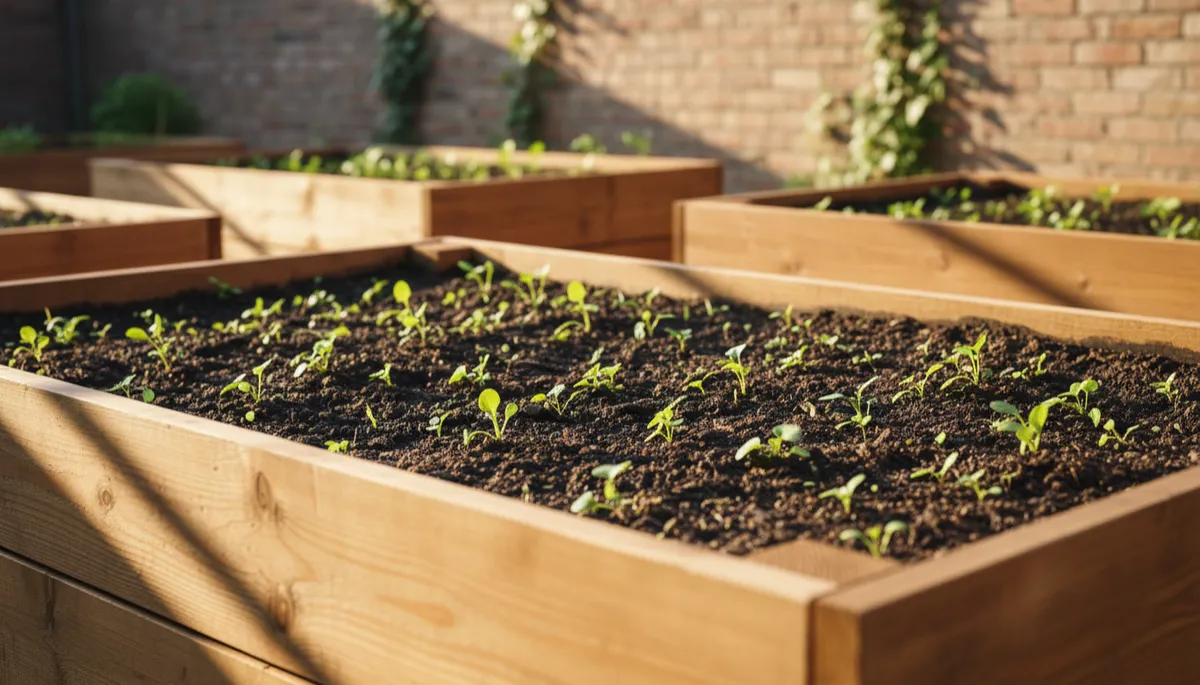
Healthy soil turns a patch of city ground into a productive micro-farm.
Step 4: Water, Sun, and the Rhythm of a City Growing Season
Learning how to start an urban micro-farm in the United States also means learning your local rhythm: the way spring creeps in, how hot summer really gets, and when frost usually returns. In her Midwestern city, Maya discovered that late April was safe for cool-weather crops, but tomatoes and peppers had to wait until after Mother’s Day. She taped a simple planting calendar to her fridge, marking when to seed indoors, when to transplant, and when to expect harvests.
Water became part of her daily routine. In the early mornings, before work, she’d step outside with a watering can, feeling the cool air on her face as she checked the soil with her fingers. On especially hot days, she watered again in the evening, careful to soak the roots rather than mist the leaves. Drip irrigation kits and simple timers can automate this, but for many urban farmers, that quiet time with the plants becomes a grounding ritual in the middle of city noise.
💡 Pro Tip: In containers, plants dry out faster. Stick a finger an inch into the soil, if it’s dry at that depth, it’s time to water. Mulch with straw or shredded leaves to keep moisture in and roots cool.
Step 5: Harvesting More Than Food—Community and Confidence
By midsummer, Maya’s backyard looked nothing like it had in April. The once-bare fence now held climbing peas and cucumbers. Raised beds overflowed with kale and basil. Cherry tomatoes glowed like tiny lanterns in the late afternoon sun. But the biggest change wasn’t the vegetables; it was the way her micro-farm pulled people together.
Neighbors slowed down when they walked past the alley gate. One older neighbor shared stories of the victory gardens his parents kept during wartime. Kids from the building next door learned how to pick cherry tomatoes gently, twisting instead of yanking. On weekends, she traded extra herbs for homemade bread with a friend across town who was also experimenting with city farming on her rooftop. Her small urban farm had become more than a source of food; it was a source of connection, a living story she shared with everyone who stepped through the gate.
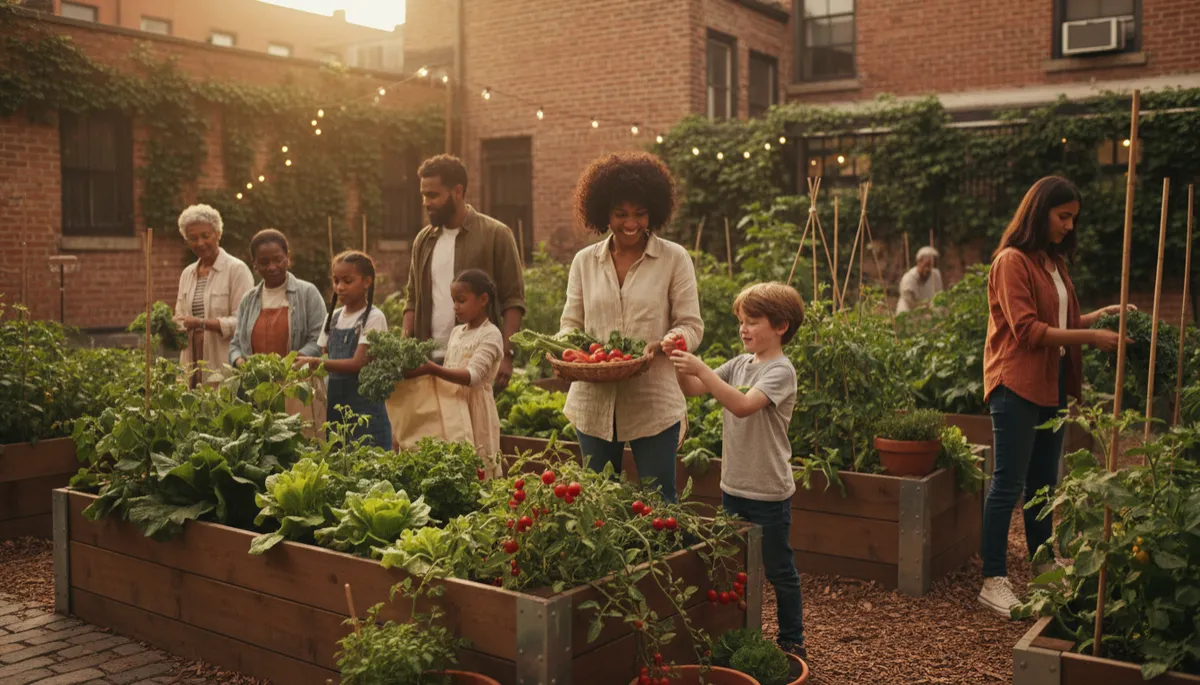
Urban micro-farms often grow community and confidence alongside fresh food.
Step 6: Growing Your Micro-Farm Year After Year
The first season taught Maya the basics of urban farming for beginners, but it was the seasons that followed that turned her backyard into a true micro-farm. Each fall, she took notes on what worked and what didn’t. The lettuce loved partial shade; the cucumbers wanted more support; the peppers needed the warmest corner of the yard. She added a small compost bin, turning kitchen scraps and fallen leaves into dark, crumbly gold for her beds. She experimented with succession planting—sowing new seeds every few weeks to keep a steady supply of greens coming.
As her skills grew, so did her ambitions. She started saving seeds from her favorite tomatoes. She tried growing garlic over the winter, tucking cloves into the soil before the first frost and harvesting plump bulbs the following summer. Her small urban farm became a living classroom, teaching her patience, observation, and the quiet satisfaction of feeding herself from a space that once held nothing but weeds and old lawn chairs.
Your Turn: Writing Your Own Urban Micro-Farm Story
Learning how to start an urban micro-farm in the United States isn’t about having the perfect yard, endless free time, or a background in agriculture. It’s about starting where you are, with what you have, and letting the story unfold one seed at a time. Maybe your farm will be a row of containers along a fire escape, a shared plot in a community garden, or a patch of soil behind an apartment building that everyone else has forgotten. Maybe it will begin with a single tomato plant and grow into something you can’t yet imagine.
What matters is that you begin. Walk your space. Sketch your plan. Choose a small list of crops. Build or fill your containers with rich soil. Water, watch, and learn. In time, you’ll harvest more than food: you’ll harvest confidence, resilience, and a deeper connection to the place you call home. In a world of concrete and glass, your little patch of green will tell a different story, one where city farming naturally weaves nourishment, beauty, and community into everyday life.
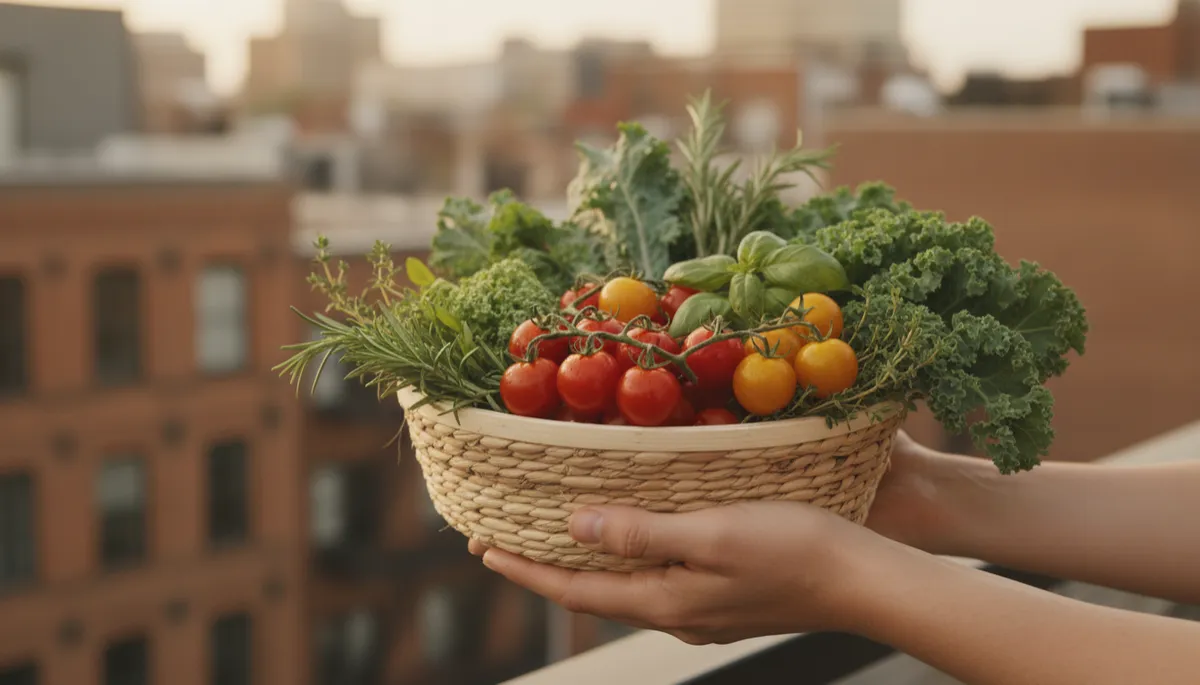
Every harvest from a small urban farm is a reminder that cities can feed us.
Somewhere, right now, another person like Maya is standing at a window, looking down at a patch of concrete and wondering if it could ever be more. The answer, as countless urban growers across the United States have discovered, is yes. Your micro-farm won’t look exactly like hers, and it doesn’t need to. It just needs your curiosity, your willingness to learn, and your decision to plant the first seed. The rest of the story, season by season, will be yours to tell.