


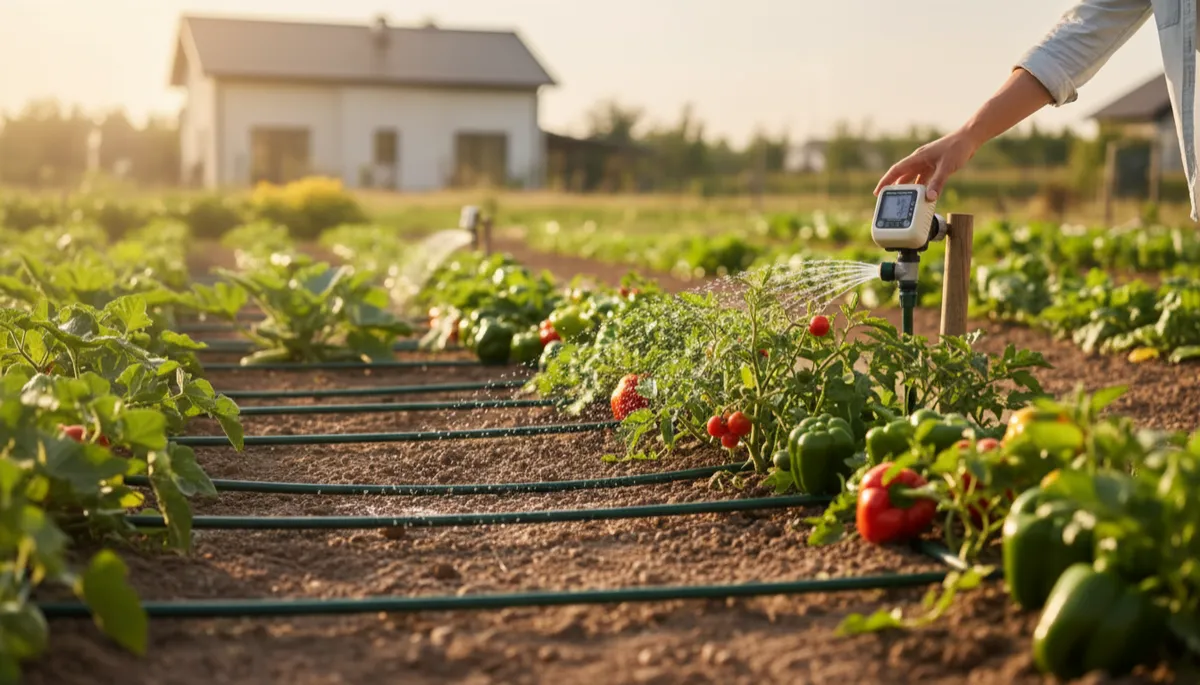
Smart Watering Schedule for Vegetable Gardens
Gardening, Smart Irrigation
Best Smart Watering Schedule for a Vegetable Garden
A thriving vegetable garden doesn’t come from luck alone—it comes from consistent, thoughtful care. And at the heart of that care is water. With a smart watering schedule for a vegetable garden, you can keep your plants happy, conserve water, and free up your time, all without standing outside holding a hose every evening.
Why Smart Watering Matters for Your Veggies
Watering a vegetable garden isn’t just about how much water you use, it’s also about when and how you deliver it. A well-planned, smart watering schedule for a vegetable garden encourages deep roots, reduces disease, and helps you avoid both underwatering and overwatering. When you bring in a bit of technology, like automated vegetable garden watering systems and a drip irrigation timer, it becomes much easier to give your plants exactly what they need at the right time.
Instead of guessing or reacting to wilted leaves, you can follow a reliable schedule tuned to your climate, soil, and plants, then let automation handle the daily routine while you enjoy watching your garden grow.
The Core Principles of a Smart Watering Schedule
Before we talk about specific days and minutes, it helps to understand a few simple principles that guide the best smart watering schedule for a vegetable garden. Think of these as your “rules of thumb” no matter what you’re growing.
Water deeply, not just on the surface. You want moisture to reach 6–8 inches down so roots grow deep and strong, making plants more resilient to heat and dry spells.
Water less often but more thoroughly. Frequent, shallow watering leads to weak, shallow roots. Deeper, less frequent watering creates healthier plants and uses water more efficiently.
Water early in the morning. This minimizes evaporation and gives leaves time to dry, which helps prevent fungal diseases like mildew and blight.
Deliver water directly to the soil. Drip lines and soaker hoses are ideal because they target the root zone and keep foliage relatively dry.
💡 Friendly Tip: As a quick check, your soil should feel like a wrung-out sponge, moist but not soggy, about 2 inches below the surface.
A Sample Smart Watering Schedule for a Vegetable Garden
Every garden is unique, but having a starting point makes things much easier. Here’s a sample smart watering schedule for a vegetable garden in a typical warm, temperate climate with well-draining soil and mulch around plants. You can adjust this based on your weather, soil type, and plant needs.
Early Season (Cooler Spring Weather)
Frequency: 2–3 times per week
Timing: Around 5:00–7:00 a.m.
Duration (drip or soaker): 20–30 minutes per session, aiming for about 1 inch of water per week including rainfall.
Peak Summer (Hot, Dry Conditions)
Frequency: 3–5 times per week, depending on heat waves and wind
Timing: Still early morning; consider splitting into two shorter sessions on extremely hot days.
Duration (drip or soaker): 30–45 minutes per session, targeting 1.5–2 inches of water per week including rain.
Late Season (Cooling Temperatures, Mature Plants)
Frequency: 1–3 times per week, depending on rainfall and plant type
Timing: Early morning as usual
Duration (drip or soaker): 20–30 minutes, gradually reducing as you near harvest for crops like tomatoes to improve flavor.
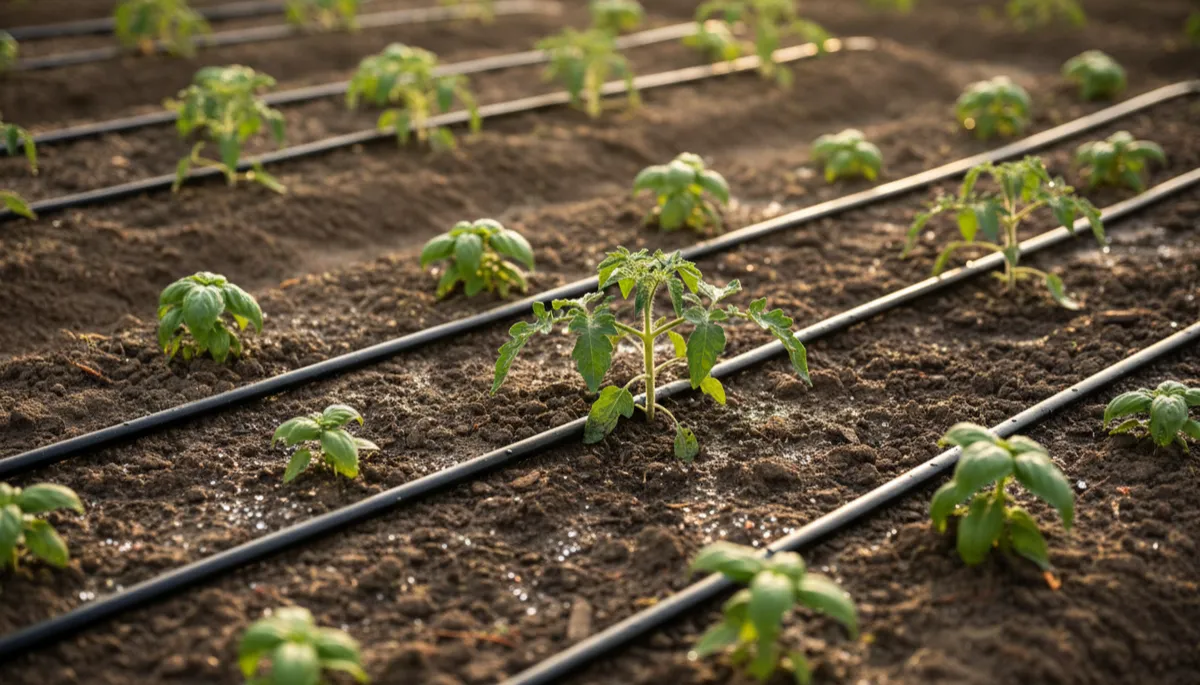
Drip lines deliver slow, deep moisture right where vegetable roots need it most.
Using Automation to Make Watering Effortless
Now let’s bring technology into the picture. Automated vegetable garden watering doesn’t mean giving up control; it means building your smart watering schedule into a system that runs on its own, day after day, even when you’re busy or out of town. The backbone of this setup is usually a drip irrigation timer connected to your garden hose or irrigation line.
What a Drip Irrigation Timer Can Do for You
Set precise start times. Schedule watering to begin at the ideal early-morning window without ever setting an alarm clock.
Control duration. Program each zone to run for a specific number of minutes based on plant type and soil conditions.
Customize days of the week. Choose exactly which days to water, or use interval settings like “every 2 days.”
Pause for rain. Many smart timers integrate with weather data or rain sensors, automatically skipping cycles when nature provides the water for you.
💡 Friendly Tip: When you install a drip irrigation timer, label each zone (for example, “tomatoes,” “greens,” “herbs”) so it’s easy to tweak run times as the season goes on.
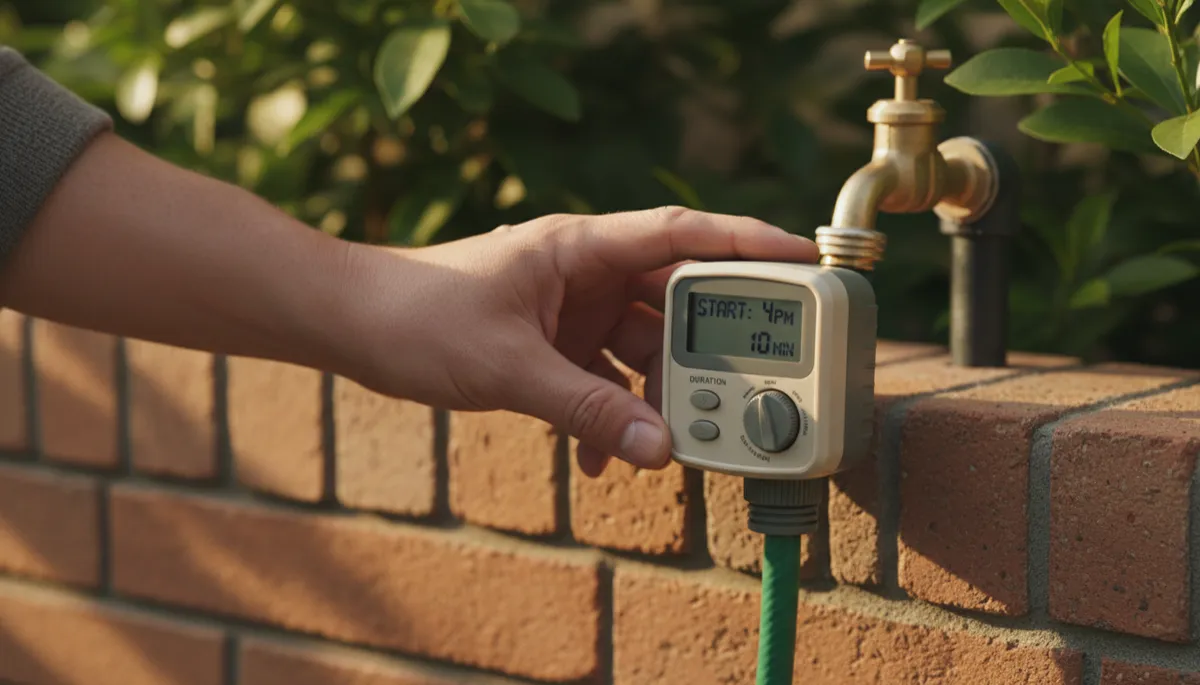
A simple digital timer turns your watering plan into a reliable daily routine.
Adjusting Watering by Vegetable Type
Not all vegetables drink at the same pace. Fine-tuning your automated vegetable garden watering by plant group helps you avoid common problems like cracked tomatoes or bitter lettuce. If your system allows separate zones, group plants with similar needs together on the same line.
Vegetable Group | Watering Preference | Scheduling Tips |
|---|---|---|
Leafy greens (lettuce, spinach, kale) | Consistently moist soil, shallow roots | Short, more frequent sessions; avoid letting soil dry out completely. |
Fruiting plants (tomatoes, peppers, cucumbers) | Deep, even moisture; dislike big swings | Longer, less frequent watering; keep schedule steady during fruiting. |
Root crops (carrots, beets, radishes) | Even moisture for straight, tender roots | Maintain consistent schedule; avoid waterlogging heavy soils. |
Fine-Tuning Your Schedule with Soil and Weather
Even the best smart watering schedule for a vegetable garden needs a little fine-tuning. Two gardens on the same street can behave differently if one has sandy soil and the other has heavy clay. Here’s how to adjust your automated plan like a pro, without making it complicated.
Sandy soil: Drains quickly and doesn’t hold moisture well. Use slightly longer or more frequent watering sessions, but watch for runoff.
Clay soil: Holds water longer and can get waterlogged. Use shorter sessions and allow more time between waterings so roots can breathe.
Mulch: A 2–3 inch layer of straw, shredded leaves, or wood chips around your plants dramatically reduces evaporation and helps keep soil moisture steady, letting you water less often.
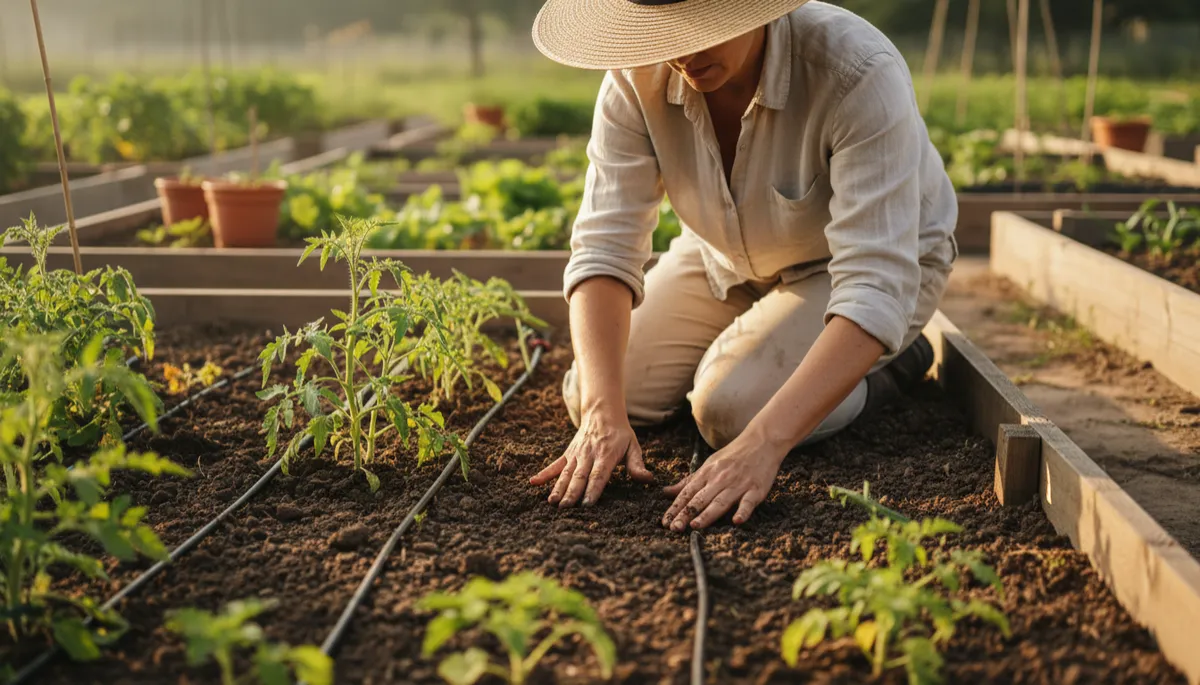
A quick finger test in the soil helps you refine your automated schedule.
💡 Friendly Tip: After a watering cycle, wait an hour and then dig a small hole or use your finger to check how deep the moisture goes. Adjust your drip irrigation timer run time until water consistently reaches 6–8 inches deep.
Putting It All Together for a Stress-Free Growing Season
When you combine a thoughtful plan with a bit of automation, watering stops being a daily chore and becomes a quiet, reliable rhythm in the background of your garden. You design a smart watering schedule for your vegetable garden based on your climate, soil, and crops, then let your automated vegetable garden watering system and drip irrigation timer handle the rest.
Over time, you’ll notice patterns: which beds dry out faster, which plants sulk when they get too much water, and how your soil responds to mulch and weather changes. A small tweak here and there, adding a few minutes to one zone, skipping a day after a big storm, keeps your schedule aligned with what your garden is telling you.
The reward is a vegetable garden that feels almost self-sufficient: lush greens, steady harvests of tomatoes and peppers, and crisp root crops pulled from soil that’s just moist enough. With a friendly, flexible approach and a little help from smart tools, you can enjoy more time savoring your gardenand less time worrying about the hose.