

Smart Sprinkler vs Timer: Water-Saving Showdown
Home & Garden, Smart Irrigation
Smart Sprinkler Controller vs Timer: Which Really Saves More Water?
If you’ve ever watched your sprinklers run during a surprise rain shower and thought, “Well, that’s a waste,” you’re not alone. With water costs rising and droughts becoming more common, many homeowners are asking a simple question: in the battle of smart sprinkler controller vs timer, which one actually saves more water, and money?
Timers vs Smart Controllers: What’s the Difference?
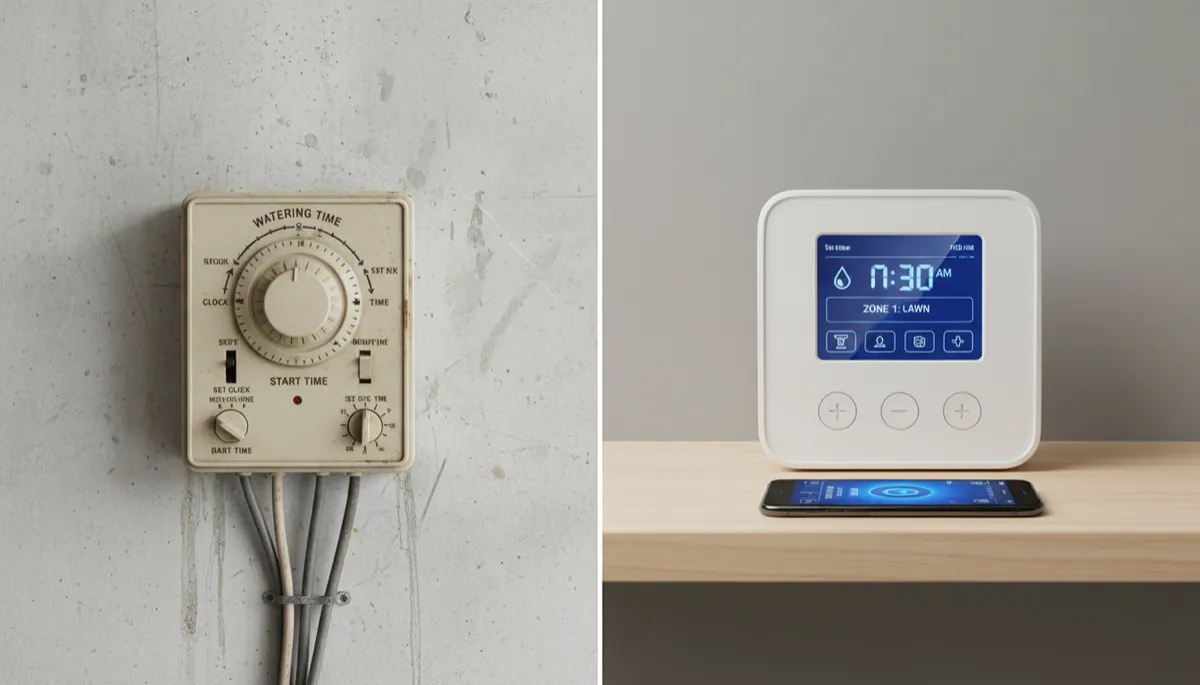
Let’s start with the basics. A traditional sprinkler timer is like an alarm clock for your yard. You set the days and times, and it turns the water on and off, no questions asked. If it’s raining, if there’s a heatwave, if your lawn is still soaked from yesterday, the timer doesn’t care. It just follows the schedule you programmed, even if that schedule no longer makes sense.
A smart sprinkler controller, on the other hand, behaves more like a helpful gardening assistant. It connects to the internet, pulls in local weather data, and often works with soil or rain sensors. Instead of blindly following a fixed schedule, it constantly adjusts your watering based on real-world conditions. That’s why studies have found that smart irrigation controllers can save roughly 20–50% more water than traditional timers by optimizing run times and skipping unneeded watering (EPA WaterSense; Smart Irrigation Controllers: A Review, ScienceDirect).
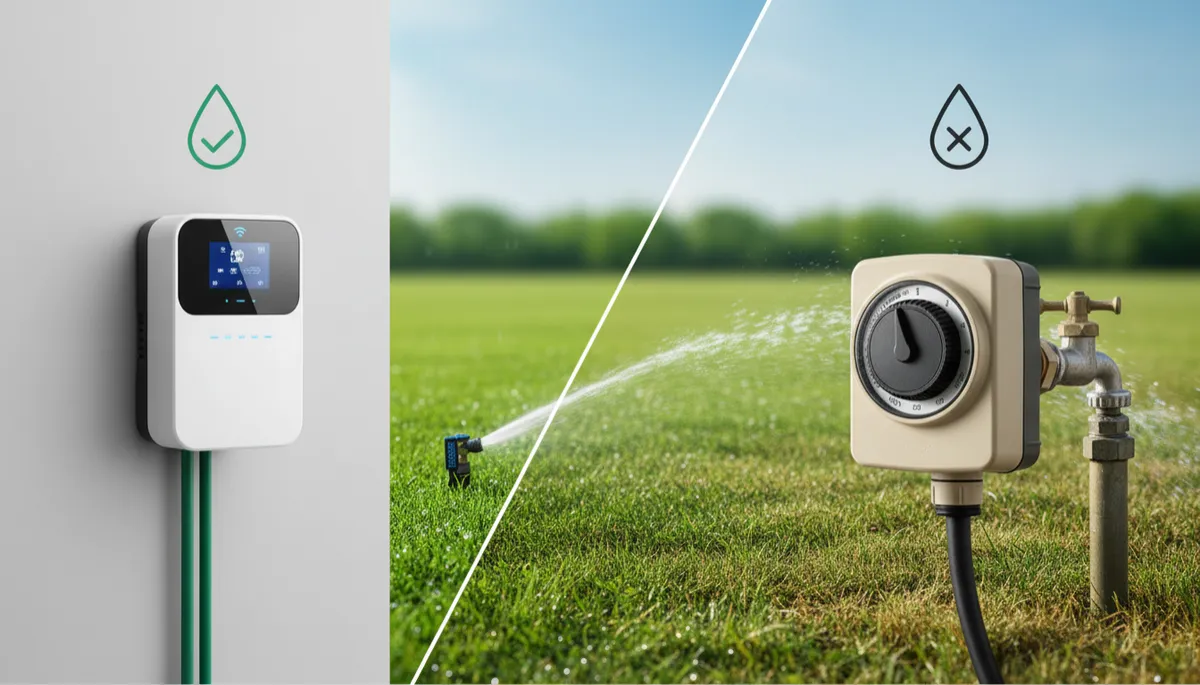
Upgrading from a basic timer to a smart controller can cut outdoor water use dramatically.
How a Wi‑Fi Irrigation Controller Saves Water Day After Day
Most modern smart controllers are actually Wi‑Fi irrigation controllers. That Wi‑Fi connection is what unlocks the “smart” part. Once your controller is online and linked to an app, it can tap into several powerful tools that a simple timer just doesn’t have.
Weather-based adjustments: The controller checks local forecasts and recent rainfall. If rain is coming tonight, it can skip this morning’s watering. If a heatwave hits, it can increase watering slightly to prevent stress, then dial it back when temperatures normalize.
Soil and plant-aware settings: Many systems let you specify soil type (clay, loam, sand), plant type (lawn, shrubs, flowers, vegetables), and sun exposure for each zone. This helps the controller decide how long and how often to water so roots get enough moisture without runoff or puddling.
Remote control and alerts: Heading out of town? You can pause watering from your phone. Notice a soggy patch? Turn off that one zone instantly. Some systems even send alerts if they detect an unusually long run time that might signal a leak or broken head.
Research on smart irrigation consistently shows that these adaptive features add up. By 2026, reviews of smart irrigation systems highlight that weather- and soil-based scheduling can achieve 20–60% water savings while still supporting healthy plants and lawns (Biosystems Engineering, MDPI Water). That’s a big difference for simply swapping the brains of your system, not the pipes in your yard.
💡 Friendly Tip: If your neighborhood offers rebates for smart irrigation (many utilities do), a Wi‑Fi irrigation controller can pay for itself even faster through lower water bills and incentives.
What Is a Smart Watering Schedule, Exactly?
You’ll see the term smart watering schedule a lot when comparing controllers. Instead of a fixed “Monday, Wednesday, Friday at 5 a.m.” plan, a smart schedule is dynamic. It changes based on:
Season: Less water in spring and fall, more during peak summer heat, often adjusted automatically month by month.
Recent rainfall: If your yard just soaked up a good storm, the controller can delay the next cycle until the soil actually needs more moisture.
Evaporation rates: Hot, dry, windy days pull moisture from the soil faster than cool, humid days. Smart controllers use local climate data to adjust for this automatically.
Many leading brands, like Rachio, Orbit B‑Hyve, Moen, and Yardian, offer multiple levels of smart scheduling. You can choose a more “hands-on” mode where you set the basics and let the system fine-tune, or a more “hands-off” mode where the controller builds a fully automatic smart watering schedule from your inputs. Wired’s 2026 roundup of smart sprinklers notes that these advanced schedules are a major reason homeowners see noticeable water savings without sacrificing curb appeal.
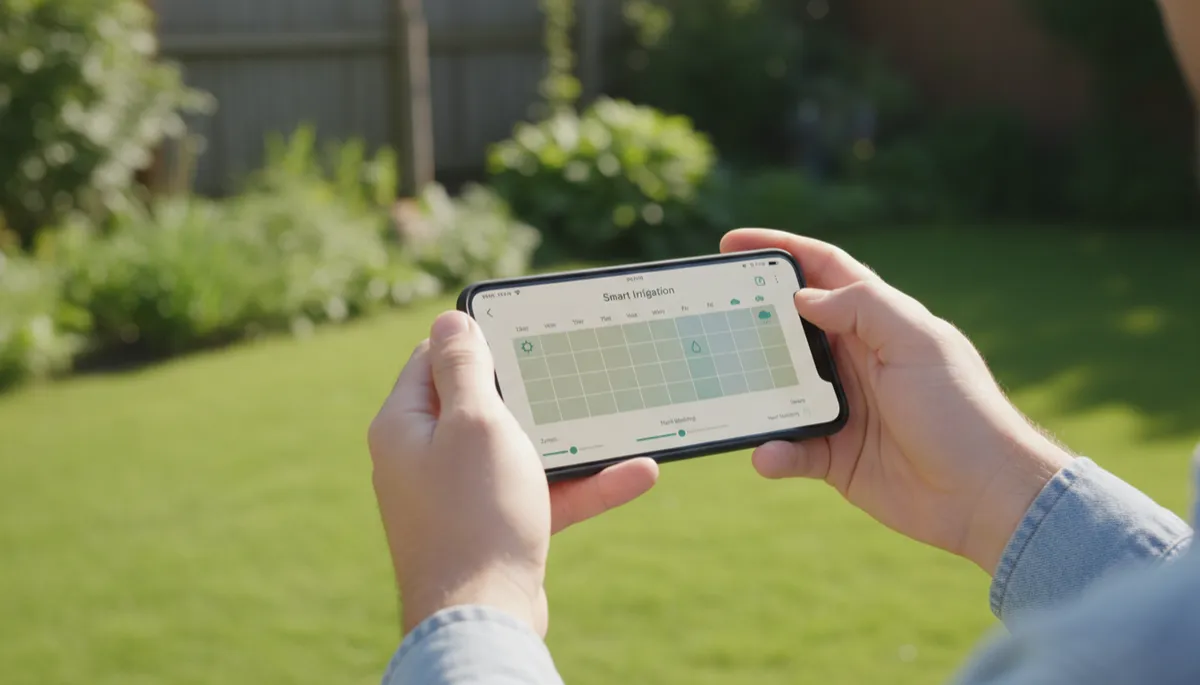
Smart watering schedules respond to real weather instead of following a rigid weekly routine.
Real-World Water Savings: What Can You Expect?
Numbers always help. The EPA’s WaterSense program and multiple academic reviews report that smart irrigation controllers typically reduce outdoor water use by 20–50% compared with traditional, unadjusted timers. In some climates and with well-tuned settings, savings can be even higher, especially where overwatering was the norm before upgrading.
Municipal pilot programs back this up. For example, a 2026 pilot in Des Moines distributed smart controllers to homeowners and compared them to fixed-schedule systems. Demand for the smart units quickly outpaced supply, and early data showed clear reductions in water use without homeowners feeling like their yards were suffering. When enough homes participate, these savings add up to serious relief for local water systems during peak summer demand.
📌 Key Takeaway: If your sprinklers run on a “set it and forget it” timer, you’re probably watering more than your yard needs, often by thousands of gallons per season.
When a Simple Timer Might Still Be Enough
To be fair, a basic timer isn’t always the villain. If you have a tiny yard, a few drip lines for pots, or you’re renting and can’t change the system, a timer can still be workable, especially if you’re diligent about adjusting it seasonally and turning it off when rain is in the forecast. For very small setups, the cost of a full-featured Wi‑Fi irrigation controller might not pencil out right away.
But this is where the smart sprinkler controller vs timer comparison really comes into focus: a timer relies on you to remember to tweak it. Life gets busy, vacations happen, and heatwaves show up without an invitation. A smart controller quietly handles those changes in the background, so your yard gets the right amount of water even when you’re not thinking about it.
Features to Look For in a Smart Sprinkler Controller
If you’re leaning toward a smart upgrade, here are some friendly guidelines to help you choose the right model for your yard and lifestyle:
Easy-to-use app: Look for clean, simple interfaces that make it easy to see your smart watering schedule, pause zones, and check upcoming runs at a glance.
Weather and sensor integration: Controllers that use hyperlocal weather data and can connect to rain or soil sensors will generally save more water than those that rely only on basic forecasts.
Zone customization: Make sure you can set plant type, soil type, and sun exposure for each zone. Your shady side yard does not need the same schedule as your sunny front lawn.
Smart home compatibility: Many 2026 controllers work with Google Home, Alexa, or Apple HomeKit. Voice control is handy when you’re standing in the yard and want to test a zone on the spot.
Water usage reports: Some apps show monthly usage, estimated savings, and even comparisons to previous seasons. This makes your conservation progress visible and motivating.
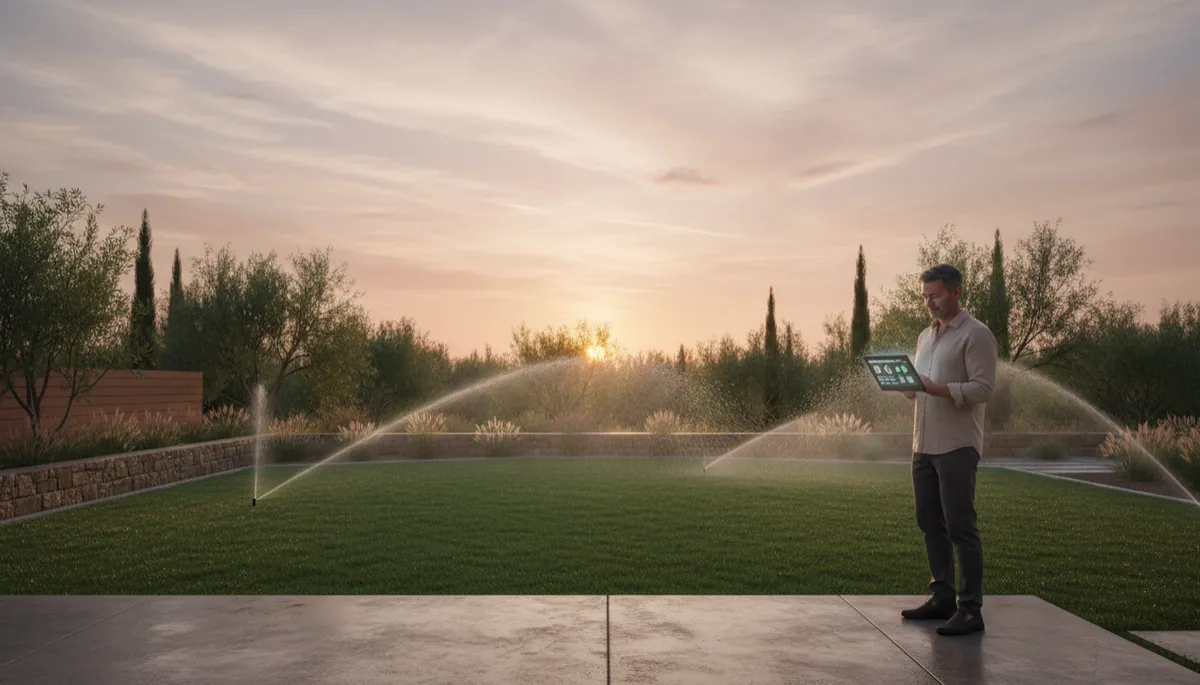
Real-time control and feedback help you fine-tune watering without guessing from the hose bib.
Smart Sprinkler Controller vs Timer: The Bottom Line
When you put all the pieces together, the answer is pretty clear. In the matchup of smart sprinkler controller vs timer, the smart controller is the hands-down winner for water savings, convenience, and long-term lawn health. By using real-time weather data, soil and plant information, and flexible smart watering schedules, today’s Wi‑Fi irrigation controllers can cut outdoor water use by 20–50% or more while keeping your yard green and thriving.
If you’re ready to stop watering the sidewalk, skip those awkward rainy-day sprinkler moments, and feel a little better about your environmental footprint, upgrading your controller is one of the easiest home improvements you can make. It’s a small change in your garage or side yard that can make a big difference every time your sprinklers turn on.
Smarter irrigation keeps your lawn healthy while using less of our most precious resource.
So next time you’re staring at that old plastic timer with its tiny dials and cryptic buttons, remember: your yard, and your wallet, deserve something smarter. A Wi‑Fi irrigation controller doesn’t just turn the water on and off; it helps you water with intention, not habit.