

How Healthy Soil Boosts Your Home Garden
Gardening, Healthy Soil, Home Garden
How Healthy Soil Actually Works in a Home Garden
If you want thriving vegetables, lush flowers, and fewer garden problems, the real secret isn’t a fancy fertilizer, it’s healthy soil. When you understand how the soil ecosystem works under your feet, caring for your home garden suddenly becomes easier, more rewarding, and a lot more fun.
Healthy Soil Is More Than Dirt
Let’s start with a simple shift in thinking: soil is not the same as dirt. Dirt is what you sweep off the floor. Healthy soil is a living, breathing community that supports every plant in your home garden. When people talk about garden soil health, they’re really talking about the balance between minerals, organic matter, water, air, and an entire hidden world of organisms.
A truly healthy soil has three main jobs:
Hold and deliver nutrients to your plants when they need them.
Manage water—so roots have enough moisture but don’t drown.
Provide a stable, airy home for roots and the organisms that support them.
When any of these pieces are out of balance, garden soil health suffers. Plants may still survive, but they’ll be more prone to pests, diseases, and disappointing harvests.
The Soil Ecosystem: A Busy Underground City
Think of the soil ecosystem as a bustling underground city. Instead of streets and buildings, you have pores and soil particles. Instead of people, you have an incredible range of life: bacteria, fungi, earthworms, insects, nematodes, and microscopic creatures with names most of us will never learn. Together, they create the foundation of soil biology.
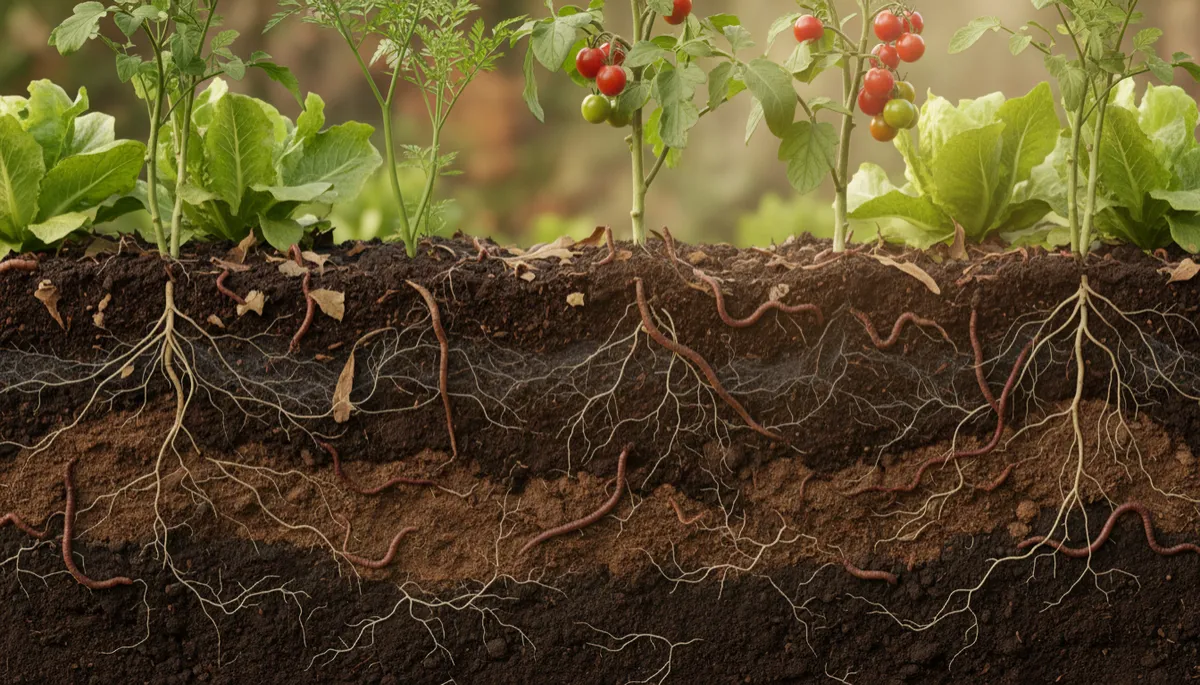
Cross-section of garden bed showing layers of rich soil, plant roots, earthworms, and fine...
A living soil ecosystem quietly recycles nutrients and supports strong, resilient roots.
Here’s how some of the key players in soil biology help your home garden:
Bacteria break down organic matter and help release nutrients in forms plants can use. Some even fix nitrogen from the air, turning it into plant food.
Fungi, especially mycorrhizal fungi, form partnerships with roots. They act like an extended root system, helping plants access water and nutrients from a larger area.
Earthworms tunnel through soil, improving drainage and aeration while leaving behind nutrient-rich castings, basically natural fertilizer pellets.
Insects and other tiny critters shred leaves and plant debris, making it easier for microbes to finish the job of decomposition.
💡 Friendly Tip: If you see earthworms when you dig, it’s a great sign your soil ecosystem is alive and working for you.
Structure: Why Soil “Crumbles” Matters
The way soil holds together—its structure—is a huge part of garden soil health. Scoop up a handful of healthy soil and it should feel crumbly, almost like chocolate cake. Those little crumbs are called aggregates, and they’re formed when organic matter and soil particles are glued together by fungal threads, root exudates, and sticky substances made by microbes.
Good structure gives your soil:
Air pockets so roots and microbes can breathe.
Channels for water to soak in instead of running off.
Stability so roots can anchor and plants can stand firm in wind and rain.
When soil is compacted or constantly tilled, those aggregates break down. The result is a hard, crusted surface that sheds water and starves roots of oxygen, exactly the opposite of what you want in a home garden.
Organic Matter: Fuel for Soil Biology
If the soil ecosystem is a city, then organic matter is its food supply. Leaves, grass clippings, compost, and old plant roots all feed the organisms that drive soil biology. As this organic material breaks down, it:
Releases nutrients slowly, so plants get a steady diet instead of a quick sugar rush.
Helps soil hold onto water like a sponge, which is especially helpful in hot, dry weather.
Improves soil structure, making it easier to dig and kinder to roots.
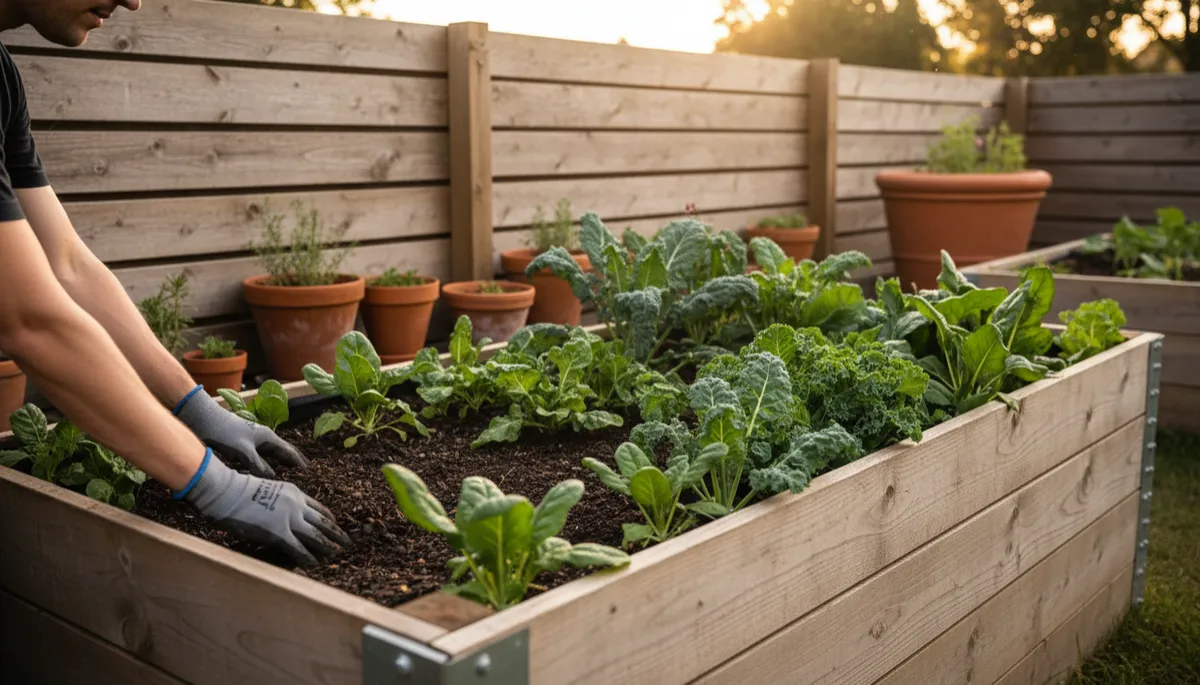
Scene of a home gardener spreading dark compost over a raised bed with leafy greens, evening...
Regular compost additions steadily boost garden soil health and moisture holding capacity.
For most home gardens, adding a couple of inches of finished compost on top of the beds once or twice a year is one of the simplest ways to improve healthy soil. You don’t have to dig it in deeply, worms and roots will do a lot of the mixing for you over time.
💡 Friendly Tip: Save your fall leaves. Shredded leaves make an excellent, free source of organic matter for improving soil structure and feeding soil life.
Water, Roots, and the Hidden Exchange
Water doesn’t just keep plants from wilting; it’s the highway that carries nutrients from soil particles into roots. In healthy soil, water moves gently through the pore spaces, wetting the root zone without washing nutrients away. Poorly structured or compacted soil either holds too much water (leading to soggy roots) or lets it rush past too quickly (leaving plants thirsty).
Roots aren’t just passive drinkers, either. They release sugars and other compounds, called root exudates, into the soil. These exudates feed microbes, which in return help unlock nutrients and protect plants against some diseases. It’s a constant back-and-forth exchange that keeps the soil ecosystem humming along and supports long-term garden soil health.
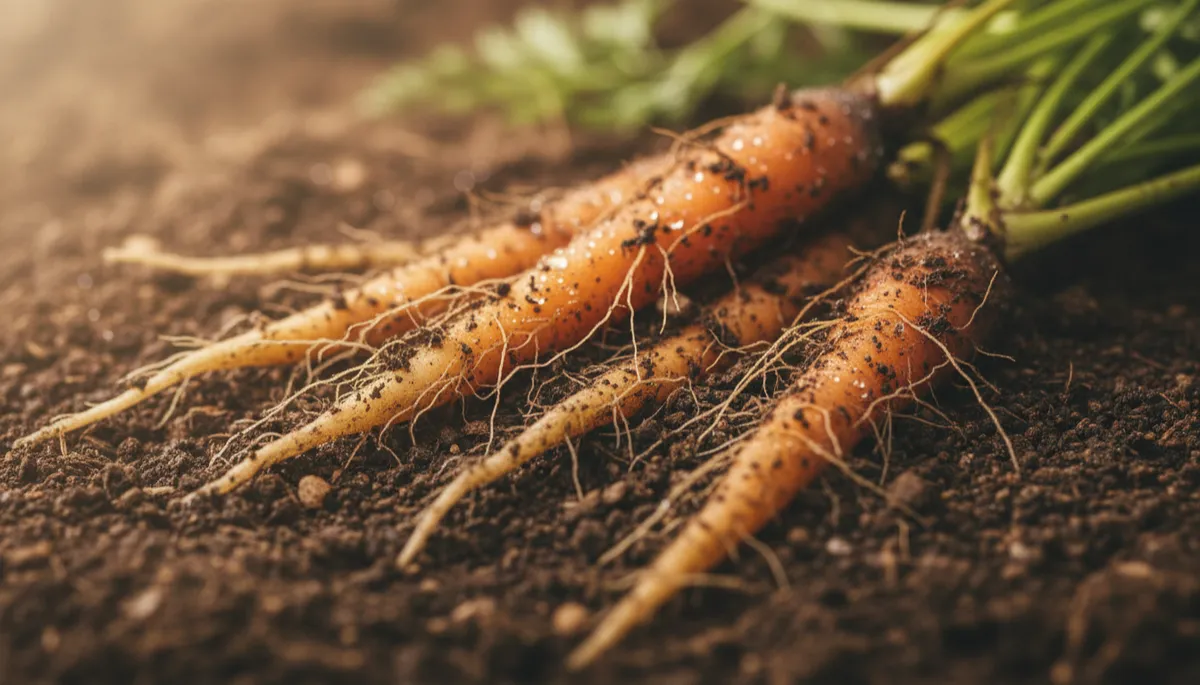
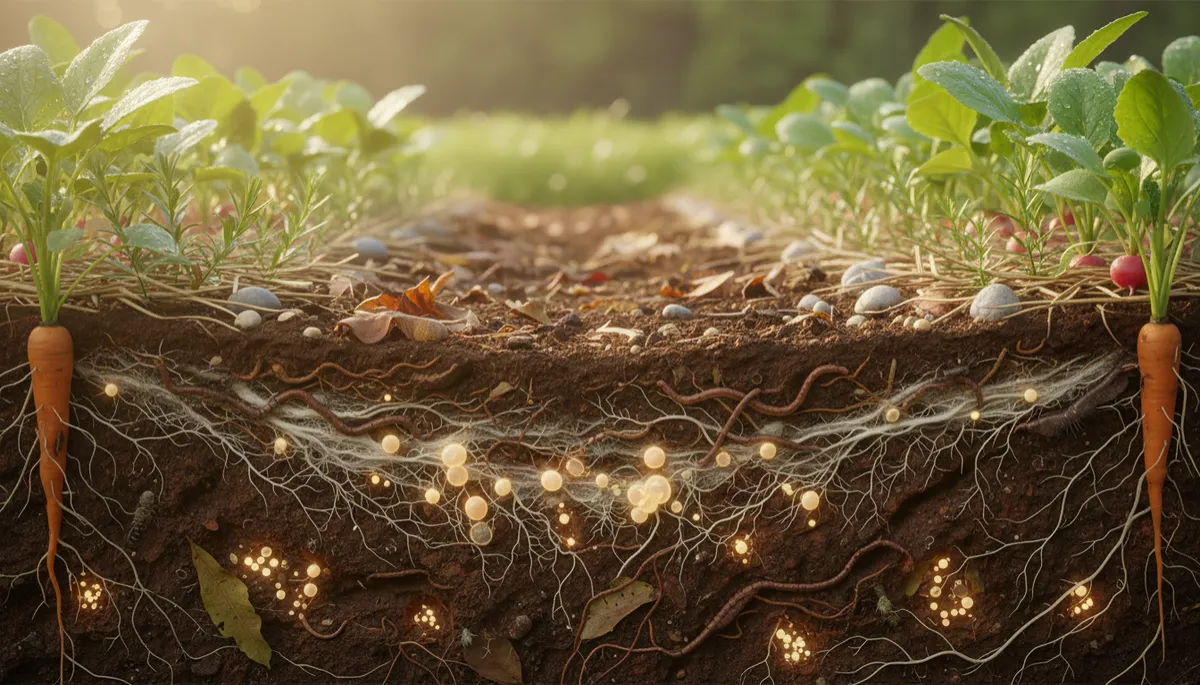
Close-up of vegetable roots in moist, crumbly soil with tiny water droplets and fine root hairs...
Healthy roots and moist, crumbly soil work together to move nutrients efficiently into plants.
Simple Habits to Support Healthy Soil in Your Home Garden
The good news is you don’t need a science degree to care for soil biology. A few friendly habits go a long way toward building and maintaining healthy soil in a home garden.
Disturb the soil less. Constant deep digging or tilling breaks up soil structure and slices through fungal networks and earthworm tunnels. Try gently loosening the top few inches instead of turning everything over each season.
Keep soil covered. Bare soil bakes in the sun, erodes in heavy rain, and loses organic matter quickly. Use mulch—like straw, shredded leaves, or wood chips—or grow cover crops in empty beds to protect the soil ecosystem year-round.
Feed the soil, not just the plants. Instead of relying on quick-acting chemical fertilizers, focus on adding compost and other organic materials that nourish soil biology and improve long-term garden soil health.
Water deeply, but not constantly. Deep, less frequent watering encourages roots to grow down into the soil, where they can access more nutrients and moisture. Shallow, frequent watering keeps roots near the surface and stresses the whole soil ecosystem.
Avoid harsh chemicals when possible. Some pesticides and herbicides can harm the very organisms that make soil biology work. Choosing gentler options and using them sparingly helps protect your underground allies.
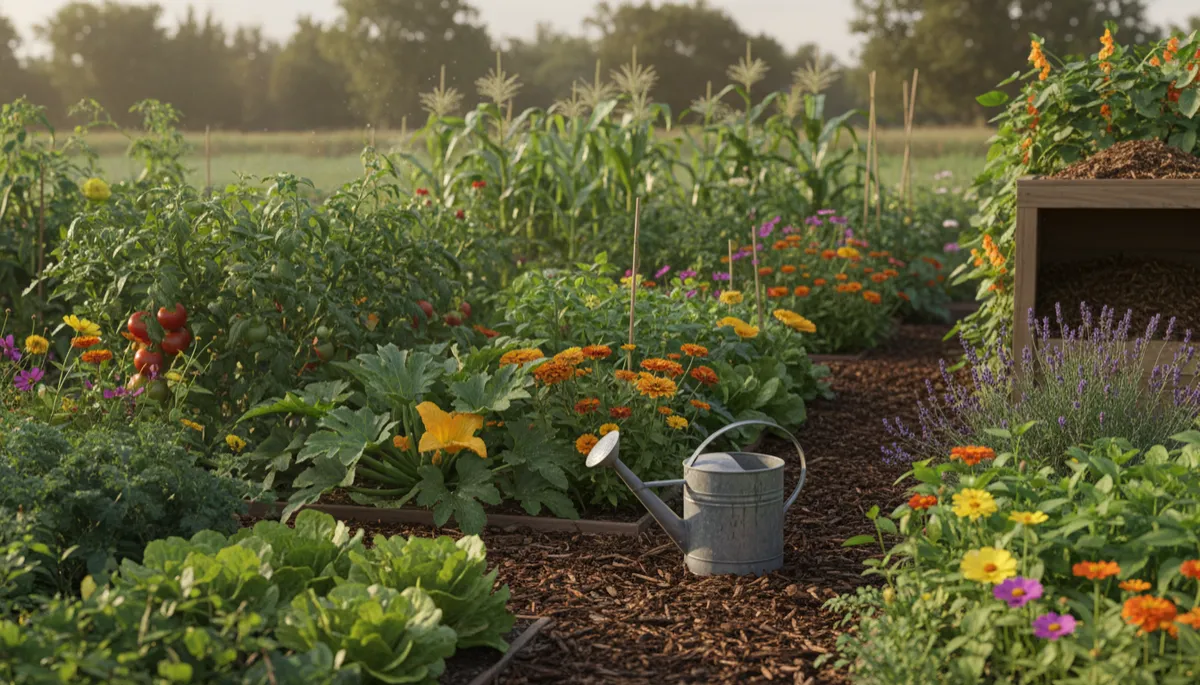
Wide shot of a small backyard garden with mulched beds, diverse vegetables and flowers, a...
Mulch, compost, and gentle watering routines create a thriving, low-stress garden ecosystem.
Reading the Signs of Your Soil’s Health
You don’t need expensive tests to get a basic sense of how your soil ecosystem is doing. Your senses are powerful tools:
Look: Does the soil look dark and crumbly, or pale and dusty? Are there bits of organic matter and visible life, like worms and small insects?
Feel: Squeeze a handful. Healthy soil should hold together lightly when moist, then fall apart when you poke it. If it forms a hard lump or feels like powder, your garden soil health likely needs attention.
Smell: Healthy soil often has a pleasant, earthy scent. Sour or chemical smells can signal problems, like poor drainage or overuse of certain products.
💡 Friendly Tip: If your plants are yellowing, stunted, or constantly battling pests, it’s worth looking below the surface, your soil may be asking for more organic matter and gentler care.
Bringing It All Together: Partnering With Your Soil
When you see your garden soil as a living system instead of just a place to anchor roots, everything changes. You start to garden with the soil ecosystem instead of fighting against it. By building organic matter, protecting soil structure, and supporting soil biology, you create conditions where plants can practically take care of themselves.
Over time, you’ll notice your home garden becomes easier to maintain. Plants will look sturdier, bounce back faster from stress, and produce more generously. You may even find that pest problems fade as your soil and plants grow stronger together. That’s the quiet power of truly healthy soil at work.
So next time you head outside with your watering can or seed packets, take a moment to appreciate the world beneath your feet. Nurture your soil, and it will happily return the favor, season after season, harvest after harvest, in the comforting, warm glow of your own backyard garden.