

Top Home Lab Equipment for Citizen Scientists on a Budget
Ever find yourself itching to test the pH of your garden soil, peer at pond water critters through a lens, or log the temperature swings in your homemade greenhouse, only to stop short because “real” lab gear costs a fortune?
I’ve been exactly there. The truth is, building a functional home lab with dependable home lab equipment doesn’t require a six-figure grant or a spare walk-in closet.
Whether you’re launching your first water-quality study or trying to extract DNA from strawberries on your kitchen table, a few thoughtfully chosen pieces of kit can turn “maybe someday” into “let’s do this.”
In this post, I’ll walk you through the budget citizen science gear and cheap lab tools that actually work, where to find them, and how to avoid the stuff that just collects dust.
Why Reliable Home Lab Equipment Doesn’t Have to Cost a Fortune
There’s a stubborn myth that science only happens in gleaming white rooms with million-dollar machines. But citizen science, the practice of everyday people gathering data and asking questions, thrives on accessibility.
What matters isn’t the price tag; it’s repeatability and a curious mind.
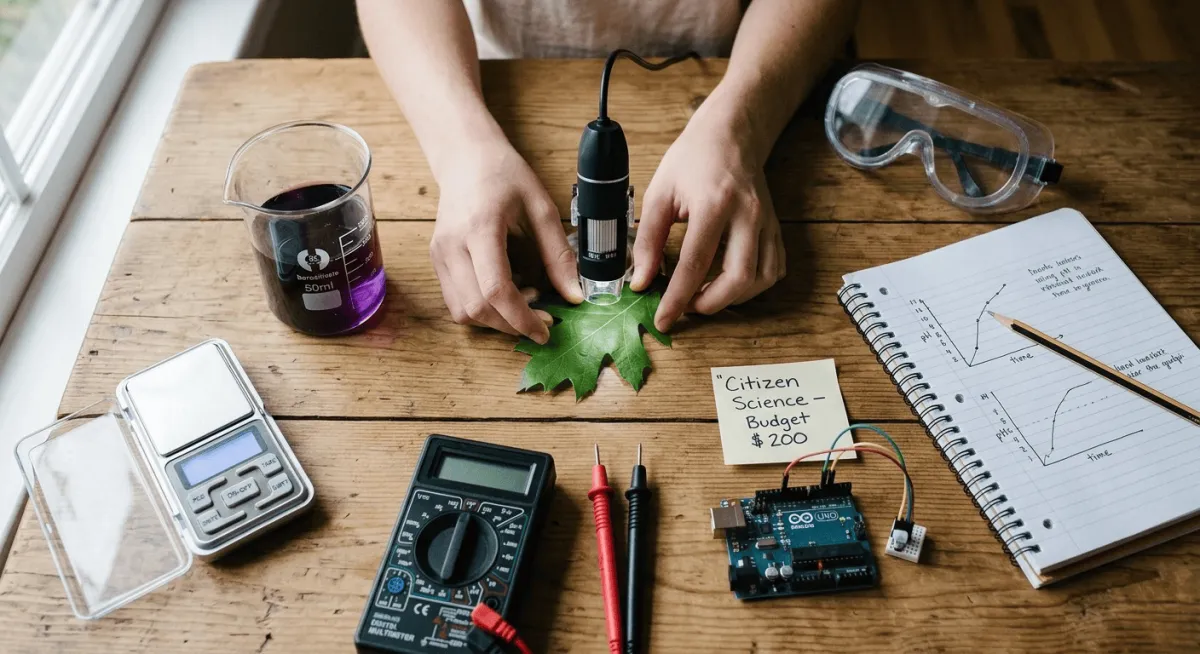
A $12 digital scale that measures to 0.01 grams can unlock dozens of experiments, from measuring evaporation rates to formulating your own plant fertilizer.
A $20 USB microscope can reveal the hidden architecture of a bee’s wing just as clearly as a university model that costs ten times as much.
The secret is focusing on core functionality instead of brand names. Most budget-friendly home lab equipment relies on the same sensors, optical elements, and microcontrollers used in pricier versions, just without the polished enclosure.
When you buy smart, you’re paying for the measurement, not the marketing. And because we’re talking about cheap lab tools, you can redirect the money you save toward consumables like reagents, specimen jars, or data-storage subscriptions.
Plus, repairing or hacking an affordable gadget teaches you far more than pressing “start” on a locked-down professional instrument. That tinkering mindset is the beating heart of homegrown science.
Internal link: For a deeper dive into making the most of small budgets, check out our post on [Citizen Science Projects for Beginners].
Sourcing Budget Citizen Science Gear Without Sacrificing Quality
Before you start clicking “add to cart,” let’s talk sourcing strategy. The term budget citizen science gear doesn’t mean settling for toys that break after two uses. It means being a savvy shopper who knows where the deals hide.
Educational marketplaces: Sites that cater to homeschool families and hobbyists often sell the same borosilicate glass beakers and test tubes found in professional catalogs at a fraction of the cost. Look for retailers with transparent reviews.
Open-source hardware communities: Platforms like Arduino and Raspberry Pi have spawned a whole ecosystem of low-cost sensors, breakout boards, and data loggers. Because the designs are open, multiple manufacturers compete to offer the cheapest breakout board for a temperature/humidity sensor, and you win.
Refurbished and second-hand: A used laboratory hot plate or a pre-loved magnetic stirrer can serve you for years. University surplus auctions, eBay, and local maker spaces are goldmines. Just make sure any pre-owned electrical device is safe and has intact grounding.
Public Lab and DIY blueprints: Sometimes the best cheap lab tools are the ones you build yourself. The Public Lab community, for instance, offers free instructions for a foldable paper spectrometer that can analyze light sources, and it costs less than $10 in materials.
When you buy, double-check that the tool gives you raw data, not just a pretty app that hides the numbers. Being able to export a .csv file from your pH meter or temperature logger means you can graph, analyze, and genuinely learn from your data.
Essential Home Lab Equipment Under $50
Let’s get specific. The following pieces of home lab equipment form a versatile core that can support biology, chemistry, and environmental monitoring without draining your wallet. I’ve used or tested every category here, and they all punch far above their weight class.
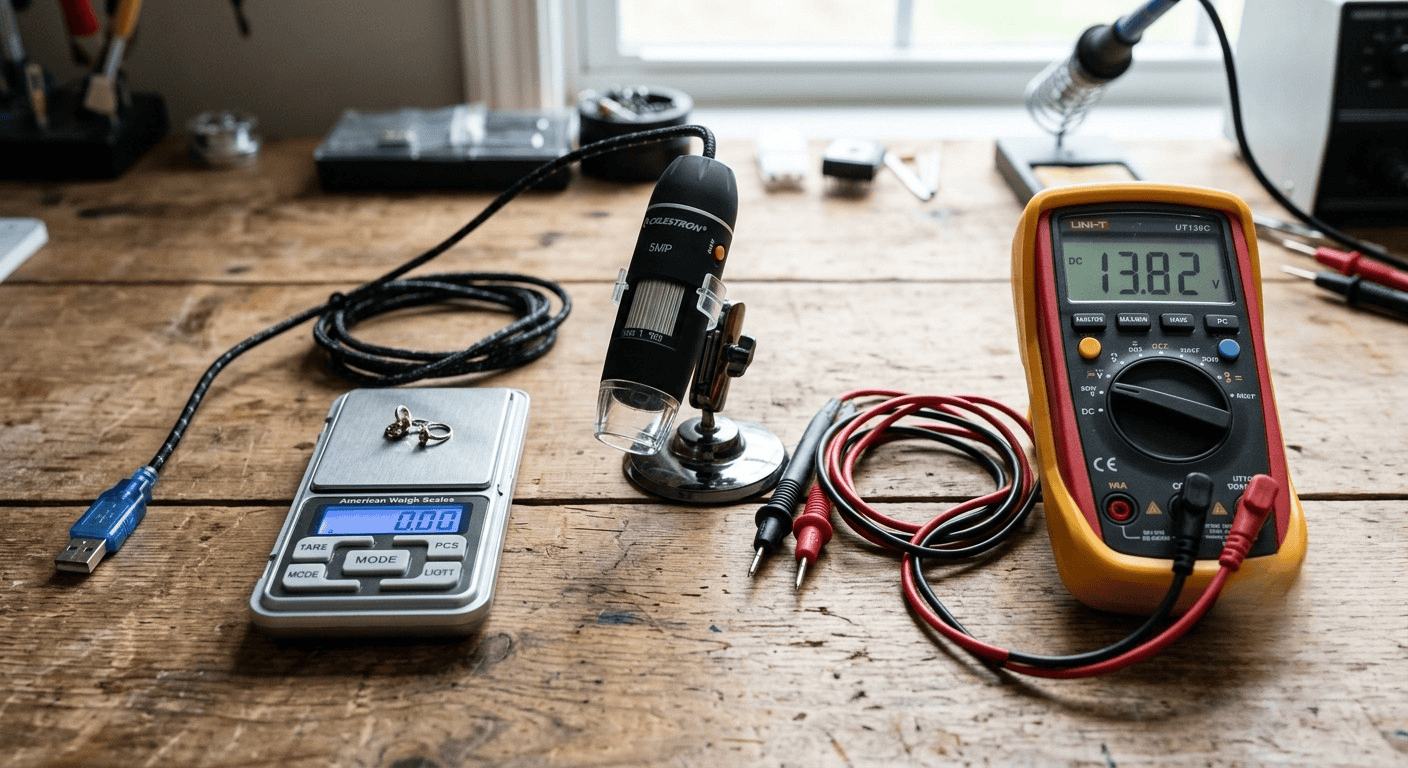
Digital pocket scale (0.01 g readability)
You’ll be surprised how often precise mass matters, measuring out nutrients for a hydroponics experiment, tracking how quickly a desiccant absorbs moisture, or preparing consistent samples for a density column. A 200 g capacity scale with 0.01 g resolution costs about $15–25 and fits in your palm. Look for one with a calibration weight included. Internal link: We cover calibration techniques in [Accurate Weighing for Home Labs].
USB digital microscope (20× to 250×)
This is the gateway drug to the microcosmos. A decent plug-and-play USB microscope like the Plugable USB 2.0 model (around $30 to 40) lets you capture stills and video. You can count stomata on a leaf, inspect the crystalline structure of table salt, or identify tiny aquatic invertebrates. The built-in LED ring light is a lifesaver for low-light surfaces. External link: Check the latest user reviews and specs at [Plugable’s product page](https://plugable.com/products/usb2-micro-250x).
Handheld digital multimeter
Voltage, resistance, continuity, a basic multimeter is your eyes into the electrical world. Even a $10 unit from a reputable brand like AstroAI or UNI-T will handle 95% of home-science tasks: testing battery health, checking if your homemade solar panel is generating power, or verifying a sensor’s output. Auto-ranging is nice but not essential; manual range forces you to understand what you’re measuring.
General-purpose glassware starter set
You don’t need a full cabinet. Three beakers (100 mL, 250 mL, 600 mL), a couple of graduated cylinders, and a set of borosilicate test tubes with a rack will cover most experiments. I found a ten-piece set for under $30. Borosilicate glass can handle gentle heating over an alcohol burner or hot plate and resists thermal shock.
External link: Browse basic glassware kits at [Home Science Tools](https://www.homesciencetools.com/).
pH test strips and a liquid pH indicator
While a digital pH meter is nice, high-accuracy models are pricey. For garden soil, aquarium water, or kitchen chemistry, a pack of wide-range pH strips (0 to14) costs $5 to 10 and gives instant, calibration-free readings. Keep a small bottle of red cabbage juice as a natural backup indicator, it’s a fun bio-based experiment in itself.
Smart Home Lab Equipment for Data-Driven Experiments
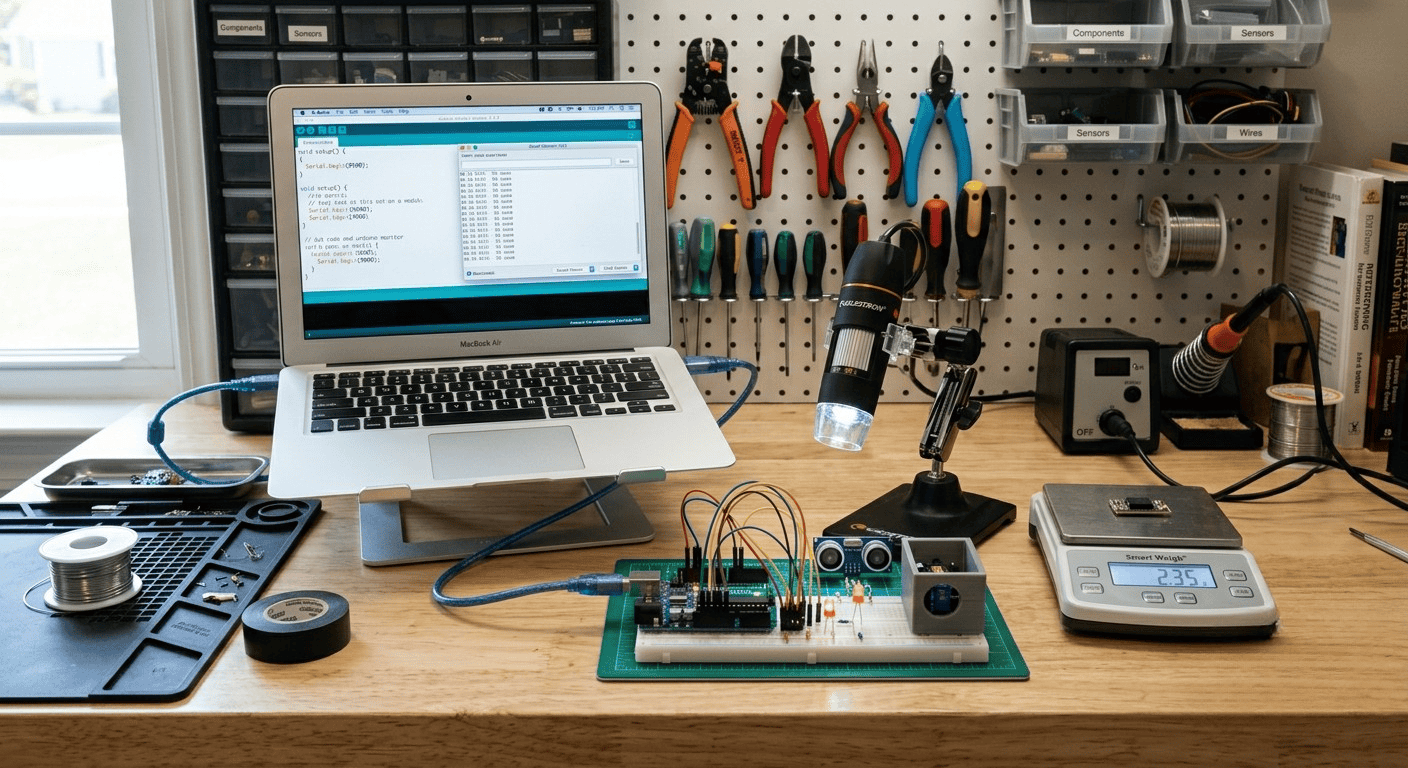
Once you’ve caught the data bug, you’ll want home lab equipment that logs readings over time. This is where microcontrollers and single-board computers shine, bringing serious budget citizen science gear to your workbench.
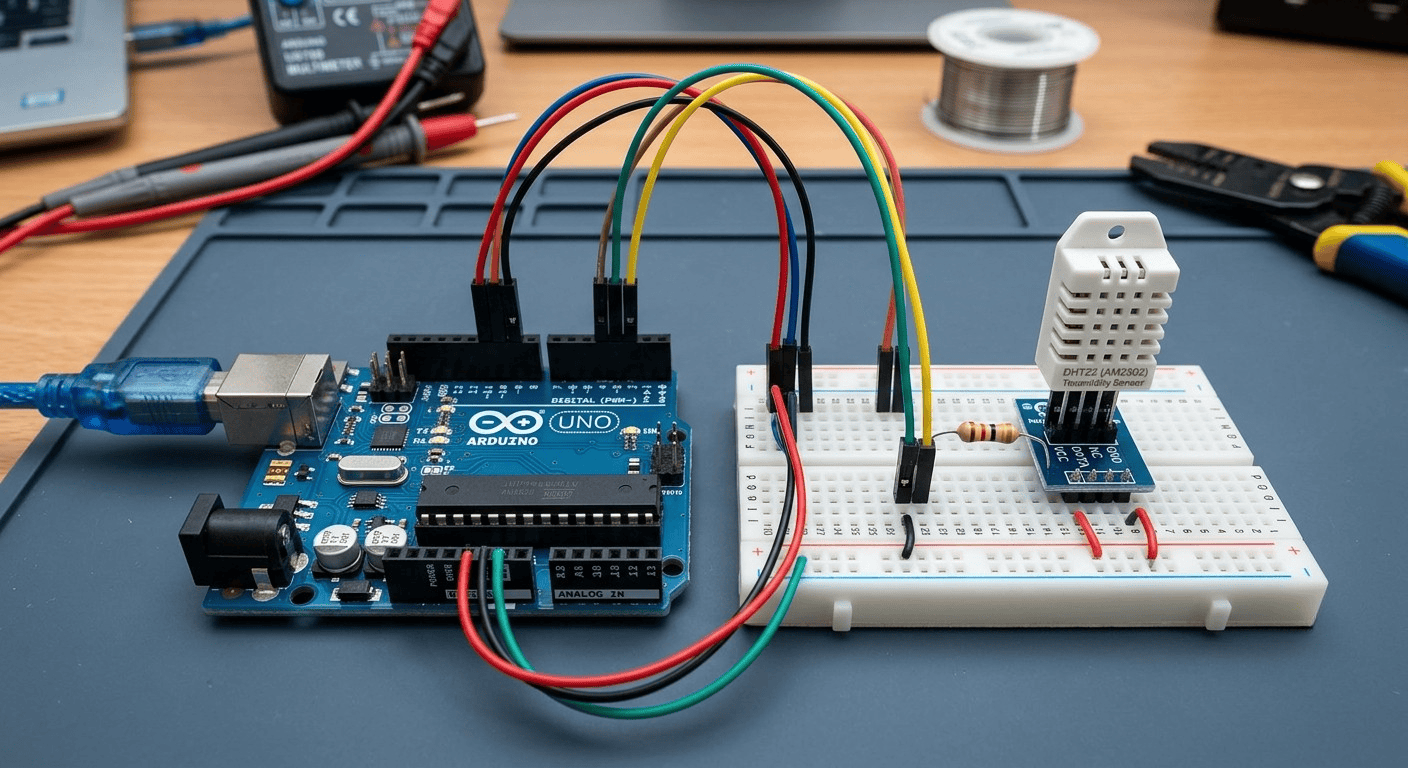
Arduino starter kit
A genuine Arduino Uno Rev3 with a breadboard, jumper wires, LEDs, resistors, and a few sensors can be had for $35 to 50. Why genuine? The open-source clones work, but a genuine board guarantees smooth driver installation and community support when you’re troubleshooting at midnight. With this kit, you can build a soil-moisture monitor, an air-quality station, or a simple seismograph using a piezo disc.
External link: Explore official kits and tutorials at Arduino.cc
Raspberry Pi (optional but powerful)
If your project needs a full operating system, a camera, or advanced data processing, a Raspberry Pi Zero 2 W ($15 to 20) or a pre-loved Pi 3B+ is incredible. It’s a full computer the size of a credit card. Pair it with a cheap USB webcam and you have a time-lapse rig for watching crystals grow or plants move.
Sensor modules
Individual I²C sensor breakout boards cost $2 to 10 each. Start with a BME280 (temperature, humidity, barometric pressure) and a BH1750 light-intensity sensor. String a few together, write a short Python or Arduino sketch, and you’ve built a microclimate logger for your backyard. The data you collect can be shared on citizen-science platforms like iNaturalist or SciStarter, connecting your home lab to real global research.
Internal link: Get the step-by-step wiring and code in our guide [Arduino Data Logging for Citizen Science].
Home Lab Equipment for Chemistry on a Dime
You don’t need a fume hood to do meaningful chemistry at home, just a respect for safety and a few carefully chosen items. When I started, I was amazed by how much home lab equipment for chemistry cost less than a takeout dinner.
Borosilicate Erlenmeyer flask and beakers
A 250 mL Erlenmeyer flask is the workhorse for mixing, heating, and observing reactions. Its conical shape reduces splashing. Grab one alongside a set of beakers and you’re ready for titrations, crystal growing, and simple electroplating.
Alcohol burner or small electric hot plate
An alcohol lamp ($8) provides a clean, adjustable flame for gentle heating, while a single-burner electric hot plate ($15 to 25) gives you flameless consistency. Never heat flammable solvents with an open flame, and always work in a well-ventilated space. A hot plate also doubles as a stirrer if you purchase a magnetic stir bar and a used lab stir-plate, often found second-hand for $20.
Basic personal protective equipment (PPE)
Safety gear is non-negotiable. A pair of chemical-splash goggles (indirect vent, ANSI Z87.1) costs $5 to 10. A box of nitrile gloves is $10 and protects you from irritants. Don’t skip these, they’re the most important cheap lab tools you’ll ever buy.
Digital kitchen probe thermometer
While lab-grade thermometers are nice, a digital meat probe with a stainless steel tip ($12) gives you instant temperature readings for solutions and works perfectly for experiments like calorimetry or monitoring incubator temperatures. Just dedicate one probe to the lab and don’t use it for Sunday roast afterward.
Maintaining and Upgrading Your Budget Home Lab Over Time
Building a home lab is like tending a garden, it grows with you. Taking care of your home lab equipment makes it last far longer than the price tag suggests.
Rinse glassware immediately after use with distilled water when possible, and store it upside down on a drying rack. Keep electronic modules in anti-static bags or a segmented parts box so you’re not hunting for a resistor at 10 p.m.
Calibrate your scale and check your multimeter against a known reference every few months. A couple of AA batteries and a permanent marker for labeling can save hours of confusion.
When you’re ready to upgrade, do it in layers. Maybe add a proper magnetic stirrer hotplate if you’re diving into synthesis, or a used spectrophotometer from a university surplus sale if light analysis becomes your jam.
The beauty of starting with budget citizen science gear is that you learn exactly what features you actually need before investing in premium versions.
Some of my most reliable instruments are still the no-name digital scale and the scuffed-up USB microscope I bought years ago. They work, they’re repairable, and they have stories.
Internal link: Ready to put your equipment to work? Read [How to Design Your First Home Experiment] to turn your curiosity into a solid protocol.
Recap: Your Budget Home Lab Shopping List
Here’s a quick-reference list of the home lab equipment we covered, all easily sourced and surprisingly affordable:
Digital pocket scale (0.01 g) – $15 to 25
USB digital microscope (up to 250×) – $30 to 40
Manual-ranging digital multimeter – $10 to 15
Borosilicate glassware starter set (beakers, cylinders, test tubes) – $25 to 35
Wide-range pH strips (0 to 14) – $5 to10
Arduino Uno starter kit – $35 to 50
Temperature/humidity sensor module (BME280) – $5 to 10
Alcohol burner or single-burner hot plate – $8 to 25
Chemical-splash goggles and nitrile gloves – $15 total
Digital probe thermometer – $10 to 15
Total: roughly $160 to $230 for a fully functional lab that covers biology, chemistry, and electronics. That’s less than the cost of a single high-end textbook, and you’ll own a tangible toolkit for discovery.
Let’s Keep the Conversation Going
I hope this list sparks ideas for your own experiments, whether you’re checking creek health, brewing kombucha with scientific rigor, or building a backyard weather station. The world needs more curious people asking questions at their kitchen tables.
Got a favorite piece of budget citizen science gear I missed? Or a clever hack that turns a common household item into reliable cheap lab tools? I’d genuinely love to hear about it.
Drop us a line at [email protected] with your stories, questions, or photos of your setup. Let’s build a community where “real science” is defined by curiosity, not by the price of your equipment.