

The Future of Open-Source Biology: Opportunities and Risks You Can’t Ignore
Have you ever wondered what the open-source biology future might look like?
Picture a world where anyone with curiosity and a laptop can engineer microbes to clean up oil spills, create drought-resistant plants, or whip up life-saving medicines in their garage.
That’s not sci-fi, it’s the emerging reality of a movement that’s breaking down lab walls and handing the keys to biology over to everyday people. But as with any powerful tool, there’s a flip side.
Today, we’re diving deep into the open-source biology future, exploring the dazzling DIY biology opportunities and the sobering open bio risks that could shape the next decade.
Grab a coffee, pull up a chair, and let’s talk like friends about what’s really coming.
What Exactly Is Open-Source Biology, Anyway?
Before we sprint ahead, let’s get on the same page. Open-source biology applies the principles of open-source software, free sharing, collaborative improvement, transparency, to the life sciences.
Instead of locking genetic sequences, lab protocols, and biological tools behind expensive paywalls, enthusiasts publish them openly. This means a student in Nairobi can use the same engineered plasmid as a researcher at MIT, remixing it for a local challenge.
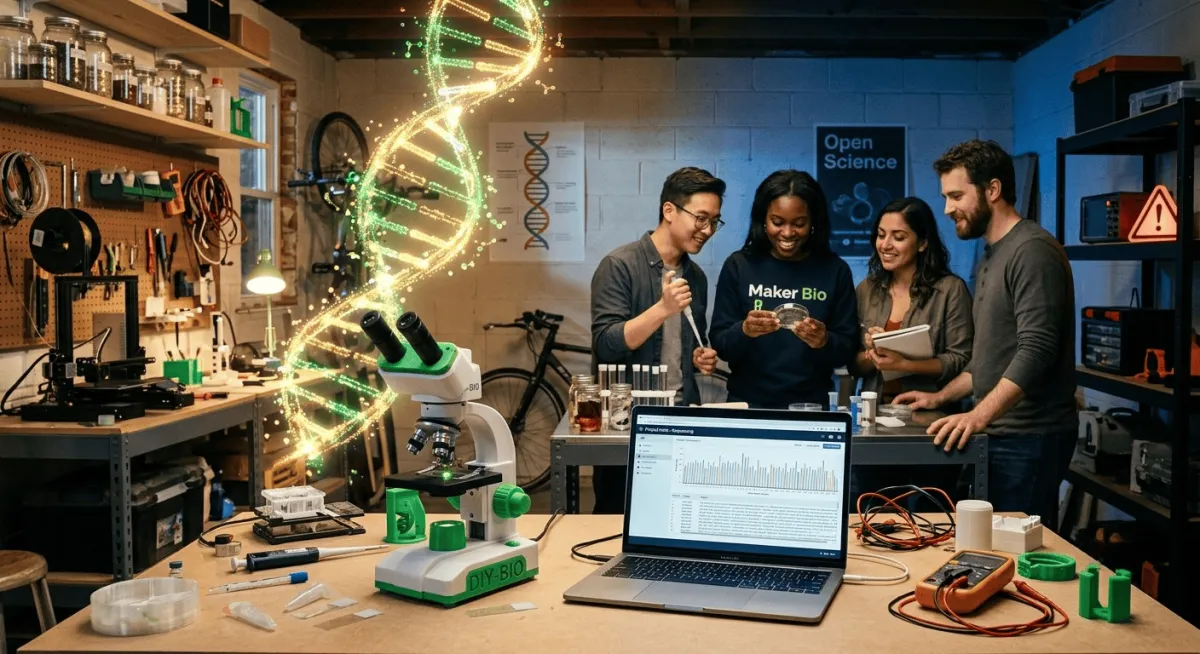
The open-source biology future builds on decades of work by pioneers like the BioBricks Foundation, iGEM (the International Genetically Engineered Machine competition), and community labs that function like makerspaces for DNA.
I remember visiting a community biolab a few years ago, and it felt more like a friendly hackerspace than a sterile institutional corridor.
People were swapping ideas about glowing plants and yogurt-based biosensors, all because the underlying knowledge was free. That’s the heartbeat of this movement, democratizing biology so innovation doesn’t stay trapped in ivory towers.
If you’ve ever been curious about biohacking, check out our earlier post on getting started with citizen science to see how simple it can be to plug in.
The Bright Side: DIY Biology Opportunities
Let’s be real, the most exciting part of the open-source biology future is what it unlocks for ordinary people. The DIY biology opportunities are exploding right now, and they’re not just for PhDs. Here’s where the magic happens.
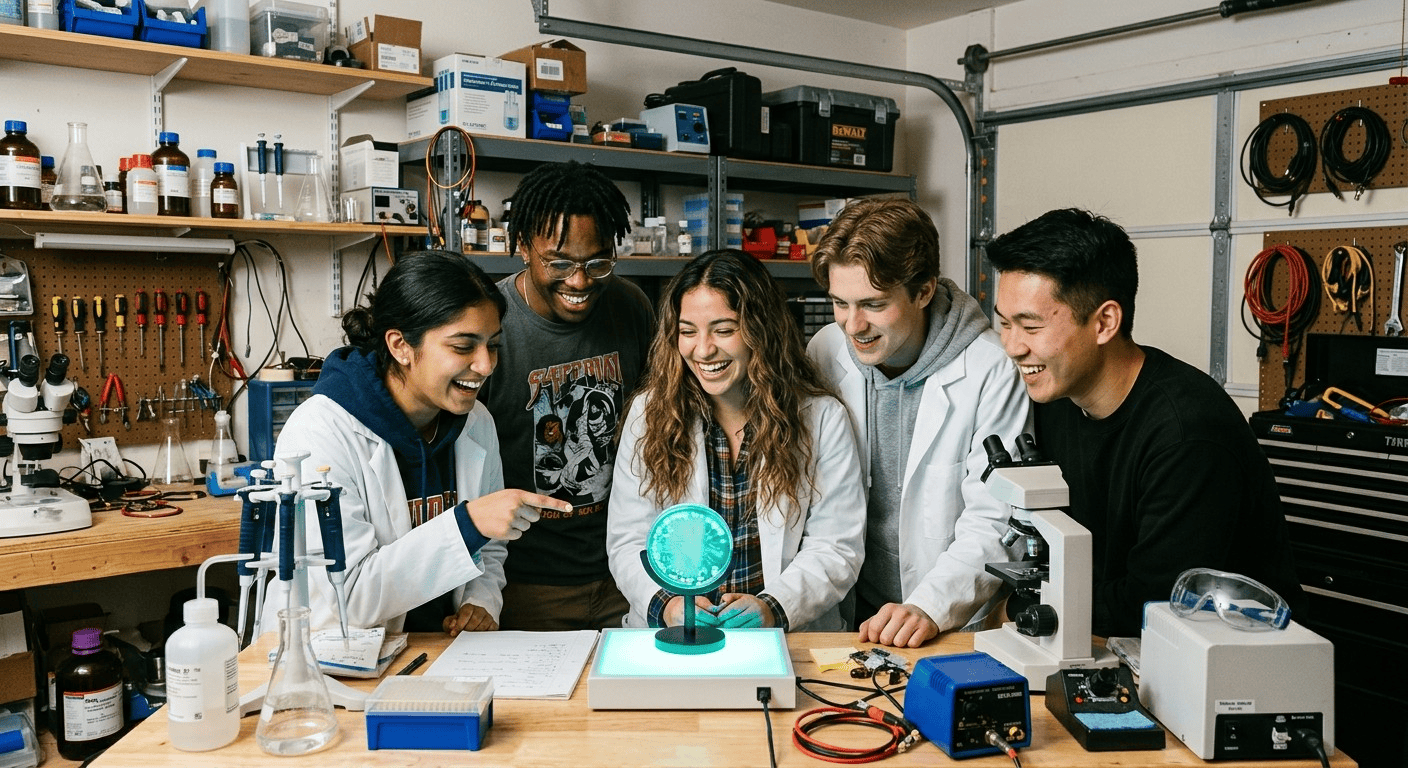
First, education and empowerment. When a high schooler can build a centrifuge from a 3D printer and an open-source design, science becomes tangible.
Platforms like the OpenTrons OT-2 liquid handler, a pipetting robot whose hardware designs are publicly available, slash the cost of automation from tens of thousands of dollars to a few hundred.
That’s a game changer for schools, tiny startups, and curious cooks who want to experiment with fermentation chemistry. Check out OpenTrons’ community here.
Second, personalized medicine. Imagine a future where a patient’s own cells are edited with an open-source gene therapy to fight a rare cancer, and the protocol is shared globally so clinics everywhere can adapt it.
The open-source biology future could dismantle the pharmaceutical monopoly on certain treatments, letting communities develop therapies for neglected diseases. DIYbio groups are already working on open insulin production to make the lifesaving hormone affordable.
Our piece on the DIY bio lab setup guide walks you through what it takes to start tinkering safely at home.
Third, environmental repair. Open-source bioremediation kits could enable farmers to deploy plastic-munching enzymes or oil-spill-cleaning bacteria without waiting for a corporate contract.
The knowledge spreads peer-to-peer, so a solution in Bangladesh can be tweaked for an oil field in Texas. This agile, distributed model accelerates problem-solving in ways that traditional siloed research can’t match.
Fourth, food and sustainability. From open-source vegan cheese made with engineered yeast to biopigments that replace toxic dyes, the movement is putting food tech into the hands of cooks and small businesses. When you can download a “recipe” for a protein, the barriers to entry crumble.
Real-World DIY Biology Opportunities You Can Explore
If you’re itching to roll up your sleeves, here are a few very real DIY biology opportunities that are alive and kicking right now:
Community Biolabs: Spaces like Genspace in New York or BioCurious in the Bay Area offer bench access, classes, and a ready-made community. You can join projects from sequencing a mystery berry’s DNA to building a low-cost incubator.
iGEM’s Open Registry: Every year, student teams contribute standardized genetic parts to the iGEM Registry of Standard Biological Parts. You can browse thousands of components and remix them for your own project. Learn more at iGEM’s Safety and Parts page.
Open-Source Lab Equipment: Designs for PCR machines, gel electrophoresis boxes, and even bioreactors are published on sites like GitHub and Appropedia. You 3D-print, solder, and get going.
Digital Biofabrication: Companies like Opentrons and the Open Bioeconomy Lab distribute protocols for making everything from enzymes to whole cell-free systems. The open-source biology future means you can literally brew up a prototype in your kitchen.
If this lights a fire in your belly, you’ll love our deep dive on [community biolabs and how to find one near you](/community-biolabs-guide) (internal link). It’s easier than you think to plug into the movement.
But Wait… What About the Open Bio Risks?
Okay, time for the serious talk. For all the sunlit DIY biology opportunities, the open bio risks are real, and ignoring them would be dangerously naive.
The same tools that let a teenager engineer a drought-proof tomato could, in theory, be misused to create something harmful.
The open-source biology future hinges on how well we navigate these tensions.
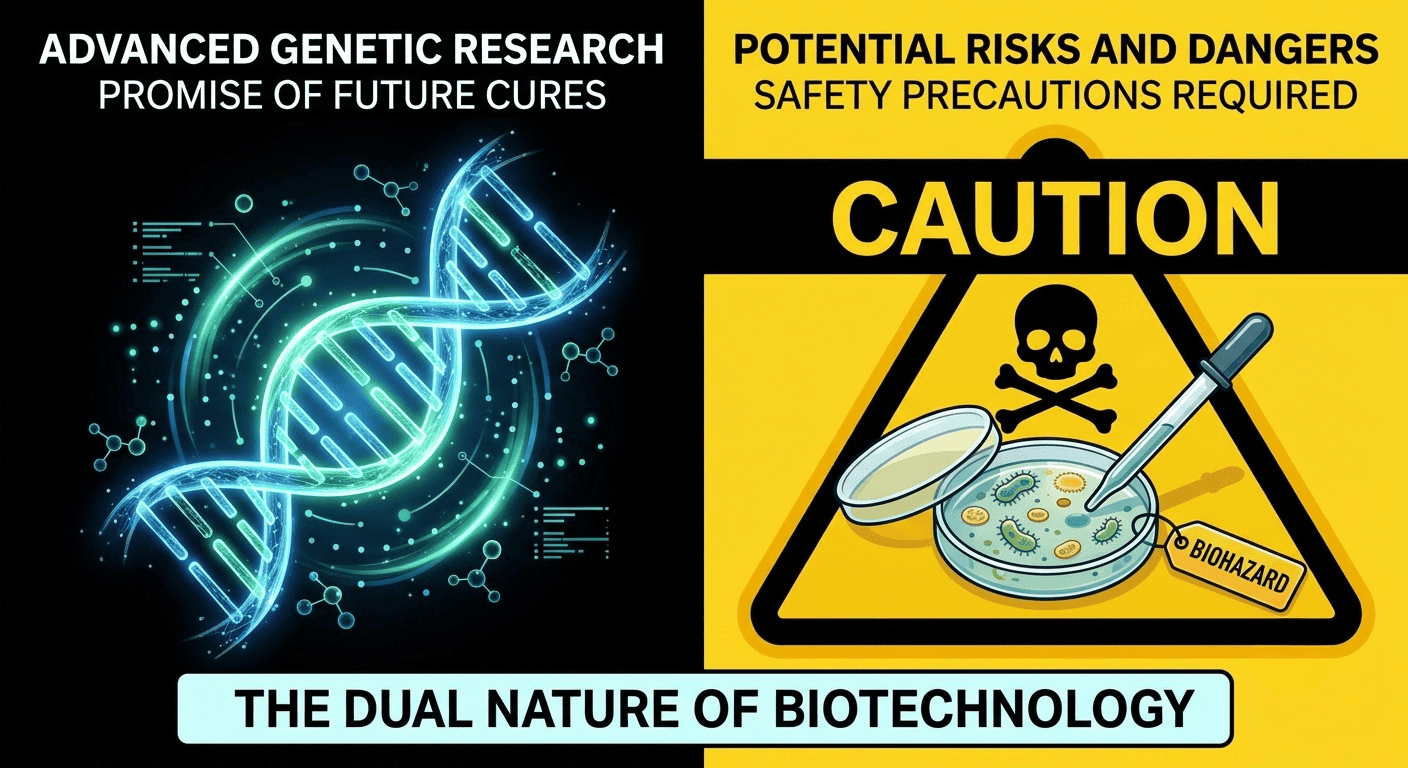
The first big worry is biosecurity. When genetic designs are freely available online, bad actors could download instructions for synthesizing a toxin or a pathogen. Unlike nuclear tech, biology is inherently dual-use, the skills to make a vaccine overlap disturbingly with the skills to make a bioweapon.
In 2018, the National Academies of Sciences, Engineering, and Medicine released a groundbreaking report, Biodefense in the Age of Synthetic Biology, ranking various bio-capabilities by concern level. (Read the full report here)
The report highlighted that even relatively simple techniques like mail-order DNA synthesis could, without oversight, be exploited. This keeps safety experts up at night.
Then there’s biosafety, the accidental kind. Without proper containment, a DIY biologist could inadvertently create an organism that outcompetes wild strains, messing up local ecosystems.
Imagine a fast-growing, plastic-degrading microbe escaping into a river and chewing through PVC pipes. Unlikely? Maybe. But when you’re working in a garage rather than a containment facility, the guardrails are only as strong as your training and discipline.
Our post on garage biology safety tips offers practical advice, but the cultural piece, making safety cool, not optional, is huge.
Ethical quandaries also loom. Who gets to decide what’s an acceptable experiment? If a DIY bio enthusiast modifies a plant to glow and gives away seeds, what happens if it cross-pollinates with a neighbor’s crop?
The open bio risks include biodiversity loss, social backlash that shuts down legitimate science, and the potential for a few bad actors to poison public trust. Without a framework for responsibility, the movement could be legislated into a corner.
Navigating the Open Bio Risks Responsibly
Here’s the hopeful part: the open-source biology community isn’t sticking its head in the sand. Many groups are baking safety into their DNA, literally and figuratively. The DIYbio.org community drafted a widely adopted code of ethics that emphasizes transparency, peaceful purposes, and accountability.
Community labs often require members to pass safety training before touching a pipette. Projects like the iGEM Safety and Security Committee screen team projects for red flags and encourage responsible innovation.
Screening DNA synthesis orders is another layer of defense. Companies in the International Gene Synthesis Consortium check orders against pathogen databases, and there’s a push to make such screening universal.
The open-source biology future needs these guardrails to evolve in step with the technology, like cyber-security for the bioweb. If you’re designing a genetic circuit, building in a “kill switch” that makes the organism dependent on a lab-supplied nutrient is one way to reduce open bio risks.
These fail-safes are being shared openly too, so safety itself becomes a collaborative project.
Still, regulation is a tightrope. Too heavy, and you strangle the DIY biology opportunities that could save lives. Too light, and you invite catastrophe.
The sweet spot likely lies in tiered oversight: simple, non-hazardous experiments remain free, while riskier endeavors require licensing or community review.
What gives me hope is that the DIYbio crowd generally wants to do good—they’re tinkerers, not terrorists, and self-policing, combined with smart external policy, could keep the open-source biology future bright.
The Open-Source Biology Future: Where We’re Headed
So where is all this heading? I think we’re on the cusp of a bio-revolution that mirrors the early internet. Just as open-source software gave us Linux, Wikipedia, and the web itself, the open-source biology future will likely birth platforms, tools, and therapies we can’t yet imagine.
Decentralized biomanufacturing could let communities produce their own medicines and materials, slashing supply chains and boosting resilience. Imagine a world where a hospital in a remote region prints its own antibiotics from an open-source blueprint when the supply runs out.
That’s not just sci-fi, researchers at MIT and elsewhere are already working on cell-free systems that can be freeze-dried and reactivated on demand.
The economics will shift too. Patents won’t vanish, but open-source licensing (like the BioBrick Public Agreement) could create a commons where foundational biological parts remain free for everyone. Companies will build proprietary applications on top, much like Red Hat builds services around Linux.
This hybrid model can fund innovation while keeping the base layer accessible. The open-source biology future will challenge our definition of ownership, when you can download a rose’s scent compound and express it in yeast, who owns that fragrance?
We’ll also see a new generation of bio-literate citizens. High schools will have bio clubs like they have coding clubs. Kids will design their own life forms as casually as they make TikTok videos.
That fluency will breed a culture of responsibility from the ground up. The DIY biology opportunities will span art, agriculture, environmental restoration, and personal health, making biology a truly participative science.
But I’d be lying if I said I had no worries. The open bio risks might mutate faster than our safety norms if we’re not careful. I suspect we’ll face a few high-profile incidents, an accidental release, a lab fire, a malicious synthesis, that force society to decide how open is too open.
The conversations we have now, in community meetings and online forums, will set the ethical default. If we wait for a crisis, we’ll end up with reactionary rules that choke the good stuff. That’s why staying informed, engaged, and willing to have tough talks matters.
Key Takeaways: Balancing Promise and Peril
Let’s wrap our heads around the main threads we’ve tugged on. The open-source biology future is a double helix of opportunity and risk, and here’s what to remember:
Democratization is already underway. Open protocols, affordable hardware, and community labs mean you don’t need a PhD to make meaningful contributions.
DIY biology opportunities span education, medicine, environment, and food. From open insulin to plastic-eating microbes, the power to solve local problems is shifting into local hands.
Open bio risks are genuine but manageable. Biosecurity, biosafety, and ethical dilemmas call for layered safeguards, screening, and a strong culture of responsibility, not blanket restrictions.
The movement is self-aware. Codes of ethics, community safety training, and kill-switch designs show that the DIYbio crowd is building the future with eyes wide open.
The regulatory sweet spot is coming. Smart policies that differentiate low-risk tinkering from high-risk work can foster innovation while minimizing harm.
You can help shape it. Whether you join a community lab, contribute to an open-source project, or simply stay informed, your voice matters in this unfolding story.
If the whole topic of responsible biotech makes your head spin, you’re not alone. That’s why we wrote our guide to biohacking ethics to help you sort through the gray zones.
Let’s Keep the Conversation Going
The open-source biology future isn’t some distant horizon, it’s being written right now in garages, community labs, and open-access journals across the planet.
I genuinely believe that if we lean into the DIY biology opportunities while honestly addressing the open bio risks, we can build a world where biology works for everyone, not just those with the deepest pockets.
So here’s my ask: don’t let this be the end of the chat. Whether you’re a seasoned biohacker, a curious newbie, or someone with hard questions about safety, I want to hear from you.
Let’s trade ideas, debate the ethical edges, and maybe even cook up a project together. For inquiries, collaborations, or just a friendly back-and-forth, drop us a line.
Contact us at [email protected]. Seriously, write to us. The future is too important to be shaped by a few voices in a boardroom, it needs all of us, talking, tinkering, and thinking ahead.