

From Hobbyist to Pro: How to Turn DIY Biohacking into a Career
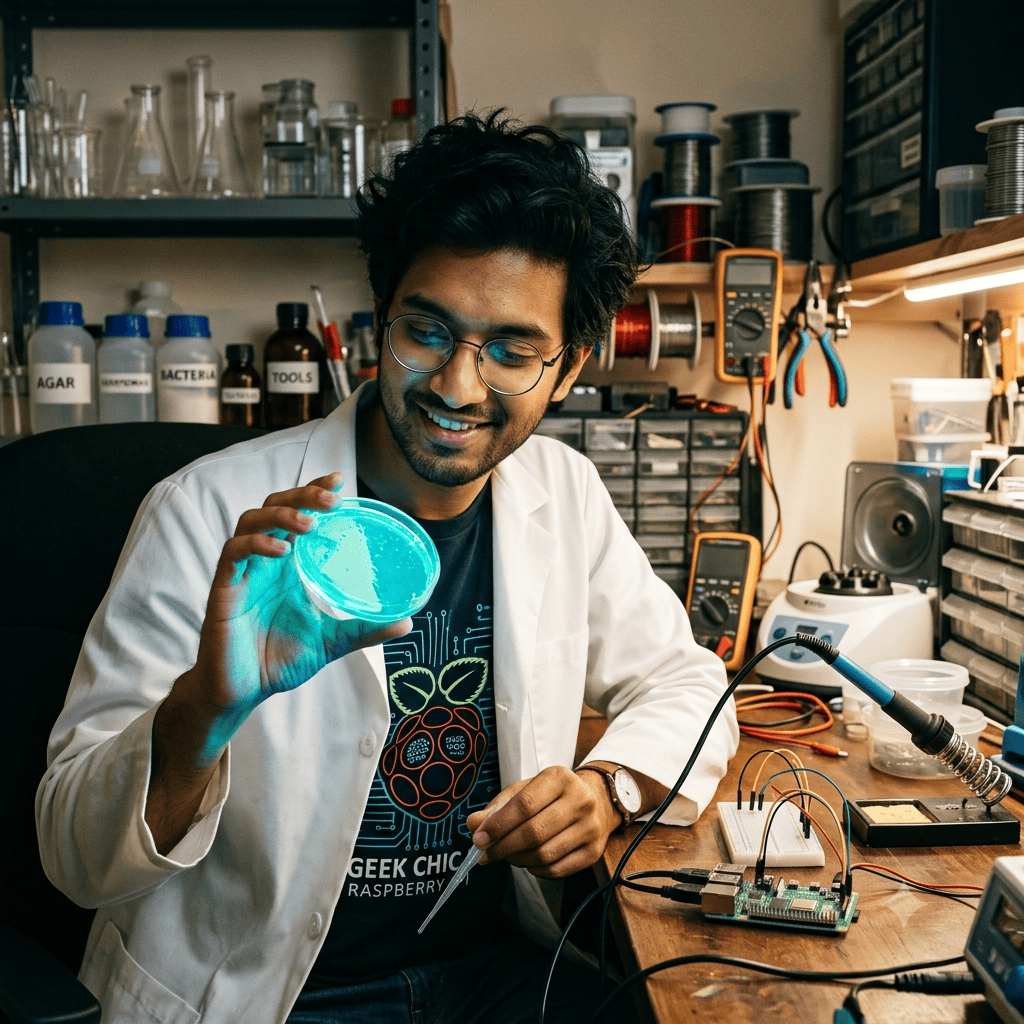
You’ve been pipetting glowing bacteria in your garage, soldering microfluidics chips out of old electronics, and staying up way too late reading synthetic biology papers. And now that nagging question won’t leave you alone: can I actually make a real DIY biohacking career out of this?
The short answer is yes, more than ever, the line between “amateur scientist” and “paid professional” is blurring, and there’s a whole ecosystem ready to help you turn biohacking into a job.
In this post, I’ll walk you through exactly how to take that leap, from the skills you need to the career paths you never knew existed, all told as if we’re chatting over coffee.
What Exactly Is a DIY Biohacking Career?
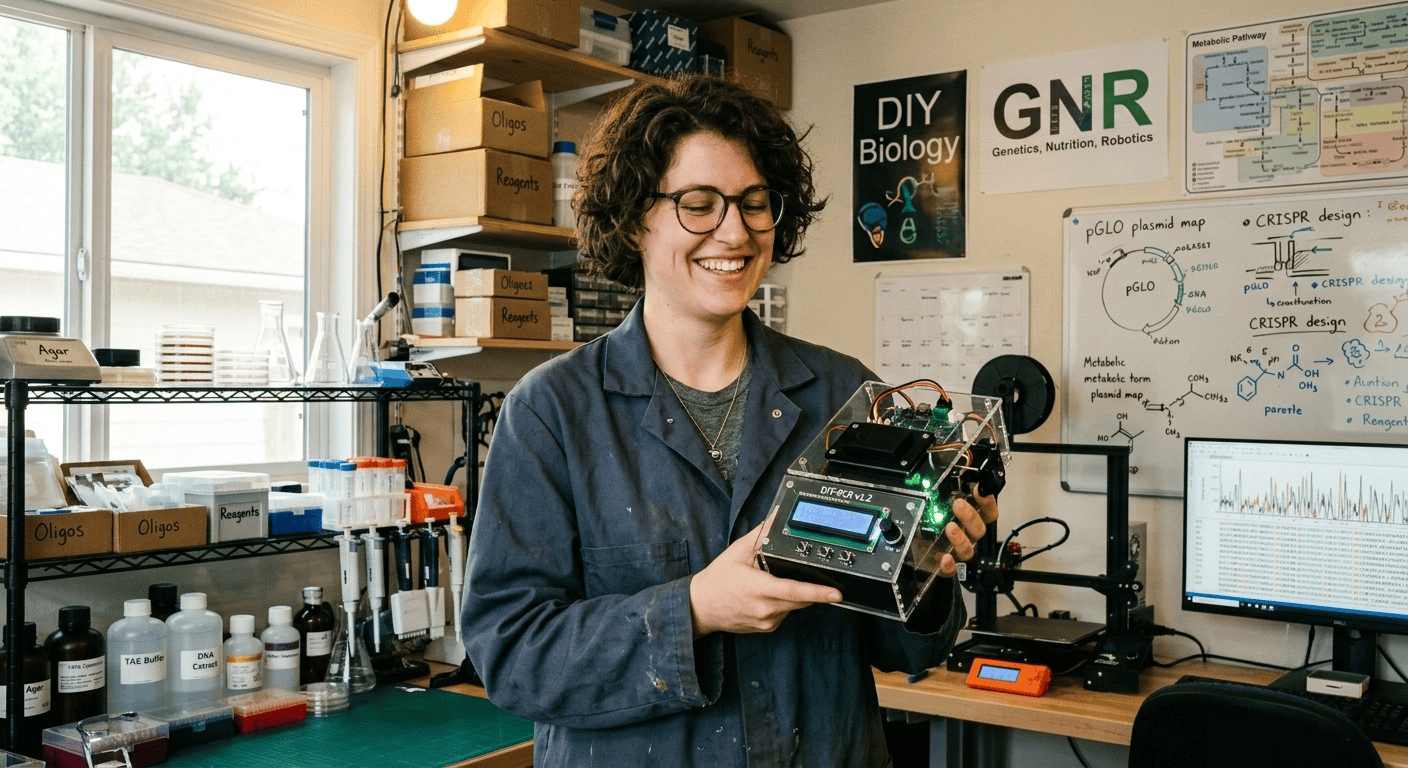
When people hear “biohacking,” they sometimes picture extreme body modification or sci-fi cyborgs. But for most of us, a DIY biohacking career means getting paid to explore biology outside traditional institutional walls, whether that’s engineering yeast to produce sustainable fragrances, building low-cost open-source lab equipment, or teaching citizen science careers to the next generation of tinkerers.
This world sits at the intersection of the maker movement, open science, and community biology. It includes roles like:
Independent researcher at a community lab
Product developer for biotech startups
Science communicator translating dense research for the public
Bio-artist merging biology and creativity
Citizen scientist running funded environmental monitoring projects
The common thread? You’re applying hands-on biological skills you honed during late-night kitchen experiments, and you’ve found a way to make it financially sustainable. It isn’t a traditional path, but that’s precisely what makes it so exciting.
Building Your Foundation: Skills and Knowledge That Pay Off
If you want to turn biohacking into a job, you need more than curiosity. You need a stack of skills that people and companies will pay for. The good news is that many of these can be learned from your home lab or a shared makerspace.
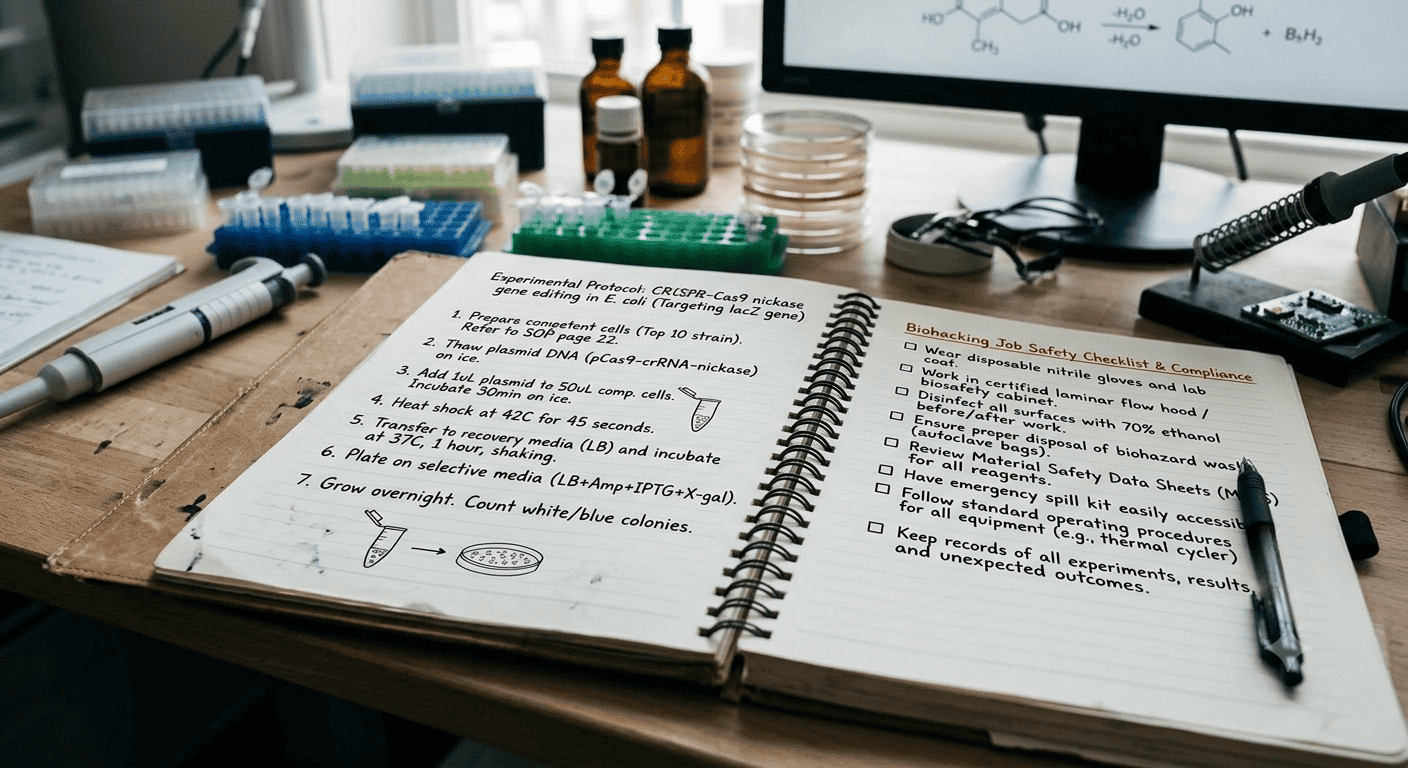
First, get rock-solid on wet-lab fundamentals. Aseptic technique, pipetting accuracy, gel electrophoresis, bacterial transformation, and basic molecular cloning are the bread and butter of almost every biology-related role.
If you’ve already been playing with DIY CRISPR kits or extracting DNA from strawberries, you’re on your way. Our guide on The Best DIY Biohacking Projects for Beginners is a great place to level up those core skills.
Next, bioinformatics and data literacy. Even the most bench-heavy job now touches some computational work. Learn to navigate BLAST, use Python or R for biological data analysis, and understand how to read sequencing results. Free resources like Rosalind and Coursera’s bioinformatics courses are gold.
Don’t ignore safety and documentation. A professional biohacker approaches every experiment with rigorous safety protocols, a clean lab notebook, and a habit of openly sharing protocols on platforms like protocols.io.
This isn’t just about not hurting yourself, it’s the language that makes you credible when you apply for grants, jobs, or collaborations.
From Kitchen Counter to Community Lab: Finding Your Tribe
You can only go so far tinkering alone. The fastest way to turn your hobby into a DIY biohacking career is to join a community lab. Spaces like Genspace in New York, BioCurious in the Bay Area, or La Paillasse in Paris are the beating hearts of the citizen science world.
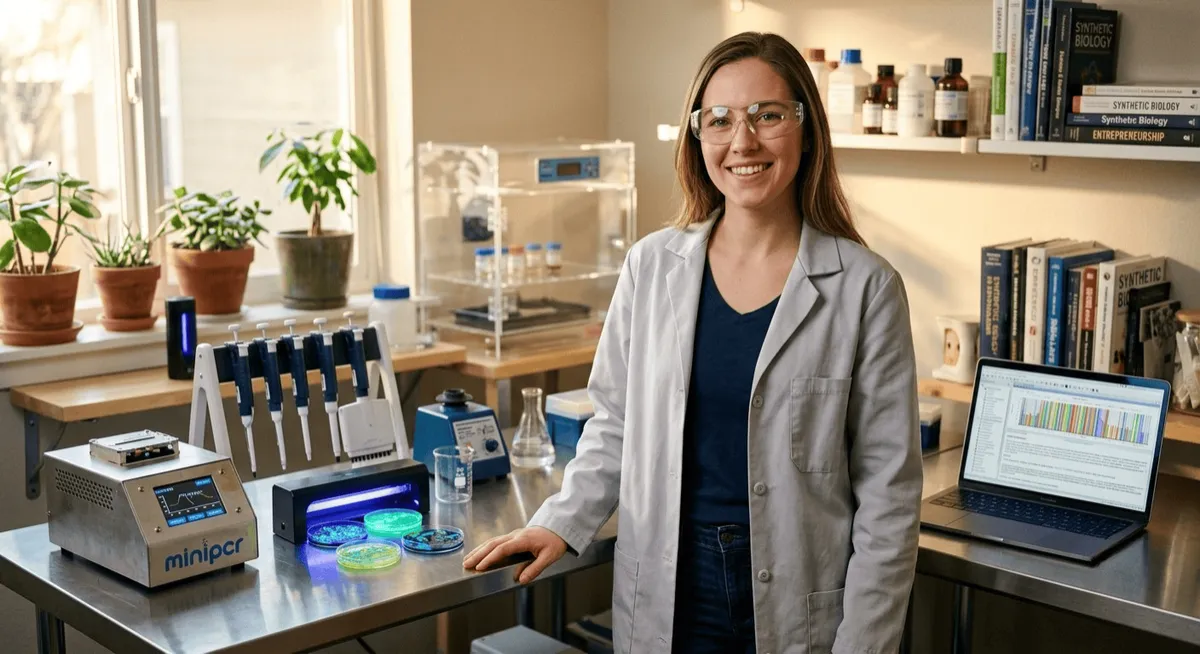
They offer equipment you could never afford alone (real thermocyclers! fluorescence microscopes!), but even more importantly, they connect you with mentors, collaborators, and job leads.
If there isn’t a community lab near you, start attending meetups, hackathons, and virtual gatherings. The iGEM competition has launched countless biotech careers, and even participating as a mentor or volunteer can put you on the map.
When you’re ready to explore paid roles that grew directly out of these spaces, our post on [Citizen Science Careers: How to Get Paid for Your Passion](/blog/citizen-science-careers-guide) breaks down the landscape.
A huge part of “finding your tribe” is embracing the open science ethos. Share your progress, your failures, and your builds on GitHub, Hackaday.io, or social platforms like the DIYbio subreddit.
People hire people they’ve seen solving problems publicly. I’ve watched folks go from posting a homemade incubator design to being commissioned to build them for schools, all because they documented the journey.
Monetizing Your Passion: Career Paths That Turn Biohacking Into a Job
So how exactly do you cash that first paycheck? There are more routes than you might think, and many of them don’t require a PhD. Here are some of the most common ways to turn biohacking into a job.
Biotech Startup Employee: Small synbio companies love self-starters who can run a PCR in their sleep and aren’t afraid to MacGyver equipment. Your garage-hacker mentality is a superpower when resources are tight.
Independent Researcher & Grant Recipient: Organizations like the Shuttleworth Foundation or Experiment.com crowdfunding allow citizen scientists to fund their own research projects. You craft a proposal, share your plan, and if the community believes in it, you get paid to do your own science.
Science Communication & Education: Biohacking fluency paired with the ability to explain things simply is rare. You can write, host a YouTube channel, design workshops, or create online courses. Companies building at-home lab kits regularly hire community educators.
Product & Hardware Development: The low-cost lab equipment market is exploding. If you’ve built your own centrifuge, incubator, or spectrophotometer, you can refine the design and sell it. Take a page from How to Build a Home Lab on a Budget and think about which of your creations could help other biohackers.
Consulting & Contract R&D: Some companies need a specific yeast strain engineered or a rapid soil testing protocol designed, but they don’t want to hire a full-time team. A skilled biohacker with a portfolio of completed projects can step in and solve those problems on a contract basis.
The Paper Trail: Certifications, Portfolios, and a Professional Presence
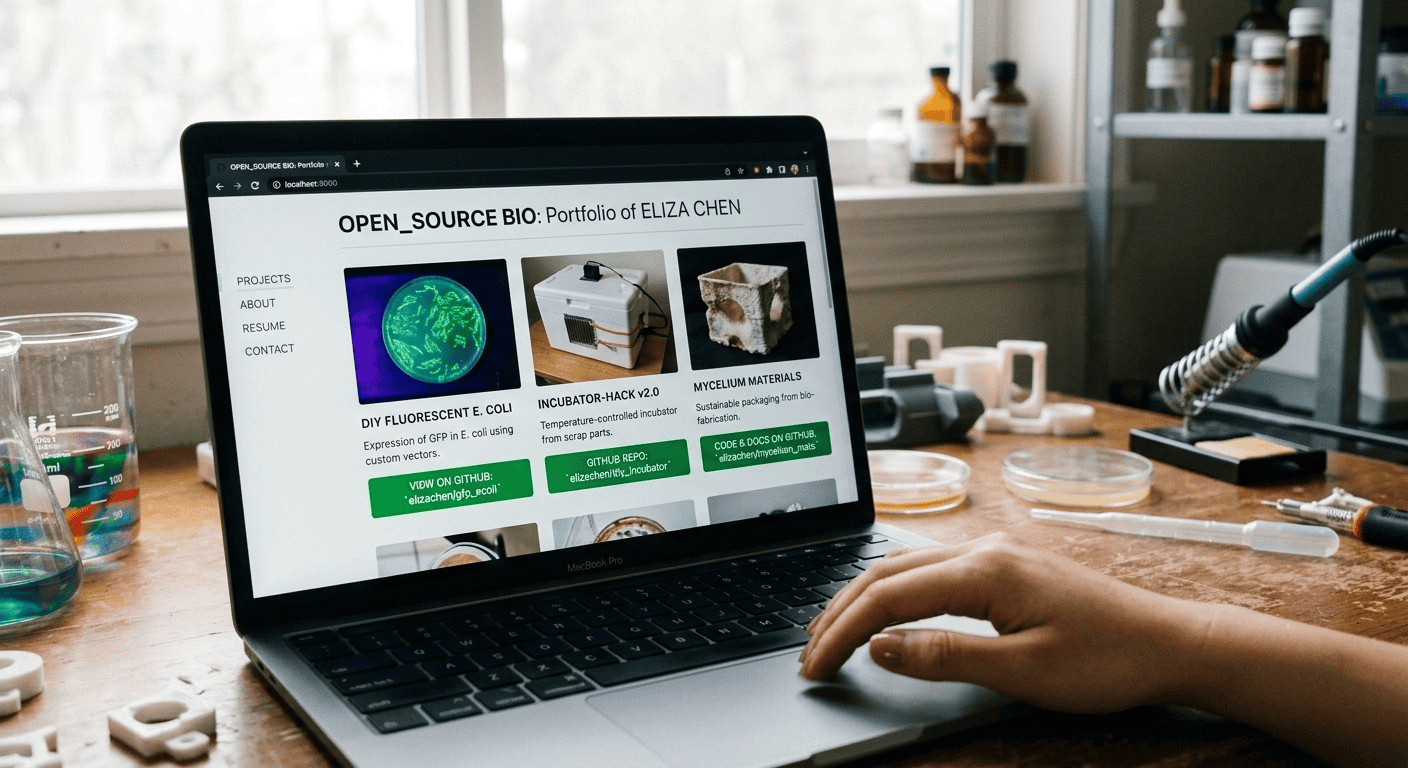
When you’re coming from a non-traditional background, your portfolio is your diploma. Build a personal website that showcases your projects, complete with high-quality photos, GitHub repositories, and write-ups of your process and results. When an employer or client searches your name, they should find a living document of your competence, not just your social media.
Consider adding a recognizable certification or two to back up your hands-on skills. A biosafety and biosecurity certificate, a BSL-1 or BSL-2 training completion from a recognized institution, or even a certificate in project management can make you stand out. Many community labs offer safety workshops that come with documentation, grab those.
For research-focused paths, publishing your work in open-access citizen science journals or preprint servers like bioRxiv can be a game changer. It shows you can see a project through from hypothesis to dissemination.
Platforms like the Public Library of Science (PLOS) openly encourage submissions from non-institutional scientists when the science is sound. This kind of visible, citable output is career rocket fuel.
Navigating Ethics, Safety, and the Law
Let’s address the elephant in the room. People get nervous when biology leaves the institutional lab. If you want a DIY biohacking career, you have to become a responsible, visible ambassador for ethical practice. That means not just being safe, but being able to prove you’re safe.
Familiarize yourself with the DIYbio community’s codes of ethics, particularly the widely adopted framework from DIYbio.org that emphasizes transparency, safety, and peaceful purposes.
Many community labs require members to sign a code of conduct, and this kind of demonstrated integrity makes you far more hireable.
On the legal side, understand what you can and can’t do in your jurisdiction. Working with genetically modified organisms at home has varying regulations. The U.S. FDA and USDA have guidelines for contained use and field release, and a responsible biohacker stays well within the “contained use” lane unless working with a licensed institution.
When a potential employer asks about your safety record, you want to be the person who can calmly walk them through your risk assessments, PPE protocols, and waste disposal methods.
Real-Life Stories: Biohackers Who Made the Leap
You don’t have to take my word for it, people are already living proof that you can turn biohacking into a job. Look at Josiah Zayner, a former NASA scientist who dove headfirst into the DIY bio movement. He started tinkering, teaching, and eventually founded The ODIN, a company that ships affordable CRISPR and genetic engineering kits to anyone who wants to learn. What began as a personal passion project is now a thriving business that sits squarely at the center of the DIY biotech world.
Community labs, too, are full of stories. Members at Genspace have gone on to launch their own biotech startups, join leading synbio companies as lab managers, and win prestigious art and science residencies.
The common ingredient isn’t an elite degree, it’s a track record of creativity, persistence, and public proof of work. Every single person who now makes a living from biohacking started exactly where you are: wondering if it could be done.
Scaling Up: Turning a Side Hustle into a Full-Time DIY Biohacking Career
Maybe you’ve already dipped your toes in, you’ve sold a few open-source lab gadgets, done a small contract job, or run a successful crowdfunding campaign for a citizen science project. How do you make it full-time?
First, systematize. Treat your side hustle like a real business even before you quit your day job. Register as a sole proprietor or LLC, set up a separate bank account, and get proper insurance if you’re working with biological materials for clients. This step alone signals to collaborators that you’re serious.
Seek out funding mechanisms designed for explorers like you. In addition to crowdfunding, look for small business innovation research (SBIR) grants, arts-science fellowships, and microgrants from organizations that support open science.
Our guide on How to Get Funding for Your Citizen Science Project walks you through the messy but rewarding proposal-writing process.
Collaborate with established institutions. Many universities and research institutes are starting to partner with community labs and independent researchers.
These partnerships can offer you access to equipment, credibility, and sometimes a stipend. In exchange, you bring a hacker’s ingenuity and a genuine connection to the public, a mix that grants reviewers love.
And remember to build multiple income streams. The most stable DIY biohacking careers often blend a few different revenue sources: a little contract work, some product sales, a workshop or two each month, and maybe an educational YouTube channel.
It’s the biohacker’s version of not putting all your petri dishes in one incubator.
Key Takeaways
Here’s the cheat sheet for transforming your passion into a real DIY biohacking career:
Solidify your wet-lab and bioinformatics skills, they’re the currency of the biotech world.
Join a community lab like Genspace or BioCurious; it’s where collaborations and jobs are born.
Build a public portfolio showcasing your projects, protocols, and problem-solving ability.
Monetize through startups, freelancing, education, product development, or independent grants.
Stay rigorously ethical and safety-focused, it’s your professional armor.
Diversify income and treat your side hustle like a business from day one.
The world needs more curious, hands-on minds who can bring biology out of the ivory tower and into the community. You already have the spark.
Now it’s about adding structure, visibility, and a dash of entrepreneurship to create a life where your garage experiments pay the bills.
Ready to turn your biohacking passion into a profession? We’d love to hear what you’re working on, answer questions, or brainstorm your next move.
Contact us at [email protected] for guidance, collaborations, or just to share your story. Let’s build your DIY biohacking career together.
External Links Used in This Post
Genspace – Community Biolab (https://www.genspace.org/)
DIYbio Code of Ethics (https://diybio.org/codes/)
The ODIN – DIY Bio Kits (https://www.the-odin.com/)
Internal links were included to related blog posts (DIY biohacking projects for beginners, citizen science careers guide, build a home lab on a budget, and funding for citizen science projects).