

DIY Sleep Optimization: Biohacks for Better Rest
Health, DIY Sleep Optimization Biohacks
DIY Sleep Optimization: Simple Biohacks Americans Can Try Tonight
On a Tuesday night in suburban Ohio, Jenna stared at her glowing phone, wide awake at 1:37 a.m., wondering why she could optimize everything in her life except her sleep. She had tried expensive supplements, trendy gadgets, and even a high-tech smart mattress, yet she still woke up feeling like she had slept in an airport chair. What finally helped her were not pricey devices, but a handful of DIY sleep optimization biohacks she could test in her own bedroom, starting that very night.
The Night Jenna Decided to Become Her Own Sleep Scientist
Jenna’s story might sound familiar. She worked a nine-to-five, squeezed in a quick workout, scrolled social media in bed, and then wondered why she was wired when she finally turned off the lights. After one particularly groggy morning commute, she made a quiet decision at a red light: she would treat her sleep like a personal science project. No lab coat, no fancy trackers, just sleep biohacking at home with whatever she already had in her American apartment.
That night, she grabbed a pen, wrote “Sleep Experiments” at the top of a notebook page, and listed three simple changes she could try. She didn’t call them “biohacks” yet. To her, they were just easy sleep experiments, small tweaks that might help her finally feel rested without turning her life upside down.
Step One of DIY Sleep Optimization: Taming the Evening Light Show
If there is one villain in modern American sleep stories, it is the glowing rectangle. Jenna realized that most nights, her last view before sleep was not her ceiling or a book, but a blue-lit screen inches from her face. So her first DIY sleep optimization experiment was simple: turn her bedroom into a low-light zone for one hour before bed.
She dimmed the overhead lights, switched on a warm bedside lamp, and set her phone to “Do Not Disturb” in the kitchen. No expensive gear, no complicated protocol, just a deliberate choice to let her brain know that night had actually arrived. Within three nights, she noticed something subtle but powerful: instead of feeling wired at midnight, she felt gently sleepy around 10:30 p.m., as if her body had been waiting for this signal all along.
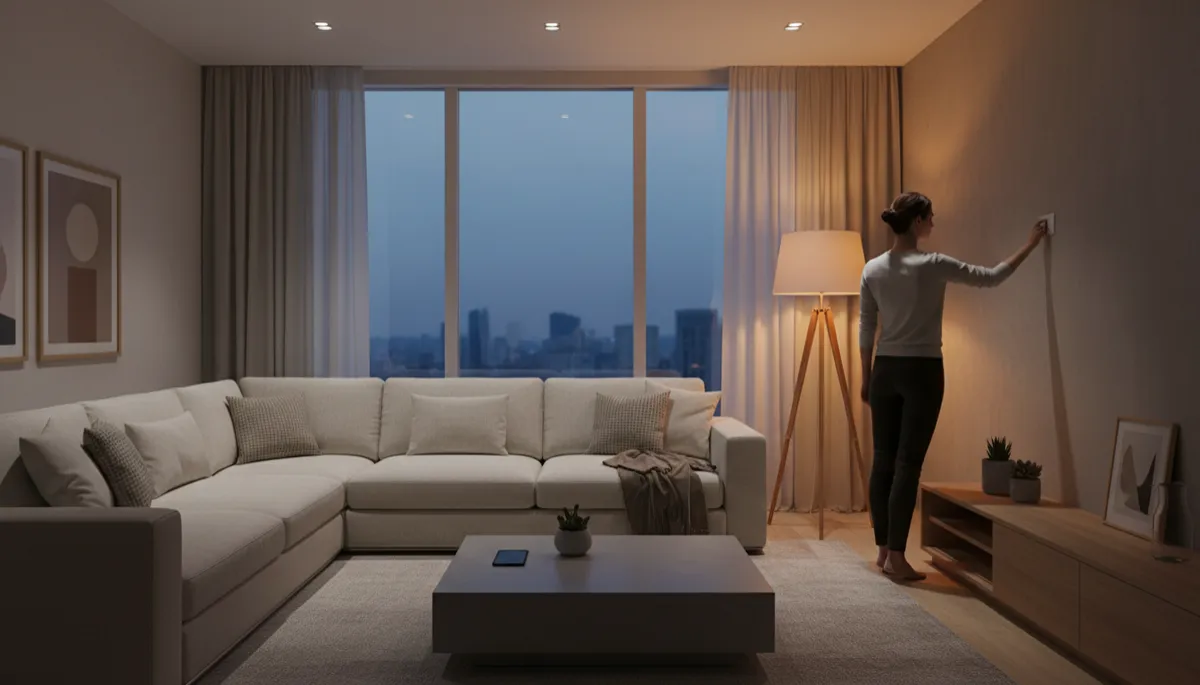
Dimming harsh lights before bed can cue your brain that night has truly begun.
Cooling Down: The Temperature Trick Hiding in Your Thermostat
The next week, Jenna tackled something even simpler: bedroom temperature. She had always cranked up the heat on chilly Midwestern nights, bundling herself in thick blankets. But one podcast episode planted a new idea in her mind: humans tend to sleep better in slightly cooler rooms. So she tried her next DIY sleep optimization biohack, lowering the thermostat by just two degrees an hour before bed and trading her heavy comforter for a lighter one with an extra throw she could push aside.
The first night felt a little strange. The air was crisper, and she wondered if she would wake up shivering. Instead, she woke up surprised: she had slept through the night without kicking off her blankets or waking up sweaty. That tiny change, available to almost anyone doing sleep biohacking at home USA, became one of her favorite easy sleep experiments. No supplements, no new gear, just a twist of a dial.
💡 Pro Tip: Try a “temperature trial” for three nights: lower your bedroom by 2–3°F, use breathable bedding, and note in a small journal how quickly you fall asleep and how often you wake up. Treat it like a mini sleep lab you run yourself.
The Wind-Down Ritual: A Story You Tell Your Nervous System
As Jenna kept experimenting, she realized that her nights had no clear beginning. One minute she was answering a late email, the next she was trying to fall asleep. Her nervous system never got the memo that it was time to switch gears. So she designed a simple, repeatable wind-down ritual, her own personal “once upon a time” that told her body the day was ending.
She chose three steps for her nightly story:
A five-minute stretch in the hallway, focusing on slow breathing.
Writing down tomorrow’s top three tasks so her mind did not keep rehearsing them in bed.
Reading a few pages of a calming book, not a thriller, under warm light.
This was sleep biohacking at home USA in its most human form: using rhythm, repetition, and gentle cues instead of pills or machines. Within a week, Jenna noticed that she no longer lay awake replaying conversations from work. Her brain had been given a new script, and it was finally learning its lines.
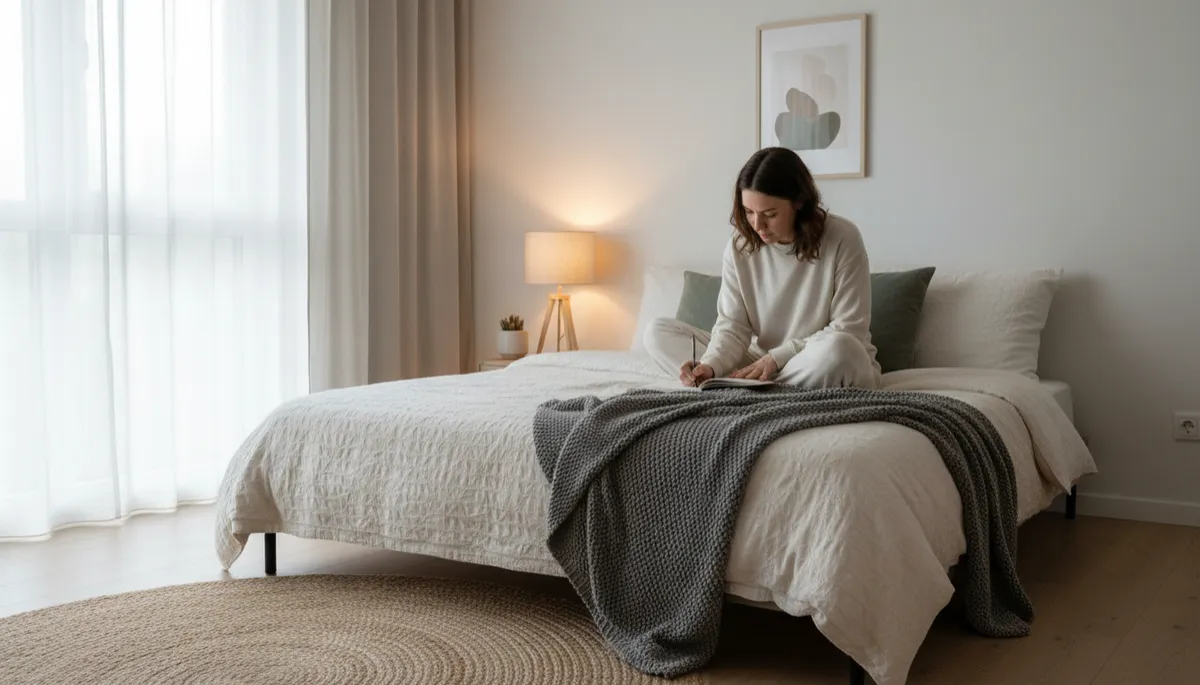
A short, repeatable ritual teaches your body that it is safe to power down.
Sound, Silence, and the Hum of American Nights
Of course, not every American bedroom is perfectly quiet. Maybe you live near a freeway in Los Angeles, above a bar in Chicago, or in a small town where freight trains rumble through at midnight. Jenna’s apartment backed up to a busy street where sirens and car doors were part of the nightly soundtrack. At first, she thought there was nothing she could do about it. Then she tried another of her DIY sleep optimization biohacks: sound shaping.
She did not buy a fancy white-noise machine. Instead, she opened a free sound app on an old tablet and chose a soft, steady fan noise. She placed the tablet across the room and let the gentle hum blend the sharp city sounds into the background. For the first time in months, a slamming car door did not yank her out of the edge of sleep. That low, consistent sound became another tool in her kit of easy sleep experiments, proof that even in a noisy neighborhood, she had options.
📌 Key Takeaway: You do not need total silence; you need predictable sound. A fan, a simple app, or even gentle music on a timer can turn unpredictable city noise into a softer backdrop for sleep.
The Caffeine and Clock Experiment: Tweaking Daytime for Better Nights
As Jenna’s confidence grew, she stopped thinking of “biohacking” as something reserved for Silicon Valley founders and started seeing it as a series of small, thoughtful experiments anyone in the U.S. could run. Her next target was daytime habits, especially coffee and clocks. Like many Americans, she loved an afternoon latte. She also had a habit of sleeping in late on weekends to “catch up.”
For one week, she tried two new rules:
No caffeine after 2 p.m. - tea or water only in the afternoon.
Wake-up time within one hour every day, even on weekends.
It felt like a small sacrifice at first, especially on Saturday when her alarm rang earlier than she wanted. But by Sunday night, something magical happened: she fell asleep quickly without the familiar Sunday-night insomnia. By stabilizing her internal clock and easing off late caffeine, she discovered one of the most powerful DIY sleep optimization biohacks of all, the art of consistency.
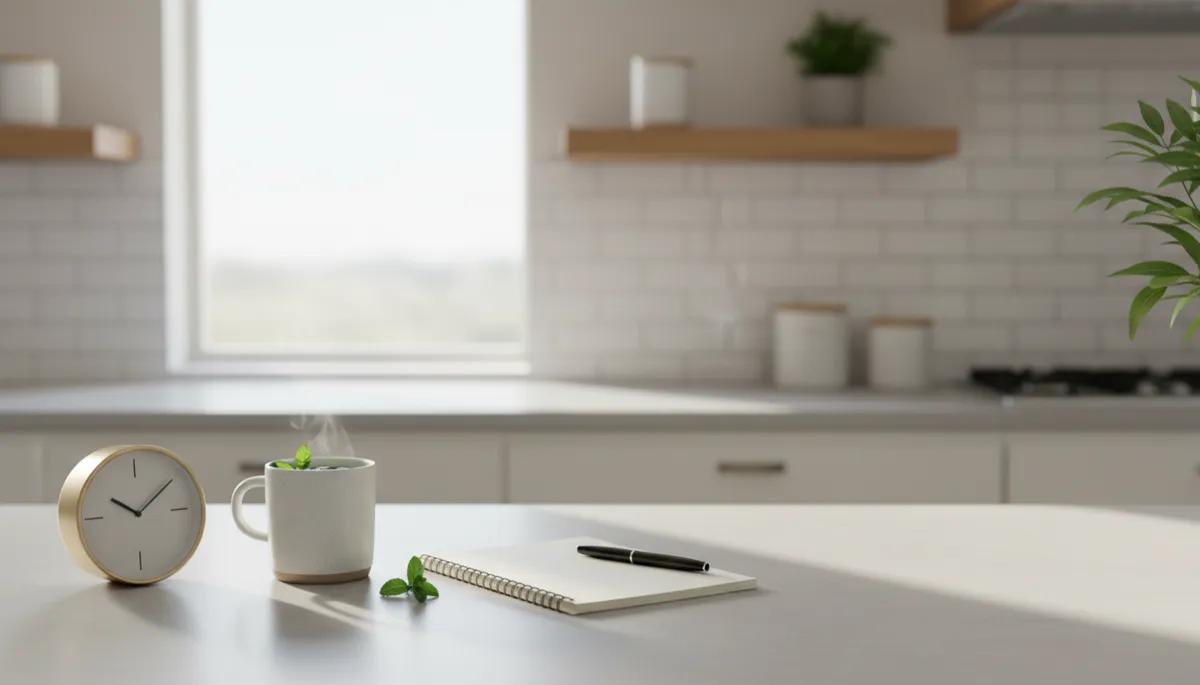
Simple daytime tweaks, like earlier caffeine cutoffs, can transform how your nights feel.
Building Your Own At-Home Sleep Lab Tonight
By the end of a month, Jenna’s notebook told a new story. Her “Sleep Experiments” pages were filled with dates, small changes, and quick notes: “cooler room = fewer wake-ups,” “no phone in bed = fell asleep faster,” “stretching + journaling = calmer mind.” She had turned her ordinary American bedroom into a personal sleep laboratory, using only what she already had. This is the heart of DIY sleep optimization: not perfection, but curiosity.
You can start your own journey the same way, tonight. Pick one or two easy sleep experiments from Jenna’s story:
Dim the lights and park your phone outside the bedroom an hour before bed.
Lower the thermostat slightly and switch to lighter bedding.
Create a three-step wind-down ritual you repeat every night.
Add gentle, consistent background sound to soften unpredictable noise.
Write them down. Give each experiment three to seven nights. Notice what shifts: how long it takes to fall asleep, how often you wake up, how you feel in the first ten minutes of the morning. This is sleep biohacking at home USA, not as a fad, but as a quiet act of self-respect in a culture that often glorifies exhaustion.
Your Story, Your Sleep, Your Next Experiment
Somewhere in an apartment in New York, a townhouse in Texas, or a dorm room in Oregon, someone else is staring at a glowing screen, feeling tired and stuck, just like Jenna once did. The difference between another restless night and a better one is not a miracle cure, it is a decision to start experimenting. To say, “What if I change just one thing tonight and see what happens?”
When you choose even one of these DIY sleep optimization biohacks, you are doing more than chasing better rest. You are rewriting the story you tell yourself about your body, that it is not broken or doomed to be tired forever, but responsive, adaptable, and capable of learning new rhythms. You become both the narrator and the scientist of your nights.
Tonight, when you switch off the bright lights, set your phone aside, cool the room, or pick up a notebook, imagine Jenna’s scribbled “Sleep Experiments” page and know that you are joining a quiet movement across the country. Ordinary Americans turning their bedrooms into gentle laboratories, practicing DIY sleep optimization one small change at a time, discovering that rest is not a luxury reserved for the lucky, it is a story they can help write, starting now.