

DIY Citizen Science for Kids: Unlocking Biology Through Safe, At-Home Discovery
You’ve just spotted a shimmering beetle on the windowsill, and your six-year-old’s eyes go wide. “What’s it doing?” she whispers. You could reach for a textbook or pull up a documentary clip, but what if I told you that very beetle could be the key to a whole world of biology, and that your family could help real scientists just by watching it? That’s the everyday magic of DIY citizen science for kids.
In this post, we’ll walk through safe, joyful biology projects you can do right on your kitchen table or in your backyard, turning ordinary curiosity into genuine data for researchers around the globe. You’ll discover why teaching biology at home doesn’t require a fancy lab, how to set up a low-cost, hazard-free space for safe biology experiments children actually beg to repeat, and five step-by-step projects that blend wonder with real science. By the end, you’ll have everything you need to turn a passing interest into a lifelong passion, and even contribute to discoveries that help our planet. So grab your coffee, and let’s dig into the soil of discovery together.
The Science of Wonder: Why Biology and Citizen Science Are a Perfect Pair
Biology is the study of life, and what better way to learn it than by holding life gently in your hands? Children are natural observers. They notice the pill bug curled under a rock, the way a bean sprout bends toward the windowsill, the sparrows squabbling over a feeder. Yet somewhere between worksheets and flashcards, that raw awe can dim. Citizen science puts the living world back at the center.
When kids participate in real research projects, counting ladybugs, tracking bud bursts in spring, or identifying moths at a porch light, they’re not just memorizing facts. They’re doing what scientists do: asking questions, collecting evidence, and sharing discoveries.
The word “citizen” here simply means anyone, regardless of credentials, contributing to scientific knowledge. Projects are designed by researchers who need many eyes and ears over time and across places. Your family’s observations fill gaps that even the most dedicated field scientist can’t cover. And because this work begins at home, you’re already teaching biology at home in its richest form, context-rich, emotionally connected, and memorable.
Studies show that when children feel their actions matter beyond a grade, motivation soars. National Geographic highlights that citizen science participation strengthens kids’ understanding of the scientific method while fostering a genuine conservation ethic. It turns out the little beetle on the windowsill is a doorway to a much bigger conversation.
Setting Up a Safe, Low-Cost Home Biology Lab
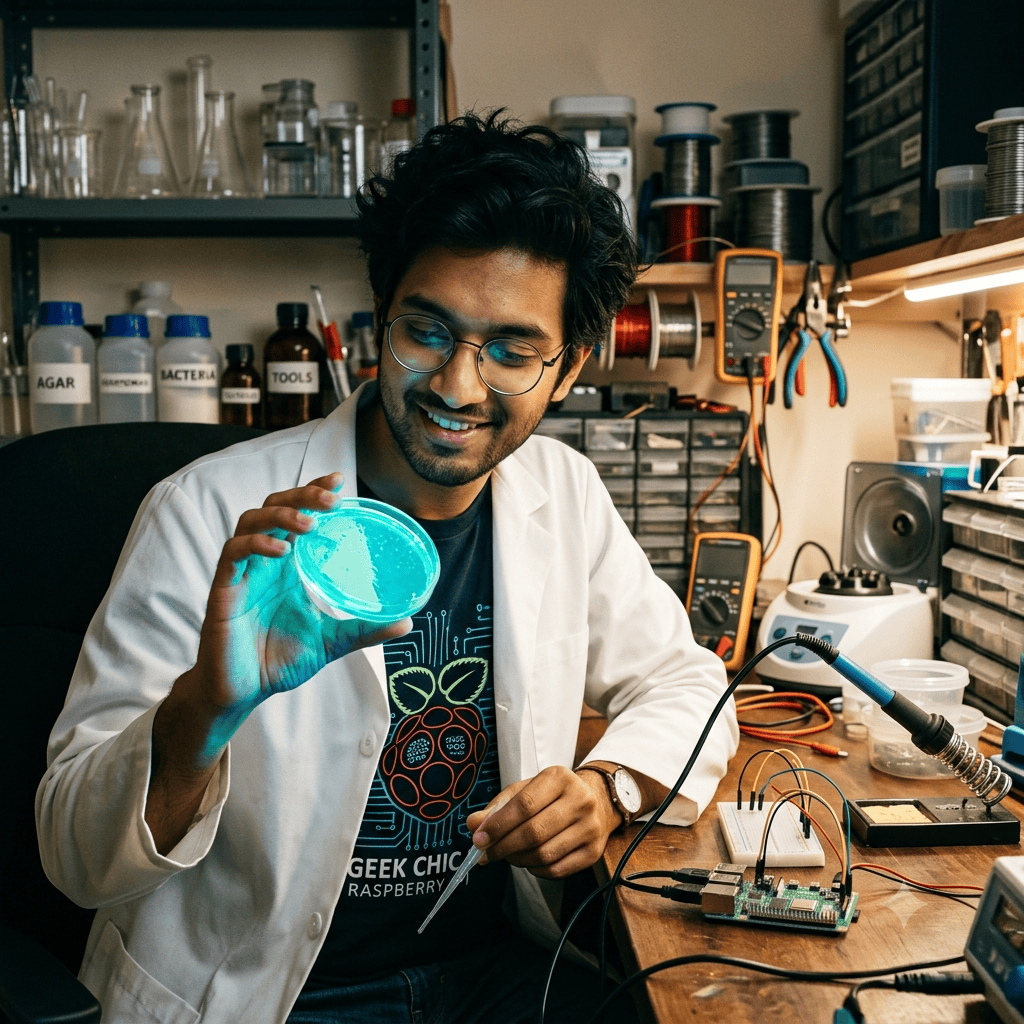
Before we pounce on our first project, let’s talk safety. Safe biology experiments children can do independently still need a caring adult to set the stage. The beauty of DIY citizen science for kids is that you almost never need dangerous chemicals or sharp tools. Instead, you’ll build a “discovery kit” from everyday household items. Here’s how to make biology feel official and completely secure:
The Non-Negotiables: Hand-washing before and after handling any living thing (including soil), no tasting experiments, and an adult within earshot. If a project involves a sealed bag, jar, or balloon, always supervise inflation steps.
The Starter Kit: Clear plastic cups, a magnifying glass (or a clip-on phone macro lens), a notebook with unlined pages for drawing, colored pencils, masking tape, scissors, and a ruler. A simple kitchen scale and a digital thermometer add measurement possibilities.
The “Lab” Space: A tray on the kitchen table defines a work zone and contains messes. For outdoor work, a small tote with a handle lets you carry the kit to the garden or park.
Tech Tools: An old smartphone or tablet can run free citizen science apps like iNaturalist or eBird. Offline, a field guide from the library works just as well and adds a cozy, screen-free option.
Set a calm, “let’s see what happens” tone. Mistakes are just data in disguise. If the seeds didn’t sprout, that’s a chance to think about water, temperature, or light—real biology, real problem-solving. With safety handled, you’ve built a foundation where teaching biology at home feels less like a lesson and more like a shared adventure.
5 DIY Citizen Science Projects for Kids to Explore Biology Safely
Here are five hands-on investigations that weave DIY citizen science for kids into your weekly rhythm. Each includes a clear scientific concept, a real project you can contribute data to, and zero scary materials.
1. Backyard Bird Breakfast Club
Concept: Animal behavior, biodiversity
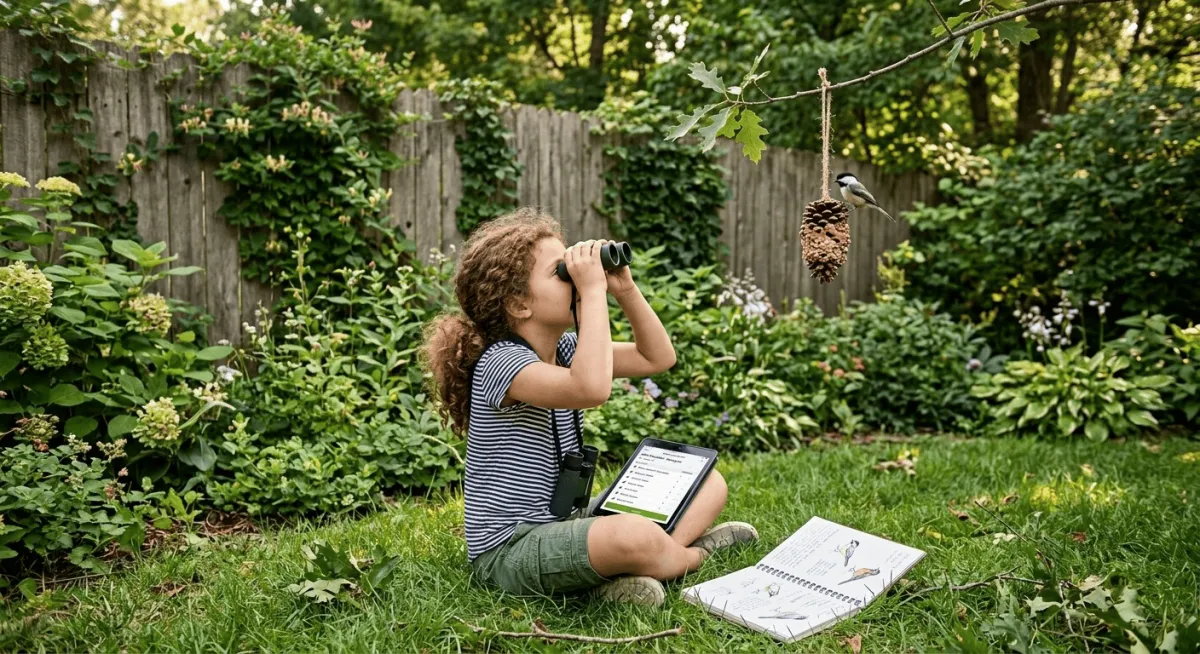
Tie a pine cone with string, slather it in peanut butter (or sunflower seed butter for allergies), roll in birdseed, and hang it near a window. Set out the notebook and open the free eBird app from the Cornell Lab of Ornithology. Spend fifteen minutes in the morning recording every bird species you see.
Over time, you’ll notice patterns: Which birds visit first? Do they peck at the feeder or the ground underneath? Submit your checklist to eBird, and your data joins one of the world’s largest biodiversity databases, used by scientists to track migration shifts. This is safe biology experiments children adore because there’s zero handling of wildlife—just observation.
2. Sock Seed Sprint
Concept: Germination, plant growth, environmental response
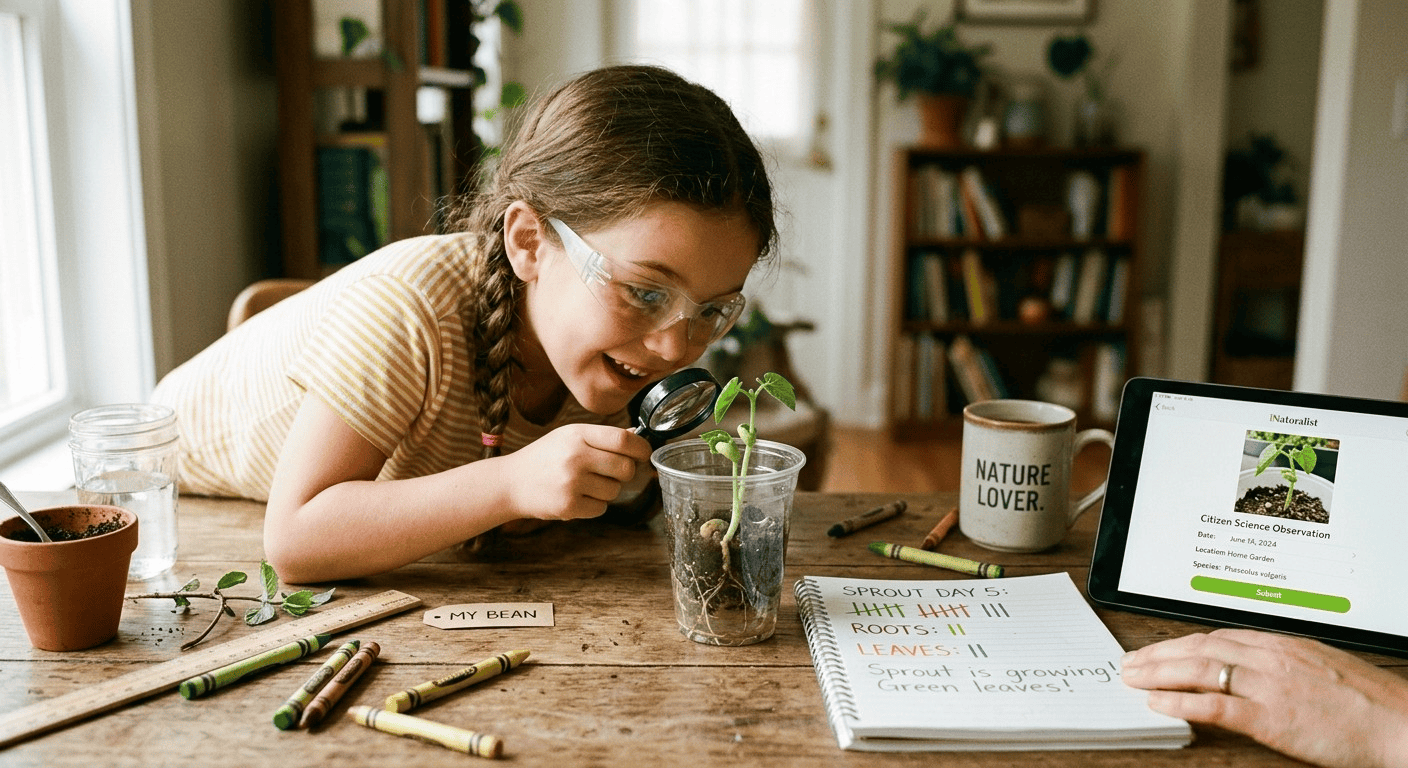
Pull an old sock over your child’s shoe and walk through a weedy patch or garden. Then place the sock in a shallow tray, cover lightly with soil, water gently, and seal inside a clear plastic bag to create a mini greenhouse. Tape the bag to a sunny window. In a few days, tiny green shoots will appear exactly where seeds stuck to the sock. Count sprouts, measure growth with a ruler, and upload photos to the Budburst project, which helps scientists track plant life cycles. It’s a vivid reminder that life is waiting everywhere, even on our socks.
3. Yeast Balloon Blow-Up
Concept: Cellular respiration, microorganisms
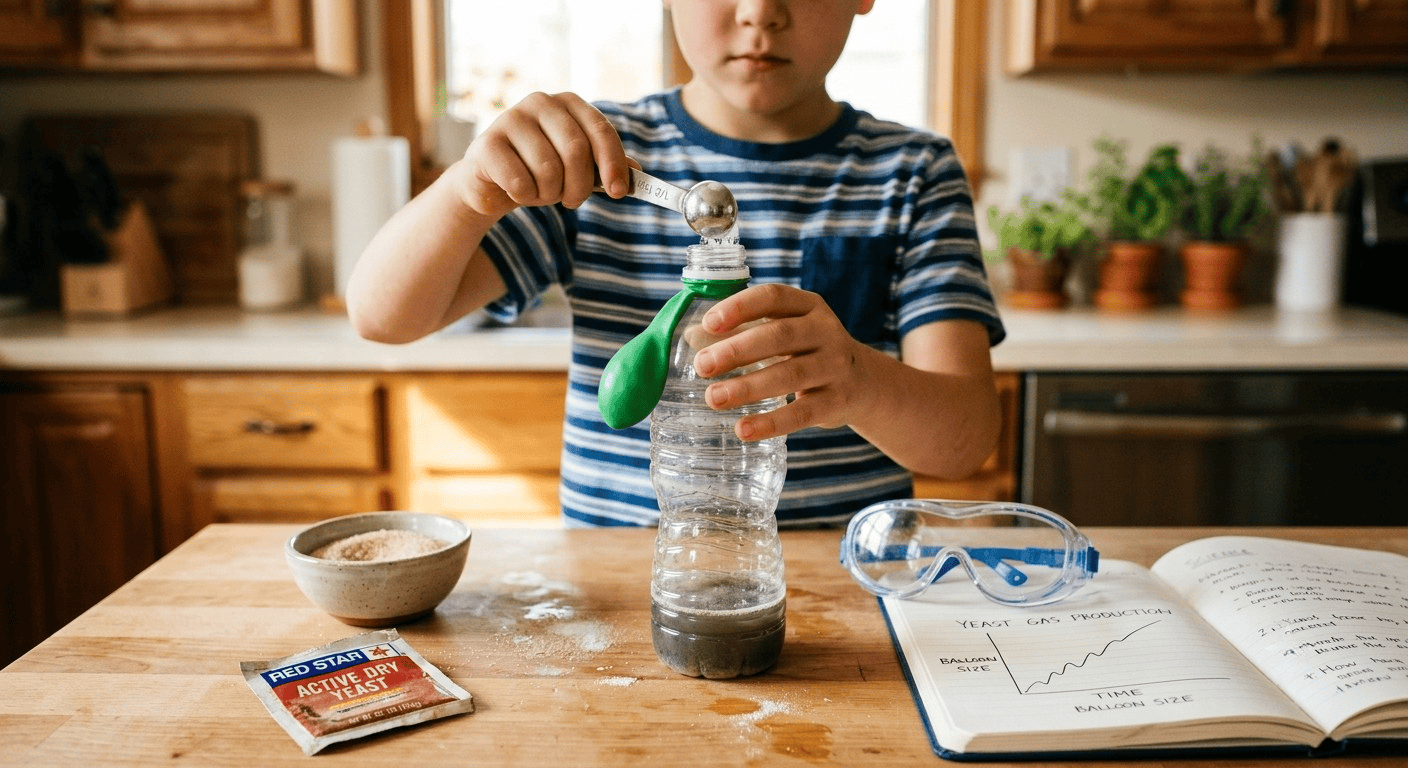
Yeast are living organisms, and they’re hungry. In a small, clean bottle, mix a packet of dry yeast with a teaspoon of sugar and half a cup of warm water. Stretch a balloon over the bottle’s mouth. Within twenty minutes, the balloon will start to inflate as the yeast feast on sugar and release carbon dioxide. Measure the balloon’s circumference every five minutes to graph the rate of respiration.
While there isn’t a single citizen science project that collects home yeast data, this experiment teaches core microbiology concepts safely, and children can share their time-lapse photos on platforms like iNaturalist’s “Lab Life” section or document it as a science journal entry. It’s a perfect bridge to discussing how microbes shape our world.
Relates to this article [Kitchen Science: Edible Experiments for Homeschoolers]
4. Pill Bug Palace
Concept: Habitat preference, isopod behavior
Pill bugs (roly-polies) are harmless decomposers. Create a simple choice chamber: a shallow plastic container with a lid, divided into two sections by a piece of cardboard. Dampen a paper towel on one side and leave the other side dry. Add a dark leaf litter “roof” over half of each section. Gently collect a few pill bugs from under a rock (always supervise and return them within an hour), place them in the center, and observe where they settle. Kids can record how many are in moist vs. dry areas, or light vs. dark, over five-minute intervals. The School of Ants project and other soil ecology citizen science initiatives welcome observations of ground-dwelling critters. It’s a wonderful way for safe biology experiments children can design themselves.
5. Moonlit Moth Watch
Concept: Insect diversity, phototaxis
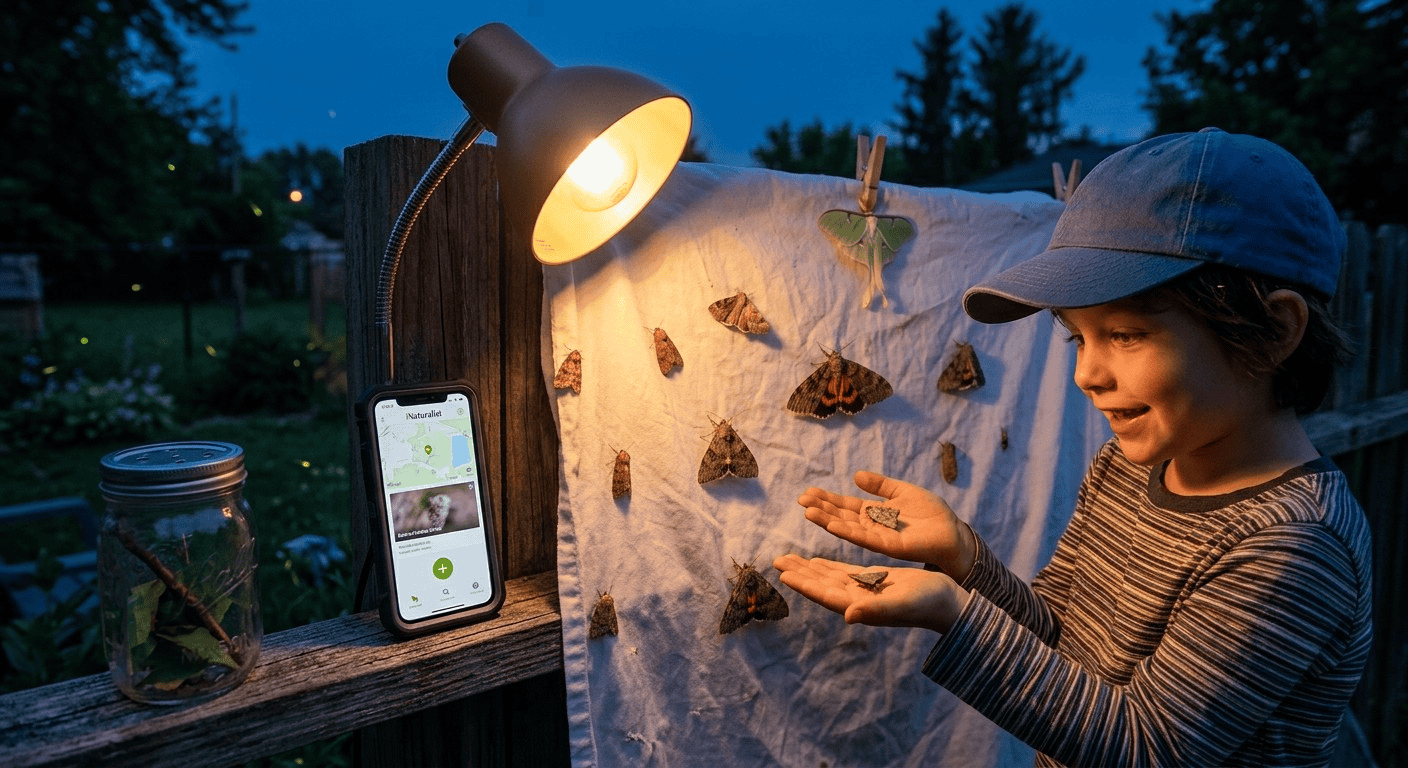
On a warm evening, clip a white sheet to a fence or clothesline, shine a desk lamp onto it, and wait. Moths, lacewings, and other nocturnal insects will land on the sheet. Photograph each visitor with a phone before gently releasing it. Upload your images to iNaturalist’s “Moths of the World” project. Over several nights, you might create a miniature catalog of backyard biodiversity. There’s something deeply memorable about standing in the dark with your child, watching a luna moth fan its wings—a quiet, real biology moment that needs no screen.
How Your Family’s Data Helps Real Scientists
It’s easy to wonder if a six-year-old’s bird tally or a blurry photo of a moth really matters. It absolutely does. Consider this: professional field biologists can’t be everywhere at once. Migrating birds cross continents; plants leaf out at different times depending on microclimates. Observations from thousands of families like yours reveal patterns that would otherwise stay invisible.
Researchers at Cornell Lab of Ornithology use eBird data to map how climate change shifts migration timing. Plant scientists studying Budburst data track whether spring is arriving earlier. Even our little pill bug counts add to knowledge about soil health in urban environments.
When you’re teaching biology at home through citizen science, you’re also teaching something deeper: that we are all part of a larger community of curious people. Your child learns that science isn’t just answers in a book, it’s questions being asked right now, and their contribution is genuinely valued. The SciStarter website connects families with hundreds of similar projects, many developed specifically for children. A quick search there can match your kid’s interest (spiders? stars? strawberries?) with a researcher who needs their eyes.
Key Takeaways
Here’s a quick recap of what we’ve covered, perfect to come back to when you need a nudge of inspiration.
DIY citizen science for kids turns everyday curiosity into real research data, making biology personal and purposeful.
Safe biology experiments children enjoy are built from common kitchen supplies and simple observation—no hazardous materials required.
Teaching biology at home works beautifully when you move from abstract concepts to hands-on projects like watching yeast respire or tracking budburst.
A prepared mini-lab with safety rules, a notebook, and a few free apps lowers the barrier and boosts confidence.
Every observation counts. Databases from eBird, Budburst, iNaturalist, and others rely on family scientists to detect ecological changes over time.
Curiosity is the most important ingredient. When a child asks, “Why?” they’re already doing science.
Remember, you don’t need to be a trained biologist. You just need to be willing to look closely and say, “Let’s find out together.”
Let’s Keep the Curiosity Growing
Biology is the story of life, and your home is already bursting with it—in the soil under the grass, the yeast in the pantry, the birds at the window. I hope these projects have sparked a few ideas you can try this weekend with nothing more than a sock, a balloon, or a sheet lit by a lamp.
The real gift of DIY citizen science for kids is that it replaces performance pressure with genuine wonder, and somewhere in the middle of a moth count or a sprouting seed, deep learning takes root naturally.
If you have questions, want to share a project your family loved, or need a hand adapting an idea for a different age, I’d genuinely love to hear from you. Contact us at [[email protected]] - this is a conversation, not a lecture, and your stories make the science richer. Now go chase that beetle. It’s waiting.
Internal Link Placeholders
Throughout the post, I linked to these related articles:
“Backyard Bug Safari: A Beginner’s Guide to Entomology for Families” — link from the Pill Bug Palace paragraph.
“How to Start a Nature Journal with Your Child (Even If You Can’t Draw)” — link from the discovery kit mention or moth watch section.
“Kitchen Science: Edible Experiments for Homeschoolers” — link from the yeast balloon experiment paragraph.
“Building a Bug Hotel: A Step-by-Step Guide for Kids” — link from the setting up a home lab section or the pill bug project.
External Link Placeholders
High-authority external links used:
[SciStarter](https://scistarter.org) — referenced in the section on finding projects.
[eBird by Cornell Lab of Ornithology](https://ebird.org) — referenced in the Backyard Bird Breakfast Club project.