

DIY Biohacking for Athletes: Simple Experiments to Boost Performance
If you’ve ever wondered whether small tweaks to your daily routine could unlock a new level of speed, strength, or recovery, you’re already thinking like a biohacker.
The word “biohacking” might sound like something reserved for Silicon Valley executives with unlimited budgets, but here’s the truth: biohacking for athletes doesn’t require a lab coat, an IV drip, or a cryo-chamber membership.
It’s simply the practice of running thoughtful, low-risk experiments on your own body, tracking what happens, and keeping what works. Think of it as coaching yourself with curiosity.
I’m going to walk you through a handful of DIY performance experiments and athlete recovery hacks that fit into a normal training schedule.
We’ll keep things grounded in science, but I’ll talk to you like a friend who’s just as obsessed with marginal gains as you are. No jargon, no magic pills, just actionable ideas you can test at home, on the track, or in the gym.
And because I want this to be genuinely useful, I’ll also share how to track your results so you know what’s moving the needle and what’s just noise.
By the time you finish reading, you’ll have a menu of simple biohacking for athletes protocols to try, plus a clear framework for deciding which ones earn a permanent spot in your kit. Let’s get into it.
What DIY Biohacking for Athletes Really Means
Let’s clear up the biggest misconception right away: biohacking for athletes is not about overriding biology.
It’s about listening to your body’s signals more carefully and then nudging the systems you already have, sleep, nutrition, movement, mindset, and recovery, toward better output.
The goal isn’t to become a different person; it’s to become a more dialed-in version of yourself.
When I say “DIY performance experiments,” I mean structured self-tests where you change one variable at a time and monitor the results.
That’s the secret sauce. No scattershot protocol hopping. You pick one thing, run it for at least two weeks, and track objective and subjective markers, resting heart rate, sleep quality, soreness, mood, time trial performance, whatever matters most to your sport.
This method turns biohacking for athletes into a skill, not a gimmick.
A quick note on safety: none of the experiments I’ll suggest are extreme. You won’t find anything that requires fasting for days or ignoring pain. These are low-risk, high-upside tweaks. Still, if you have a medical condition or are unsure, loop in a trusted professional. Good? Good. Let’s dive into the first experiment.
Experiment 1: Morning Light and Circadian Anchoring
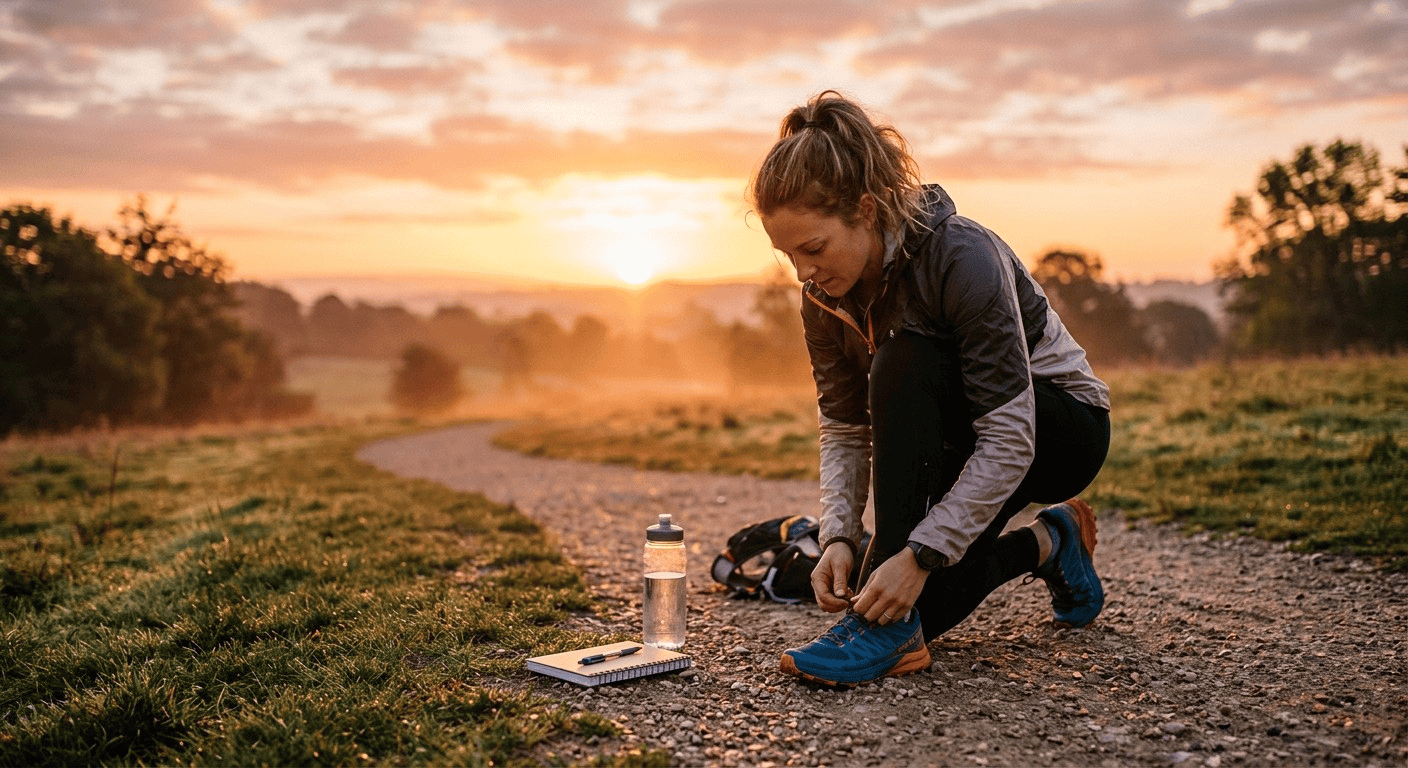
If I could only keep one free recovery tool, it would be morning sunlight. It sounds too simple to matter, but your circadian clock governs everything from hormone release to sleep depth and even muscle repair timing.
By exposing your eyes to natural light within 30 minutes of waking, you set a biological timer that helps you fall asleep faster at night and wake up with more energy in the morning. For athletes, that means better training readiness and quicker athlete recovery hacks that actually stick.
How to run the experiment:
For two weeks, step outside (or sit by a bright window) for 10–20 minutes within half an hour of waking. Don’t wear sunglasses; glasses and contacts are fine. No need to stare at the sun, just let it hit your eyes. On overcast days, stay out a little longer. If you’re in a dark climate, a 10,000-lux light box works, but real daylight is best.
Track these markers:
Time you fall asleep (write it down)
Sleep quality score (1 to 5 scale)
Morning resting heart rate
Perceived readiness for your first training session
After two weeks, compare your average sleep onset and recovery metrics to the two weeks before you started. I’ve seen athletes shave 20 minutes off the time it takes to fall asleep just by anchoring light exposure. That matters when you’re stacking training sessions.
Experiment 2: Cold Water Immersion for Recovery
Cold plunges have gone mainstream, but you don’t need a high-tech tub to experiment with one of the most researched athlete recovery hacks out there.
Cold water immersion can reduce perceived muscle soreness, lower inflammation, and improve mood, though the timing matters if your main goal is strength or hypertrophy.
The protocol (start gentle):
Begin with 2 to 3 minutes in water that’s between 10–15°C (50–59°F). If you don’t have a thermometer, aim for water that makes you gasp a little but doesn’t hurt. A bathtub with cold tap water and a bag of ice works. A natural body of water works even better, provided it’s safe.
Commit to 3 to 4 sessions per week, ideally right after a hard session or in the evening. If you’re chasing muscle growth, wait at least 4 hours post strength training before cold immersion, because blunting inflammation too quickly might dampen the adaptation signal. Read our deep dive on timing cold exposure here.
Track:
Muscle soreness (1 to 10 scale) 24 hours post workout
Sleep quality that night
Morning resting heart rate variability (if you track it)
Overall mood and perceived energy
Most athletes I work with report less “heavy legs” the day after hard runs or leg sessions. Some find cold exposure overstimulating close to bed; others sleep like a rock. That’s the whole point of DIY performance experiments, your nervous system has a personality, so test and learn.
Experiment 3: Breathing and CO₂ Tolerance
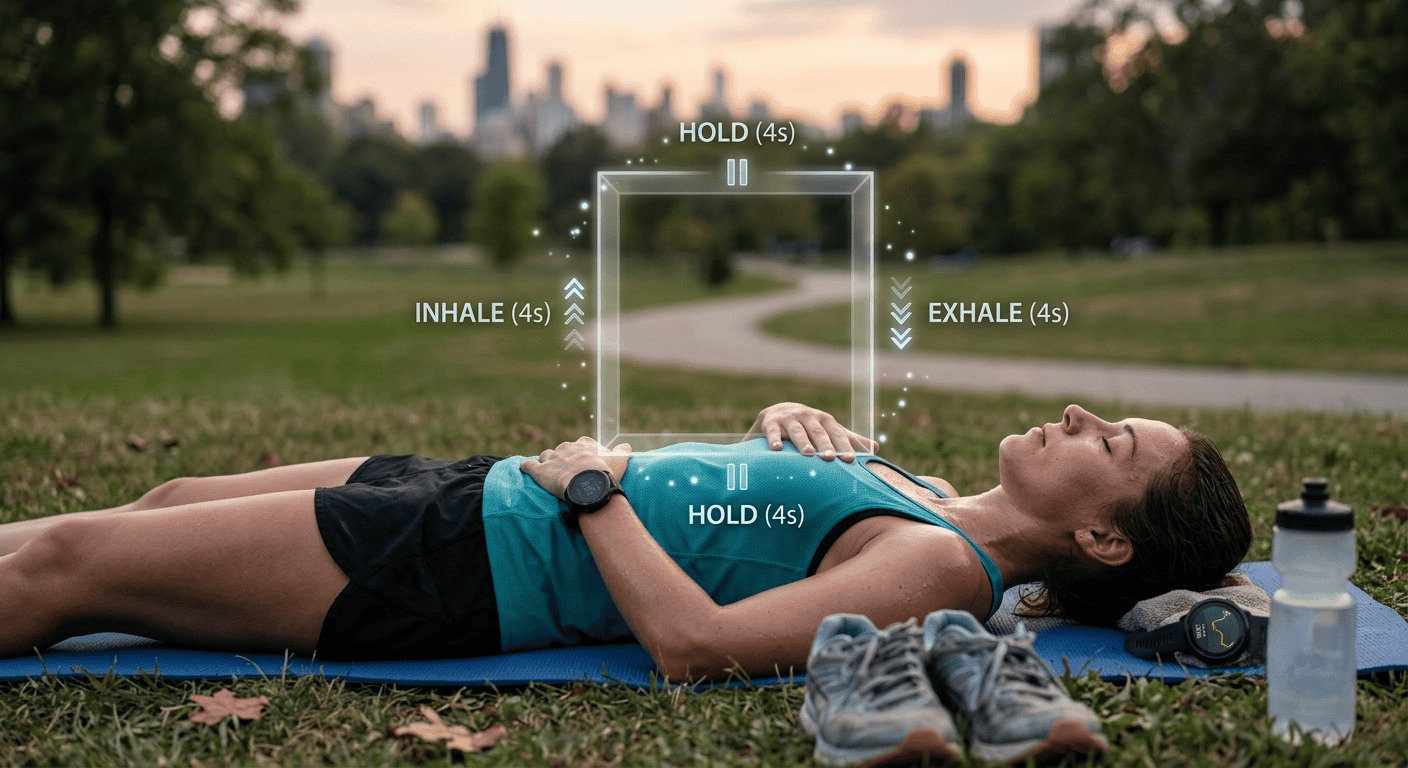
Breathwork is one of the most underused tools in biohacking for athletes. While your lungs are rarely the limiting factor in endurance, how you breathe between efforts and during recovery directly influences your nervous system state. Box breathing, nasal-only breathing during warm-ups, and CO₂ tolerance drills can improve your ability to stay calm under fatigue and bounce back faster.
Pick one technique to test:
Post-training box breathing: Immediately after your session, sit or lie down. Inhale through your nose for 4 seconds, hold for 4, exhale for 4, hold for 4. Repeat for 5 minutes.
Nasal-only easy runs/warm-ups: For the first 15 minutes of any low-intensity session, breathe only through your nose. If you have to mouth-breathe, slow down.
CO₂ tolerance walking drill: While walking, inhale through your nose for 4 seconds, exhale through your nose for 4, then pinch your nose and hold your breath. Count the number of steps you can take comfortably. Over time, try to increase your step count by 5 to 10%.
Track:
Heart rate during nasal-only portion vs. mouth-breathing at same pace
Time needed for heart rate to drop 30 beats after an interval
Subjective calmness before bed
Step count on the CO₂ drill (a fun metric to watch grow)
Breathing is a real-time remote control for your nervous system. By treating it as a DIY performance experiment, you’ll discover which protocol helps you down-regulate fastest. For more on respiratory training, see our breathwork guide.
Experiment 4: Pre-Sleep Nutrition Tweaks
You’ve heard that eating too close to bed can wreck sleep, but the story isn’t that simple.
For athletes, strategic pre-sleep nutrition can enhance overnight muscle repair and even next-day performance, if you pick the right foods and timing.
This is where biohacking for athletes gets delicious.
What to test:
About 30 to 45 minutes before bed, consume a small, protein-rich snack that also contains a little bit of slow-digesting carbohydrate or fat.
Think Greek yogurt with a handful of almonds, cottage cheese with berries, or a casein protein shake blended with a teaspoon of almond butter. Total calories: 150–200. The goal is to supply amino acids to muscles during the first half of the night without spiking insulin enough to disrupt deep sleep.
Run this for two weeks, then compare to two weeks of no pre-sleep snack.
Track:
Morning hunger levels (useful if you train fasted)
Sleep quality and number of awakenings
Next-day training session perceived exertion
Any bloating or digestive discomfort
This experiment often surprises athletes who’ve been told never to eat before bed. Many find they wake up less groggy and feel stronger during morning sessions. If digestion is an issue, shift the snack 60 minutes earlier or drop the volume. For a broader look at fueling around the clock, check out our post on nutrition tracking.
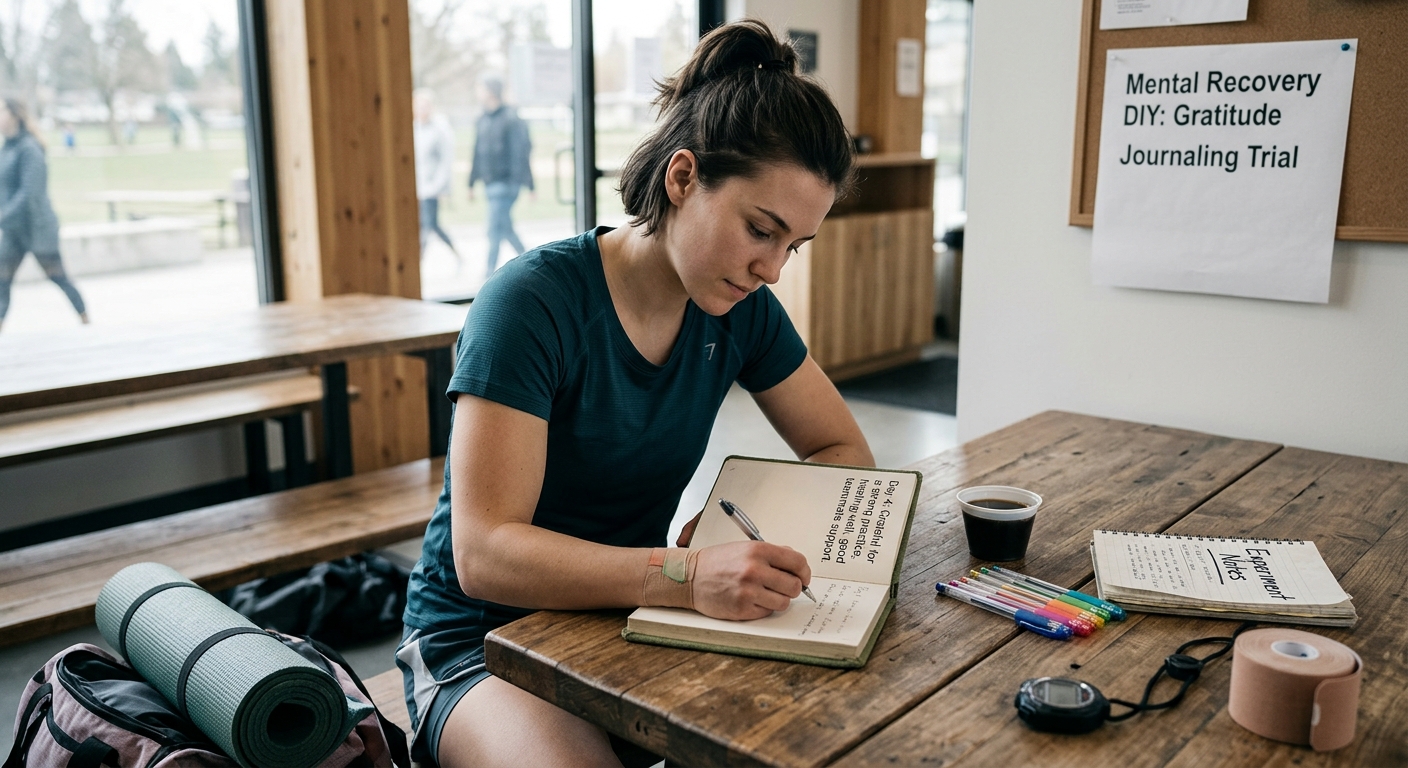
Experiment 5: Gratitude and CNS Recovery Journaling
Biohacking for athletes isn’t all ice baths and breathing drills. Your central nervous system (CNS) heavily influences how recovered you feel. Psychological stress, whether from training, work, or life, takes a toll.
A quick daily writing habit can lower cortisol and improve perceived recovery, essentially acting as a free athlete recovery hack that costs five minutes.
The protocol:
Every evening, write down three specific things you’re grateful for from that day. They can be training-related (nailed a set of squats) or completely ordinary (great coffee).
Next, note one tiny win, something you did well. Then, write one sentence about what would make tomorrow great. Keep it bullet-point style. Do this for three weeks.
Track:
Morning “readiness to train” score (1 to 5)
Daily mood rating (1 to 5)
Training session RPE at same objective output
Qualitative: do you feel less irritable on rest days?
This isn’t woo-woo. A growing body of research links gratitude practices with better sleep and lower inflammatory markers. It’s a low-commitment experiment that can shift your mindset and, in turn, your body’s ability to adapt.
How to Build Your Own Biohacking for Athletes Experiment Tracker
You don’t need a fancy wearable, though a simple heart rate monitor helps. Grab a notebook or a spreadsheet and set up these columns for any variable you test:
Date
Variable changed (e.g., cold plunge, nasal breathing, snack timing)
Duration and details (e.g., 3 min at 12°C)
Subjective markers (soreness, mood, sleep quality)
Objective markers (resting HR, HRV, time-trial time, step count)
Notes (what felt different, any life stressors that might skew data)
Run one experiment at a time for at least 14 days. The discipline to isolate variables is what separates real biohacking for athletes from random wellness trends. When you stack too many changes, you can’t tell what worked. Be patient, stay curious, and let the data talk.
Summary: Pick One, Track It, Learn from It
Here’s a cheat sheet of the DIY performance experiments we covered:
Morning light exposure to anchor sleep and boost energy
Cold water immersion (post-training, timed carefully) to manage soreness
Breathing drills (box breathing, nasal-only warm-ups, CO₂ tolerance) for nervous system control
Pre-sleep protein snack to aid overnight muscle repair
Gratitude journaling to improve CNS recovery and mindset
Each of these athlete recovery hacks costs little or nothing, and all can be measured. That’s the essence of biohacking for athletes: turning your body into a living lab where you’re the scientist and the subject. Small, repeated improvements compound. A few minutes of sunlight here, a few minutes of breathwork there, over a season, that’s the difference between feeling flat and feeling ready.
Ready to Go Deeper?
If you’re hungry for more structured guidance or want to brainstorm how to adapt these ideas to your specific sport, I’d love to hear from you. Whether you’re a weekend warrior or an elite competitor, the goal is the same: smarter training, better recovery, and a body that feels like home.
Contact us at [[email protected]] with your questions, results, or just to say hi. We’re always swapping stories about which DIY performance experiments are working right now.
This article is for informational purposes only and does not constitute medical advice. Please consult a healthcare professional before making significant changes to your training or recovery routine.