

DIY Biohacking: Affordable Tools for Beginners
Health, DIY Biohacking, Citizen Science
DIY Biohacking on a Budget: Affordable Tools for American Beginners
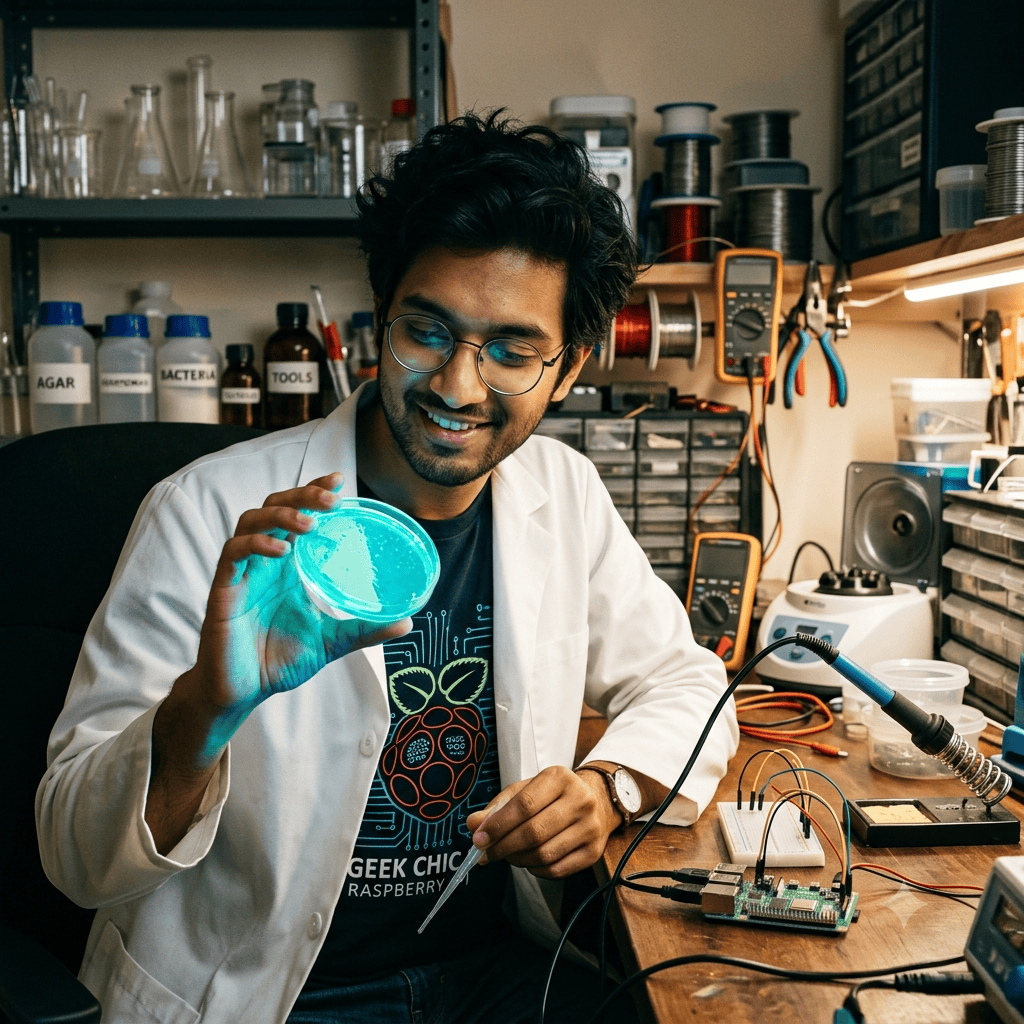
Curious about biohacking but worried it’s only for Silicon Valley millionaires with cryotherapy chambers and $500 gadgets? The truth is, DIY biohacking on a budget is absolutely possible in the United States. With a bit of creativity, you can start experimenting with your own health, performance, and biology using affordable biohacking tools USA residents can find online, at local stores, and through community labs. This guide walks beginner citizen scientists in America through low‑cost gear, simple experiments, and smart ways to stay safe while you explore.
What Is DIY Biohacking and Why It Doesn’t Have to Be Expensive
At its core, biohacking means using data, tools, and small experiments to understand and improve your body and mind. That can be as simple as tracking your sleep and steps, or as advanced as genetic tinkering in a lab. When people hear “biohacking,” they often picture high‑priced wearables and futuristic clinics. But the heart of DIY biohacking on a budget is curiosity, not cash.
For beginner citizen science America enthusiasts, the first goal isn’t to buy everything, it’s to measure, change one thing, and observe. You can do that with free apps, discount-store gear, and simple household items. Think of yourself as a one‑person research project: you’re collecting data, testing ideas, and seeing what genuinely helps you feel and perform better.
💡 Key Idea: Expensive gadgets can be nice, but consistent tracking and thoughtful experiments matter far more than price tags.
Start with Free and Nearly-Free Tracking Tools
Before you spend a dollar, squeeze everything you can out of free tools. Data is the foundation of effective DIY biohacking on a budget, and you already carry a surprisingly powerful device: your smartphone.
Built‑in step counters: iOS Health and Google Fit track steps, walking distance, and basic activity automatically. Use this as your baseline for movement experiments.
Free sleep apps: Apps like Sleep Cycle or basic sleep logs let you track bedtime, wake time, and how rested you feel. You don’t need perfect accuracy to notice patterns.
Simple spreadsheets or notebooks: A paper journal or a free Google Sheet is often the most powerful biohacking tool. Record what you change, caffeine, bedtime, exercise, and how you feel each day.
For many people, a month of consistent tracking reveals more than any fancy gadget. You may notice that one extra hour of sleep improves your mood more than any supplement, or that late‑night screen time wrecks your rest.
Affordable Biohacking Tools USA Beginners Can Find Almost Anywhere
Once you’re tracking the basics, you can add a few low‑cost gadgets to deepen your experiments. Here are affordable biohacking tools USA beginners can pick up on Amazon, at big‑box stores, or even at local pharmacies, often under $30–$40 each.
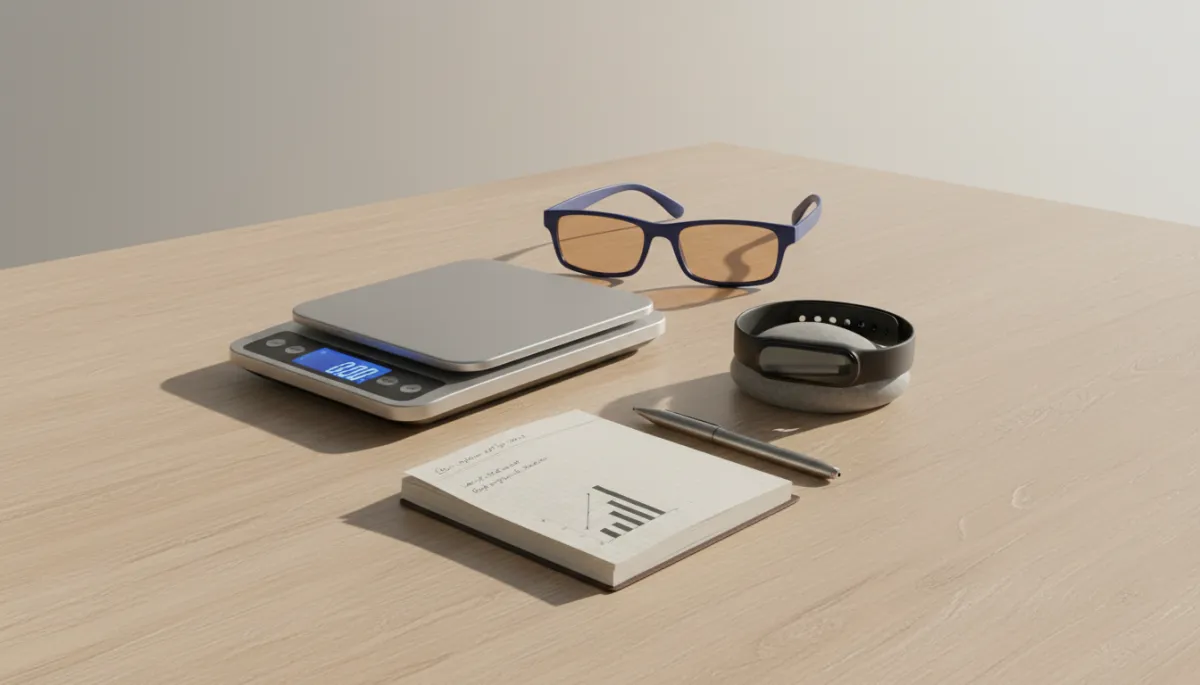
Simple, low-cost tools can generate powerful insights when used consistently.
1. Budget Fitness Trackers
You don’t need a premium smartwatch to benefit from wearable data. Many sub‑$40 fitness bands track steps, heart rate, and sometimes sleep. For beginner citizen science America hobbyists, this is often the first “upgrade” from phone tracking, giving you more continuous data and reminders to move.
2. Digital Kitchen Scale and Measuring Spoons
Nutrition is one of the most powerful levers in biohacking, and also one of the easiest to misjudge. A basic kitchen scale and measuring spoons (often under $20 total) let you quantify your food intake with surprising precision. You can test how different carb levels affect your energy, or whether a higher‑protein breakfast keeps you full longer.
3. Blue‑Light Blocking Glasses
Screen time late at night can interfere with melatonin production and sleep quality. Inexpensive blue‑light blocking glasses, widely available online in the US, are a classic DIY biohacking on a budget tool. Combine them with dimmer lights and a regular bedtime, then track changes in how fast you fall asleep and how rested you feel.
4. Basic Home Health Monitors
Digital thermometer: Useful for experimenting with cold showers, saunas, or temperature‑based routines.
Blood pressure cuff: Often available for $30 to $40, it lets you see how stress management, exercise, or salt intake affect your numbers.
Pulse oximeter: A small fingertip device that measures blood oxygen and pulse, helpful for breathwork or altitude experiments.
These tools are widely available at pharmacies and online, making them accessible entry points for affordable biohacking tools in the USA.
Free and Low‑Cost Experiments You Can Run at Home
Tools are only half the story. The real power of DIY biohacking on a budget comes from structured experiments, changing one variable at a time and watching what happens. Here are a few starter ideas that cost little or nothing:
Sleep experiment: For two weeks, aim for a consistent bedtime and wake‑up time, wearing blue‑light glasses in the hour before bed. Track your sleep duration and rate your energy each morning on a 1 to 10 scale.
Movement experiment: Use your phone or fitness tracker to set a daily step goal - say, 7,000 steps. After two weeks, compare mood, focus, and sleep to your pre‑experiment baseline.
Nutrition experiment: Use your kitchen scale to portion a higher‑protein breakfast for a week, then a higher‑carb breakfast the next week. Track hunger, cravings, and afternoon energy dips.
📌 Key Takeaway: Change one variable at a time, run your experiment long enough (1–2 weeks), and write everything down.
Community Labs and Beginner Citizen Science in America
If you want to go beyond home experiments, the USA has a growing network of community biology labs and maker spaces. These spaces are designed for beginner citizen science America hobbyists who want hands‑on experience with lab equipment without spending thousands of dollars or pursuing a formal degree.
Many labs offer low‑cost memberships or day passes, making advanced tools like microscopes and PCR machines accessible on a budget.
Workshops often cover topics like microbiology basics, DNA extraction, and safe lab practices, perfect for DIY biohacking beginners.
You’ll also meet mentors and peers, which can keep your projects safer, more ethical, and more fun.
Search for “community bio lab” or “DIY biology lab” plus your city, or explore national organizations that list member labs across the country. This is one of the most powerful ways to access affordable biohacking tools USA wide, without buying them yourself.
Safety First: Responsible DIY Biohacking on a Budget
Exploring your own biology can be empowering, but safety should always come first, especially when you’re experimenting at home. Budget biohacking doesn’t mean cutting corners on health or ethics.
Stay within your expertise: Focus on lifestyle, nutrition, and basic physiology unless you’re working with trained professionals in a proper lab setting.
Consult healthcare providers: Before changing medications, starting extreme diets, or using potent supplements, talk with a qualified medical professional.
Respect laws and ethics: Genetic modification, pathogen work, and unapproved medical devices are heavily regulated for a reason. Keep your experiments legal and considerate of others.
⚠️ Warning: If an experiment could seriously harm you or someone else, it’s not a DIY project. Seek expert guidance or skip it.
Building Your Personal, Budget-Friendly Biohacking Roadmap
To bring everything together, think of your journey in phases. You don’t need to buy everything at once or run complex experiments from day one. Here’s a simple roadmap for DIY biohacking on a budget in America:
Phase 1 – Track for free: Use your phone and a notebook to log sleep, movement, mood, and basic habits for 2–4 weeks.
Phase 2 – Add 1–2 affordable tools: Choose items that match your goals, maybe a budget fitness tracker and blue‑light glasses, or a kitchen scale and blood pressure cuff.
Phase 3 – Run structured experiments: Change one habit at a time, record your data, and look for clear trends over weeks, not days.
Phase 4 – Join a community: Explore local community labs, online forums, or citizen science projects to learn from others and access more advanced, shared tools.
Final Thoughts: Biohacking Belongs to Everyone
Biohacking is often portrayed as an exclusive, high‑tech world. In reality, the most impactful changes, better sleep, smarter movement, thoughtful nutrition, and mindful routines, are accessible to almost anyone. With DIY biohacking on a budget, you can start where you are, using tools you already own and a few carefully chosen, affordable upgrades.
Whether you’re a college student in a dorm, a parent juggling work and family, or a curious retiree, the path of beginner citizen science America is open to you. By combining free tracking, affordable biohacking tools USA residents can easily access, and a mindset of careful experimentation, you can turn your everyday life into a personal laboratory, and steadily move toward feeling and performing at your best, without breaking the bank.