

Top Citizen Science Trends to Watch in 2026
Friend, can we talk about how wildly exciting it is to be alive right now?
Every time I open my laptop, I stumble on a new project where regular people, no lab coats required, are helping track endangered species, mapping the stars, or even tinkering with DNA in a community lab.
We’re not just passive consumers of science anymore. We’re part of the research itself. That shift is what makes the citizen science trends 2026 landscape feel so electric.
I’ve been following these movements closely, and I want to walk you through the shifts that are reshaping how we all do science this year.
Grab a coffee, get comfy, and let’s explore what’s happening right now.
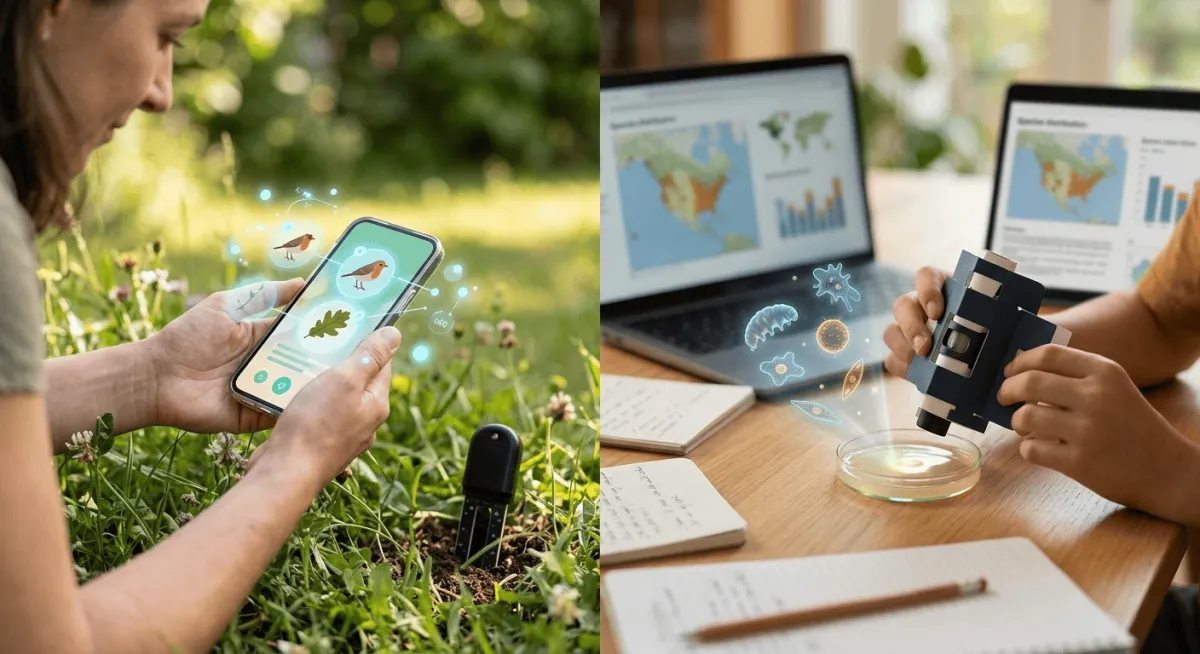
The future of citizen science is being written by people like you and me, neighbors with smartphones, gardeners with soil sensors, and high school students building air quality monitors.
If you’ve ever wondered whether your curiosity could contribute to real discovery, this is your moment. The barriers are dissolving. The tools are smarter. The communities are more inclusive.
And the problems we’re tackling, from climate resilience to rare disease research, need all of us. So let’s dive into the trends I believe will define citizen science in 2026, weaving in a little biohacking magic along the way.
Note for the reader: throughout this piece, I’ve embedded a few internal links to posts that go deeper on specific topics. If something sparks your interest, just click through, they’re there to help you take the next step. I’ve also linked to trusted external sources so you can verify facts and explore projects directly.
1. AI-Powered Citizen Science Becomes the New Normal
If 2025 was the year artificial intelligence knocked on the door of public participation, 2026 is the year it pulled up a chair and joined the family dinner. AI isn’t replacing citizen scientists; it’s handing us superpowers.
The most noticeable of the citizen science trends 2026 is the deep integration of machine learning tools that make identification, data cleaning, and pattern recognition nearly instant.
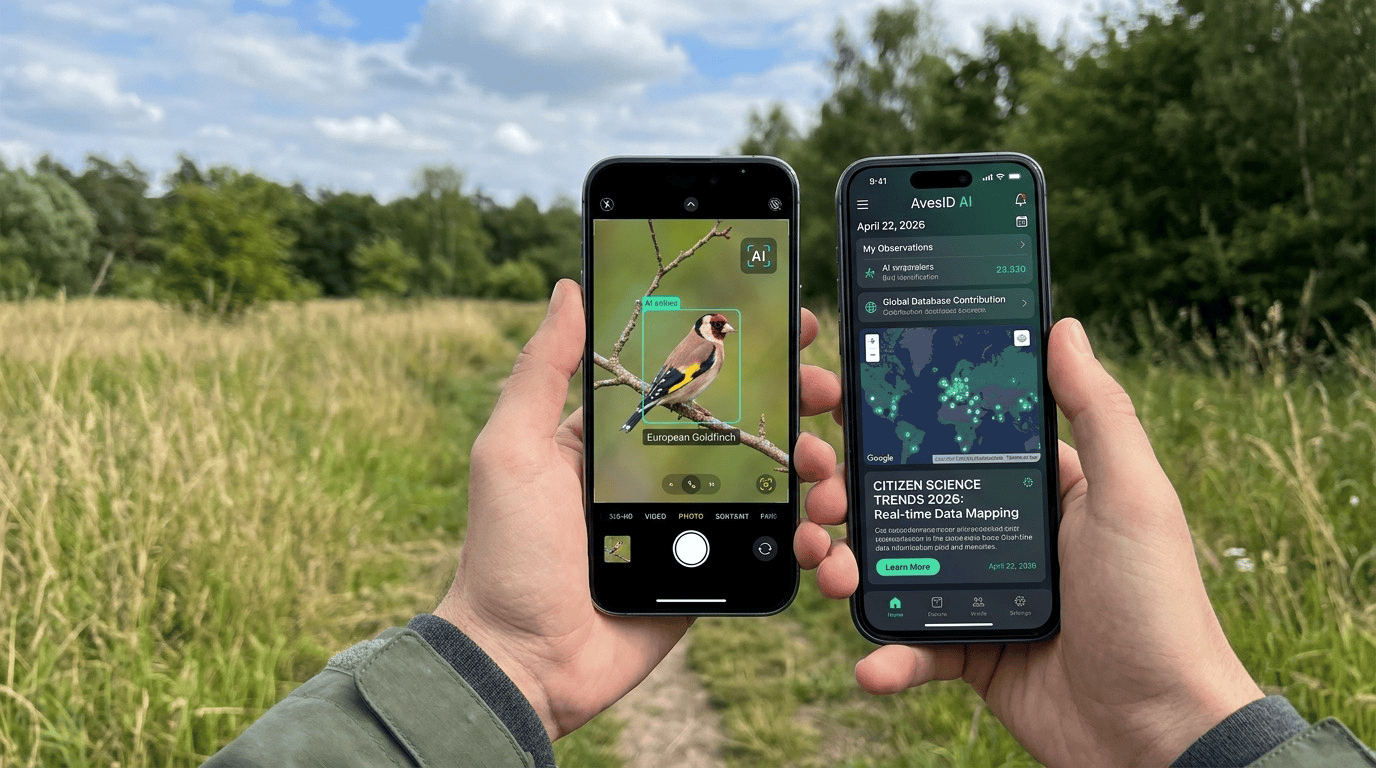
Think about the apps you might already use, like iNaturalist or Merlin Bird ID. This year, those platforms have evolved to not just suggest a species name but to learn from your corrections in real time.
That means when you snap a blurry photo of a moth on your porch, the AI cross-references location, time of day, wing silhouette, and even recent local sightings to give a shockingly accurate ID.
You still make the final call, but the heavy lifting of field guide flipping is gone. This lowers the entry barrier for beginners and dramatically speeds up data collection for researchers. It’s a key piece of the future of citizen science, where human observation and algorithmic precision dance together.
But it goes beyond identification. Projects like Zooniverse now employ AI assistants that pre-sort galaxy images or transcribe handwritten historical documents, leaving the tricky, interesting edge cases for volunteers.
You get to spend your time on the puzzles that genuinely need human intuition, not tedious clicking. This shift combats volunteer fatigue and keeps engagement high.
I recently chatted with a project coordinator who told me, “Our volunteers are staying twice as long on tasks because the AI handles the boring 80%, and they get the fascinating 20%.” That’s a win-win.
Even more exciting, AI is enabling real-time feedback loops. Imagine you’re testing water quality in a local stream using a low-cost sensor kit.
An app connected to a cloud model immediately flags an anomaly, a spike in turbidity, and asks you to double-check the reading and collect an additional sample.
You’re no longer just a data gatherer; you’re an intelligent node in a responsive monitoring network. This is the future of citizen science unfolding in your hands.
Internal link opportunity: If you’re curious how AI is reshaping ethical data collection, you might enjoy our article How AI Is Changing the Ethics of Community Science. It dives into questions about bias and transparency that every participant should understand.
2. Biohacking Trends Go Mainstream in Community Labs
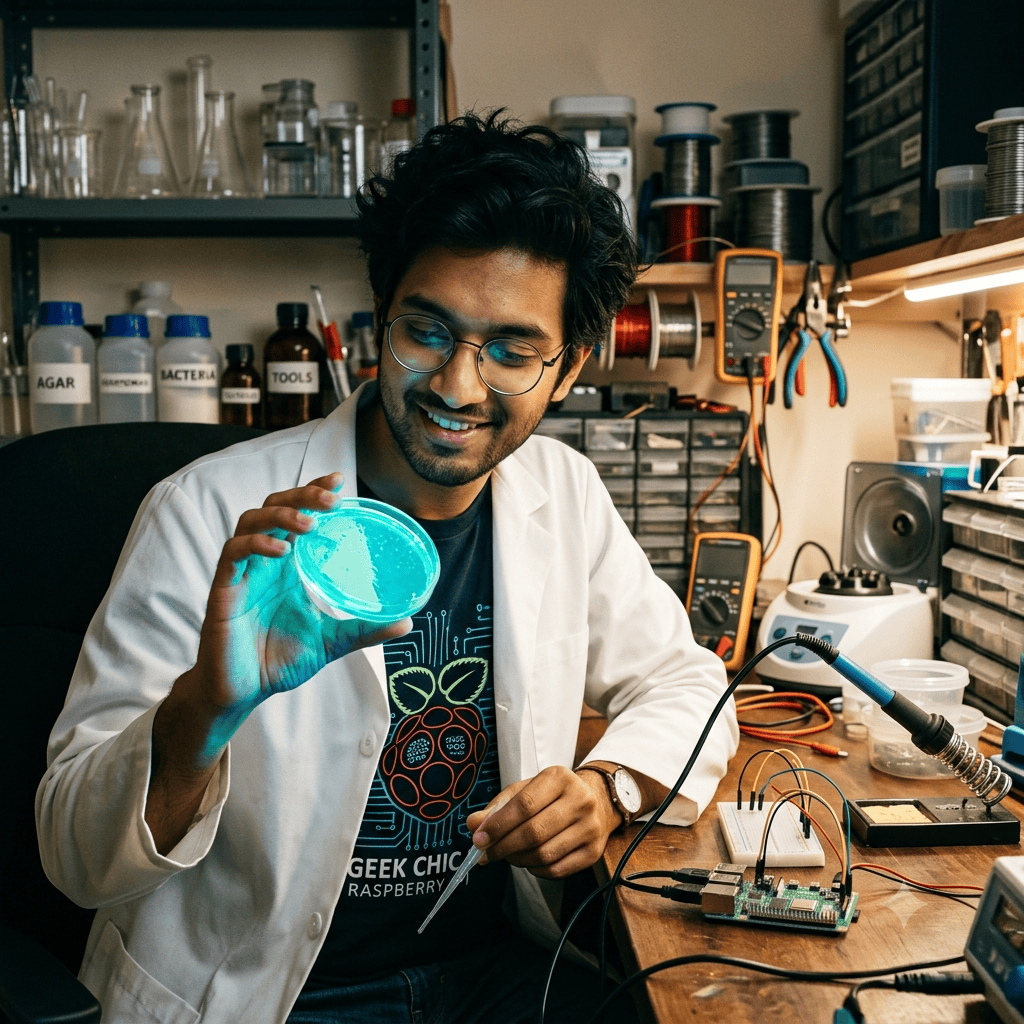
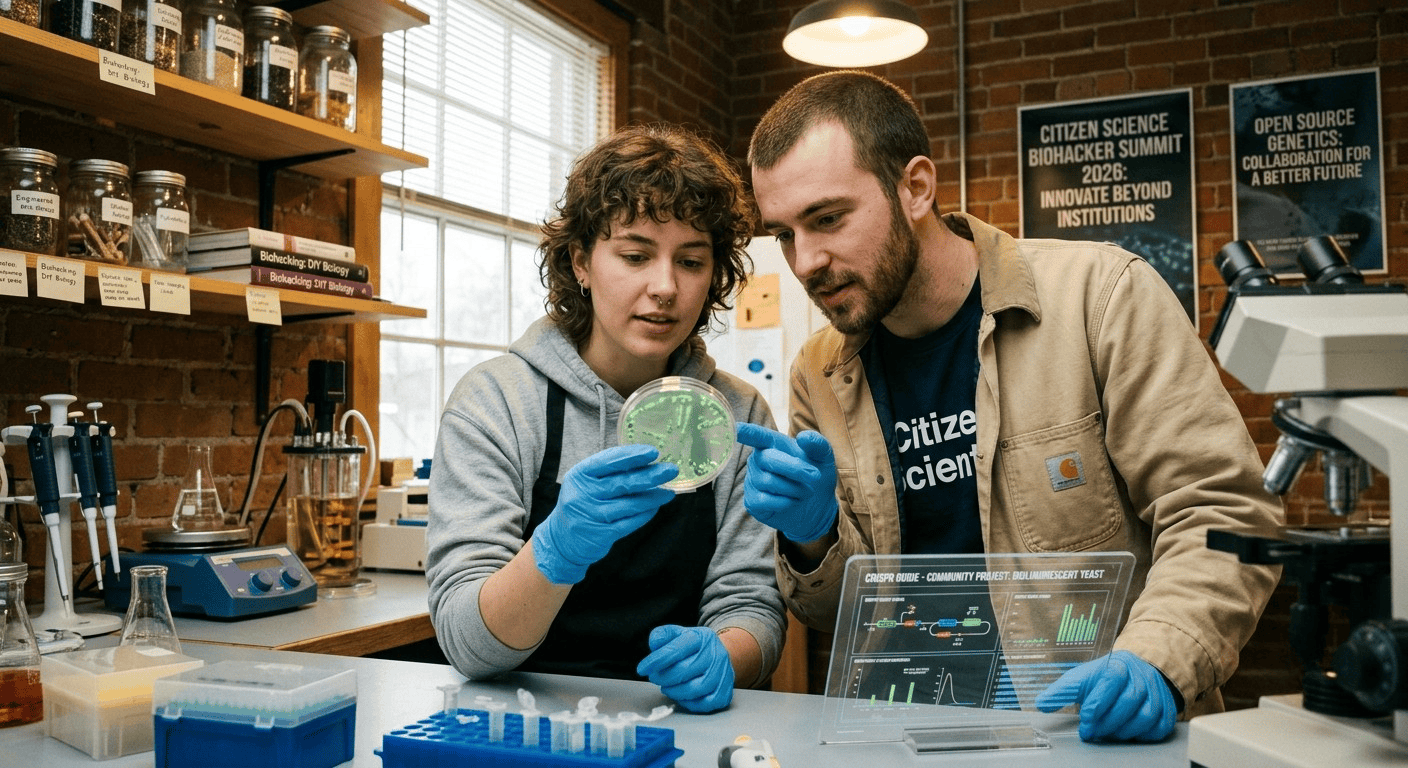
I’ve been watching the maker movement and DIY biology for years, but 2026 marks the point where biohacking trends are no longer just fringe experimentation. They’re becoming a legitimate, celebrated branch of citizen science.
Community labs like BioCurious in California and Genspace in New York (external link: https://biocurious.org) have inspired a global network of safe, accessible spaces where you can learn to engineer bacteria to glow, test your own microbiome, or grow edible mushrooms from coffee grounds.
What makes this one of the core citizen science trends 2026 is the shift from “playing with biology” to “contributing to open-source research.” I’m seeing ordinary people running real experiments in decentralized clinical trials, tracking how different diets affect their gut flora and sharing that data anonymously with nutrition scientists.
There are projects mapping local soil microbiomes to understand urban biodiversity, with participants using affordable PCR machines and smartphone-based analysis.
These biohacking trends feed directly into the future of citizen science by democratizing tools that were once locked behind million-dollar university doors.
Safety and ethics are, rightly, a huge part of the conversation. The community lab movement has developed robust biosafety training and peer review, and many spaces now require a “community ethicist” on their advisory board.
This maturing of governance is exactly why biohacking is being welcomed into mainstream citizen science. It’s not about mad science; it’s about thoughtful, inclusive inquiry.
When a 14-year-old can isolate a novel bacteriophage from pond water with a mentor’s guidance and publish the genome sequence in an open journal, we’ve shattered the ivory tower for good.
The crossover with health is particularly personal for me. Last month, I talked to a woman who tracks her glucose response to different foods using a continuous monitor and contributes her anonymized data to an open platform studying metabolic health.
She’s not a scientist by training, but her daily observations, combined with thousands of others, are revealing patterns that could help refine nutrition advice. That’s the future of citizen science, your body, your data, your contribution, with proper privacy guardrails in place.
Internal link: If you’re new to this world and want a gentle start, our post on Biohacking for Beginners: A Mindful Approach walks you through the first three experiments you can try at home safely, plus how to find a community lab near you.
3. Climate and Biodiversity Monitoring Hits Hyperlocal Scale
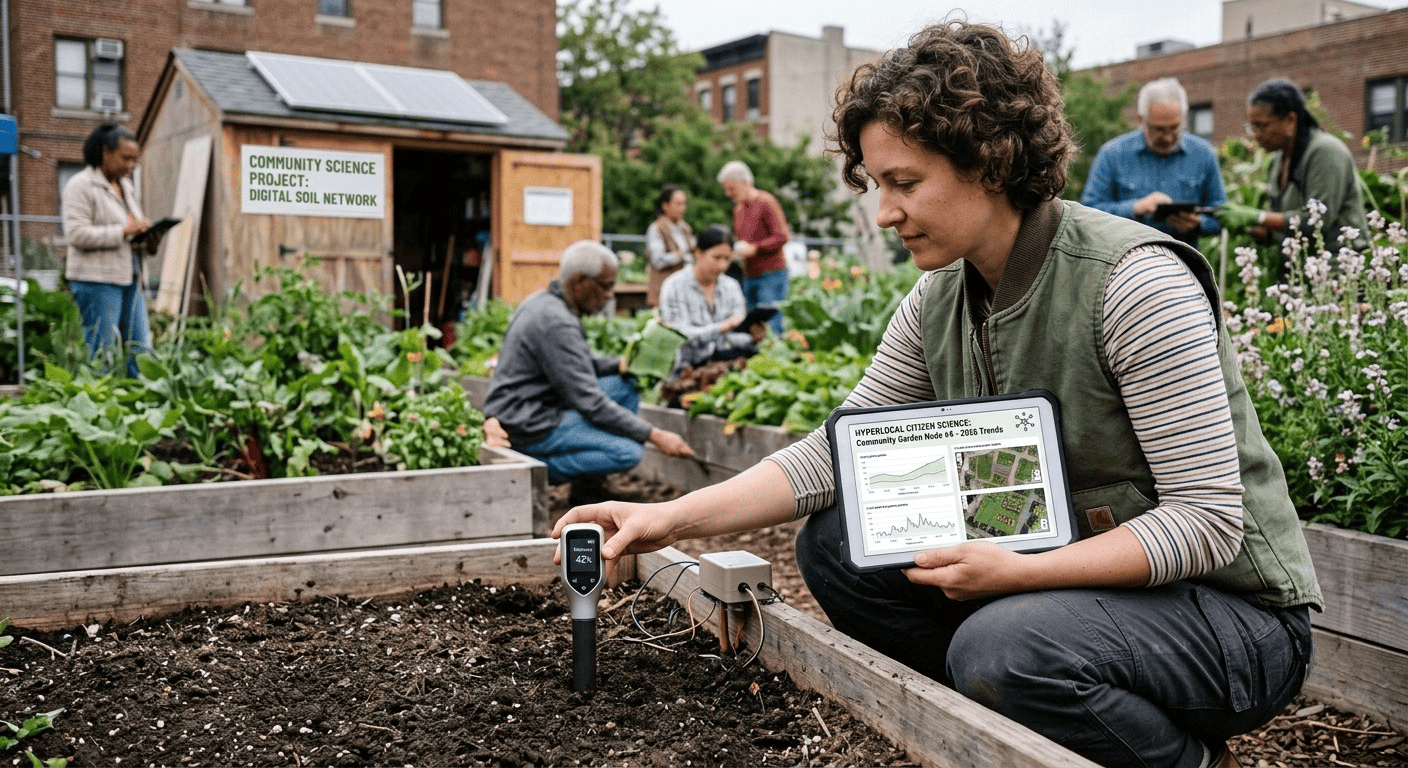
There’s a quiet revolution happening in backyards, balconies, and neighborhood parks. One of the most powerful citizen science trends 2026 is the move toward hyperlocal environmental monitoring.
We’ve gone far beyond simply counting birds (though that’s still wonderful). Today, low-cost sensor networks, soil kits, and even acoustic recorders let communities track everything from air particulate matter to nocturnal pollinator activity.
The shift is partly driven by the urgency of climate anxiety. People feel helpless reading global reports, but when you can measure the exact air quality difference when a new green space opens in your neighborhood, that data becomes advocacy.
Groups of neighbors are pooling resources to deploy PurpleAir monitors, then using the real-time map to push for traffic-calming measures.
Similarly, small farmers are measuring soil carbon with pocket spectrophotometers and working with university extension programs to verify carbon sequestration practices.
You become a steward and a data co-owner.
This hyperlocal scale is where the future of citizen science truly shines. It blends traditional ecological knowledge with modern tech.
I know a group of Indigenous youth in the Pacific Northwest who combine ancestral wisdom about salmon runs with underwater camera traps that send images to their phones.
They’re documenting spawning timing shifts that satellite data misses. It’s a beautiful marriage of deep time observation and instant digital verification.
The smartphone is still the ultimate field tool. Apps now let you record and upload the soundscape of a forest, and an AI will tell you not just which birds are present, but whether their vocal activity indicates stress due to nearby construction. This turnkey power means even a casual weekend hiker can contribute to a longitudinal study.
Projects on SciStarter (explore them at https://scistarter.org) are exploding with location-specific calls to action: “We need 50 more observations of flowering times for desert marigolds within 20 miles of Tucson before April 15.” It feels like a quest, and you’re the hero.
Internal link: Want to start a monitoring project in your own community but feel overwhelmed by gear? Check out Getting Started with Community Environmental Monitoring for a no-fluff guide to the best free apps, sensor kits under $50, and how to partner with a local scientist.
4. Gamification, Micro-Tasking, and the Rise of the 2-Minute Scientist
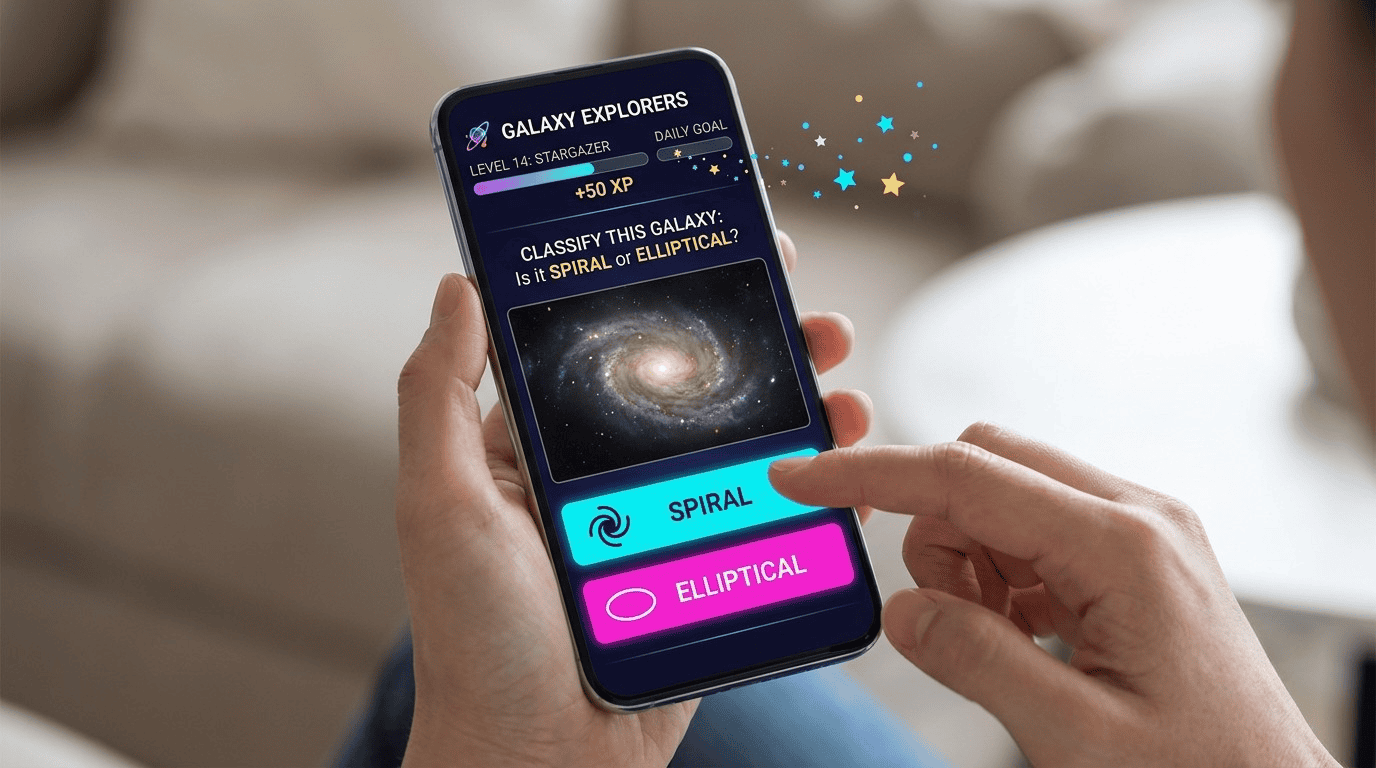
Let’s be real: attention is a scarce resource. One of the smartest citizen science trends 2026 is the explosion of micro-tasking projects that fit into the cracks of your day.
Waiting for your coffee to brew? You can classify three galaxy images. In line at the post office? You can transcribe a 19th-century whaling log.
This frictionless participation is radically expanding who can call themselves a scientist.
Gamification has matured beyond leaderboards and badges, though those still scratch a satisfying itch. This year’s platforms weave narrative and emotional stakes into tasks.
For instance, a project mapping plastic pollution in the ocean might frame your image-tagging as part of a larger story:
“You’ve just identified a ghost net fragment. Real-time analysis suggests this came from a shipping lane near the Philippines. Add your tag to complete the drift model and alert cleanup crews.” You feel the impact immediately.
This trend directly fuels the future of citizen science by proving that tiny, consistent contributions aggregate into monumental datasets.
The Foldit puzzle game continues to be a poster child, but 2026 brings similar logic to chemistry and materials science.
Players now help optimize molecular structures for more efficient solar panels, with the best player-designed molecules actually synthesized in a partner lab. You can literally help invent a new material on your lunch break. How wild is that?
Accessibility is baked in. Micro-tasking projects prioritize mobile-first design, with large buttons and optional audio descriptions.
That means people with varying physical abilities, those in regions with intermittent internet, and folks with just a few minutes to spare all have a seat at the table. It’s a quiet democratization that I find genuinely beautiful.
No one is excluded because they’re not a “nature enthusiast” or lack advanced gear. Curiosity and a smartphone screen are the only prerequisites.
External link: Dive into the Zooniverse platform’s current micro-tasking projects, there’s always something new.
5. Data Sovereignty and the Ethics of Participation
We can’t talk about the citizen science trends 2026 without addressing the elephant in the room: who owns the data, and who profits from it?
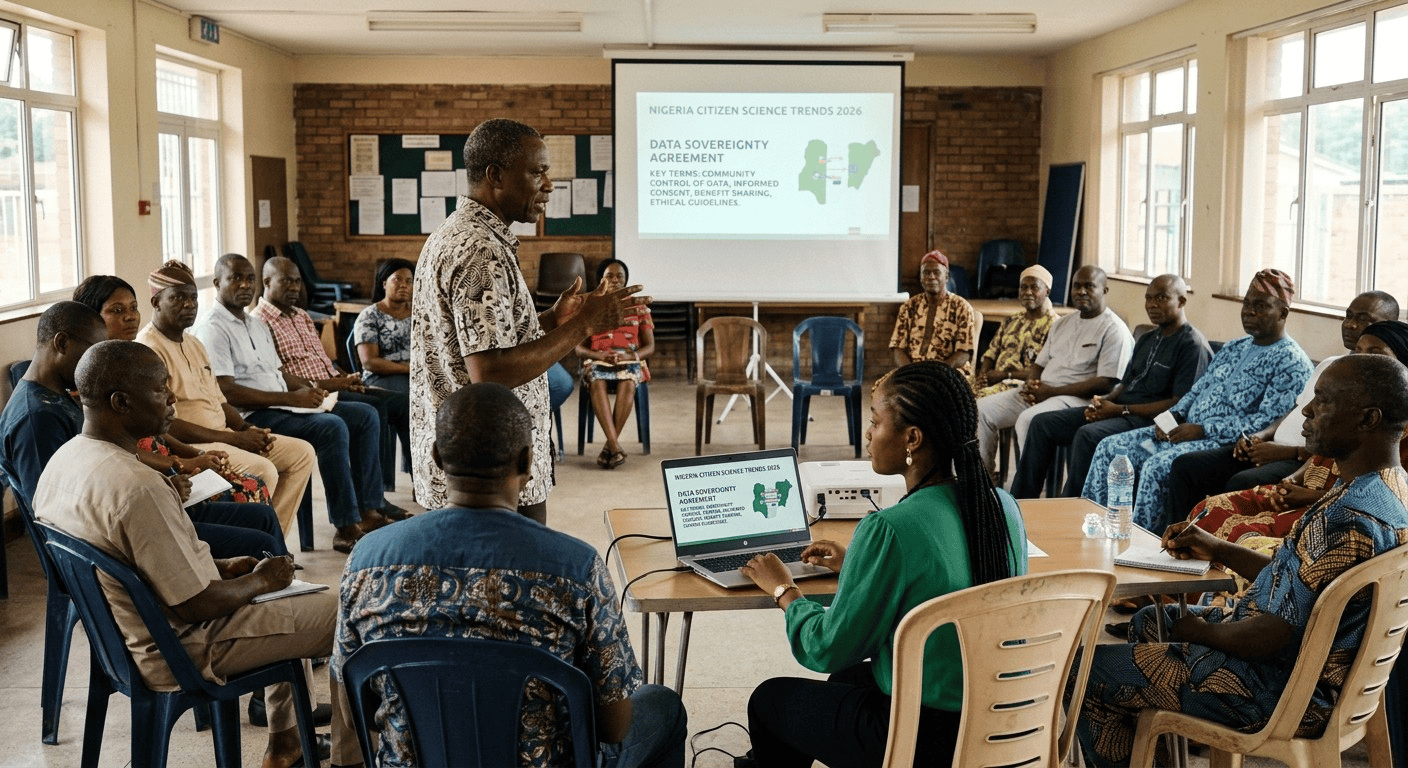
The most heartening shift I’m witnessing is the move from “extractive” citizen science, where volunteers simply feed data to large institutions, toward a model of shared governance and data sovereignty.
Communities are asking, “Will this study benefit us directly? Do we control how the information is used?” These are questions of justice, and they’re reshaping project design from the ground up.
Indigenous data sovereignty is at the forefront. Across the globe, tribal nations are creating protocols requiring that data collected on their lands and about their ecosystems remain under their collective authority, governed by community-defined principles.
In practice, this might mean a citizen science water monitoring project co-designed with a Tribal council, where data storage happens on tribally controlled servers and publications require approval. It’s not a barrier; it’s a reclamation.
This is the future of citizen science acting as a tool of empowerment, not extraction.
This ethical lens also extends to biohacking trends. When community lab participants sequence their own microbiome or experiment with gene circuits, informed consent isn’t a one-time checkbox, it’s an ongoing conversation.
Many biohackers now use decentralized identity verification and contribute to projects only after understanding exactly how their biosamples and data will be used, whether for open-access research or potential commercial applications.
There’s a growing library of plain-language data agreements co-created with participants, not lawyers alone. I’ve seen people walk away from a study because the terms didn’t feel right, and the project leads thanked them for raising the bar. That’s cultural maturity.
For anyone joining a project in 2026, my advice: look for a clear data policy page.
Does the project state who owns the aggregated data? Can you download your own contributions? Will your personally identifiable information be stripped and never sold? The best projects are upfront.
The citizen science trends 2026 reveal a community that’s learning to demand transparency, and that’s a powerful thing.
Internal link: We’ve covered this shift in depth before. Read Who Owns Your Community Science Data? A Practical Guide to learn what red flags to watch for and how to advocate for fair policies in your favorite projects.
6. Democratizing the Cosmos and Unseen Worlds
When you look up at the night sky, do you ever wonder what’s still waiting to be discovered? One of the most joyful citizen science trends 2026 is the explosion of accessible astronomy and micro-space projects.
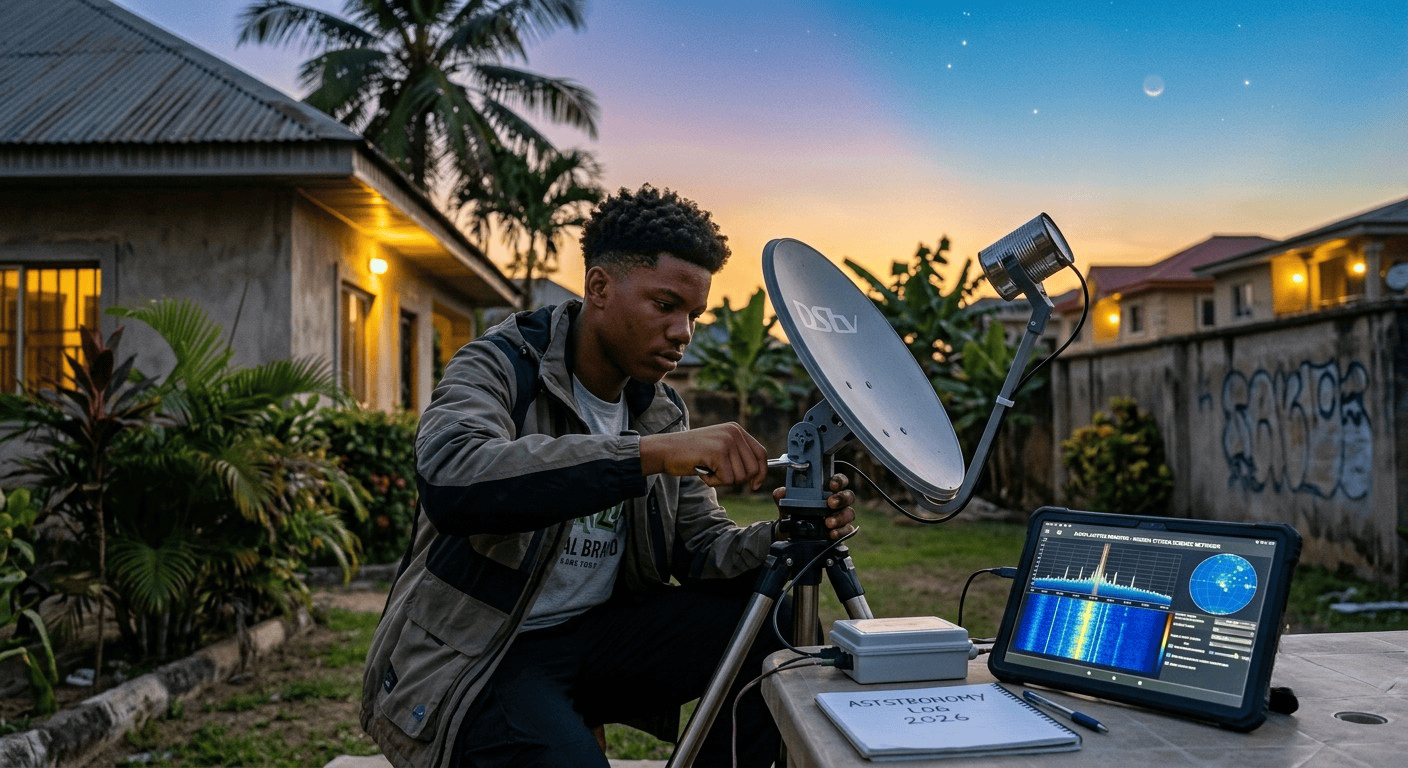
It’s no longer just about clicking through satellite images, though that remains vital. Now, affordable radio telescope kits allow high school clubs to detect the spiral arms of the Milky Way using hydrogen line emissions.
Your DIY ground station can pick up weather satellite transmissions, and there’s an entire community of enthusiasts decoding Earth observation data right from their backyards.
The future of citizen science in astronomy is interactive and immediate. NASA’s citizen science projects continue to thrive, but the real buzz is around decentralized networks. Imagine a global array of night sky cameras coordinated to catch meteor fireballs and calculate their orbits, contributing to planetary defense.
That’s live right now, and new nodes join weekly. This collective stargazing unites people across continents in a shared, awe-filled pursuit.
But “cosmos” also means the microscopic cosmos beneath our feet. Foldscopes, origami-style paper microscopes that cost less than a dollar, are being deployed in classrooms and remote field stations to map tardigrades, freshwater algae, and soil nematodes.
These observations, uploaded via a companion app, are creating a worldwide atlas of microbial biodiversity. It’s the perfect marriage of low-tech hardware and high-tech coordination.
A child in a rural village and a researcher at a top university can both contribute to understanding how microscopic life adapts to a warming world. That’s not just the future of citizen science; it’s the future of humility and wonder.
External link: Learn more about building your own radio telescope with the excellent resources from the Society of Amateur Radio Astronomers.
Summary: The Big Picture of Citizen Science in 2026
We’ve covered a lot of ground, friend. Let’s distill the major citizen science trends 2026 into a few takeaways you can carry with you:
AI is your partner, not your replacement. Smart tools handle the grunt work so you can focus on the meaningful, intuitive parts of research.
Biohacking has grown up. Community labs and open protocols are making biotechnology a genuinely accessible avenue for public participation, driven by rigorous ethics. These biohacking trends are reshaping who gets to be a biologist.
Hyperlocal monitoring turns anxiety into agency. From backyard soil sensors to neighborhood air monitors, we’re building the data to advocate for our own communities.
Micro-tasking makes science a habit. Bite-sized contributions on mobile-friendly platforms mean anyone, anywhere, can advance discovery in minutes a day.
Data sovereignty is non-negotiable. Projects are finally embracing co-ownership, Indigenous protocols, and transparent consent, ensuring the future of citizen science is equitable.
The universe, from galaxies to microbes, is open for exploration. Low-cost tools and global networks are creating a new generation of explorers.
I hope you feel that spark. The boundaries between scientist and citizen have never been more porous, and that’s a gift. The questions we face as a global community, ecosystem collapse, emerging diseases, sustainable food systems, require all kinds of intelligence. Yours included.
If you’re sitting there thinking, “I want to jump in but I don’t know where to start,” start small.
Pick a project from SciStarter that aligns with something you already love, gardening, stargazing, gaming, and give it 10 minutes. I promise you’ll feel the shift when you see your data point join thousands of others on a live map.
Let’s Build This Future Together
I write about these topics because I genuinely believe that democratizing science is one of the most hopeful movements of our time. But the real magic happens in conversation and collaboration.
Whether you’re a community organizer wanting to launch a local monitoring project, a teacher hunting for classroom-ready biohacking modules, or simply a curious soul with a question, I’d love to hear from you.
Let’s swap stories, share resources, and maybe even cook up a project together.
For inquiries, partnership ideas, or just a good chat about the future of citizen science, reach out to me directly at [email protected]. I read every email, and I’ll always do my best to point you toward a community, a tool, or a person who can help.
Now go outside (or tinker inside!), make an observation, ask a question, and know that you are a citizen scientist in the most meaningful sense of the word. The world needs your curiosity.