

Build a Low-Cost PCR Setup for Citizen Science
Citizen Science, DIY Biology, Low-Cost PCR
How to Build a Low-Cost PCR Setup for Citizen Science in America
In garages, community labs, and spare bedrooms across the United States, a quiet revolution is unfolding: ordinary people are learning to read the code of life with tools they built themselves.
The Night the Garage Became a Lab
On a quiet fall evening in Ohio, Maya stood in her parents’ garage staring at a metal block, a tangle of wires, and a $12 microcontroller. It didn’t look like much. It certainly didn’t look like the gleaming machines she had seen in university labs on YouTube. But to her, this was hope. If she could pull this off, that simple block of aluminum would become a DIY PCR machine, a bridge between her curiosity and the invisible world of DNA.
Maya wasn’t a professor or a PhD student. She worked part-time at a coffee shop and volunteered at a local community bio lab on weekends. What she wanted was simple and profound: a low-cost PCR setup for citizen science in the USA, something her friends and neighbors could use to test water, explore local microbes, or learn basic genetics without five-figure budgets or institutional backing.
Why PCR Belongs in the Hands of Citizens
Polymerase Chain Reaction [PCR] sounds intimidating, but its heart is beautifully human: taking something small and giving it a voice. PCR copies tiny fragments of DNA millions of times so we can see them, study them, and understand what’s really happening in our water, food, and environment. For decades, this power was locked behind lab doors, paywalls, and degrees. But that’s changing, especially in America, where a culture of tinkering and making has collided with the falling cost of technology.
A low-cost PCR setup for citizen science in America is more than just a clever hack. It’s a statement: that knowledge about our bodies, our neighborhoods, and our ecosystems shouldn’t belong only to institutions. It should belong to the people who live there. When you build a DIY PCR machine in America, you’re not just assembling parts, you’re assembling a new kind of relationship with science itself.
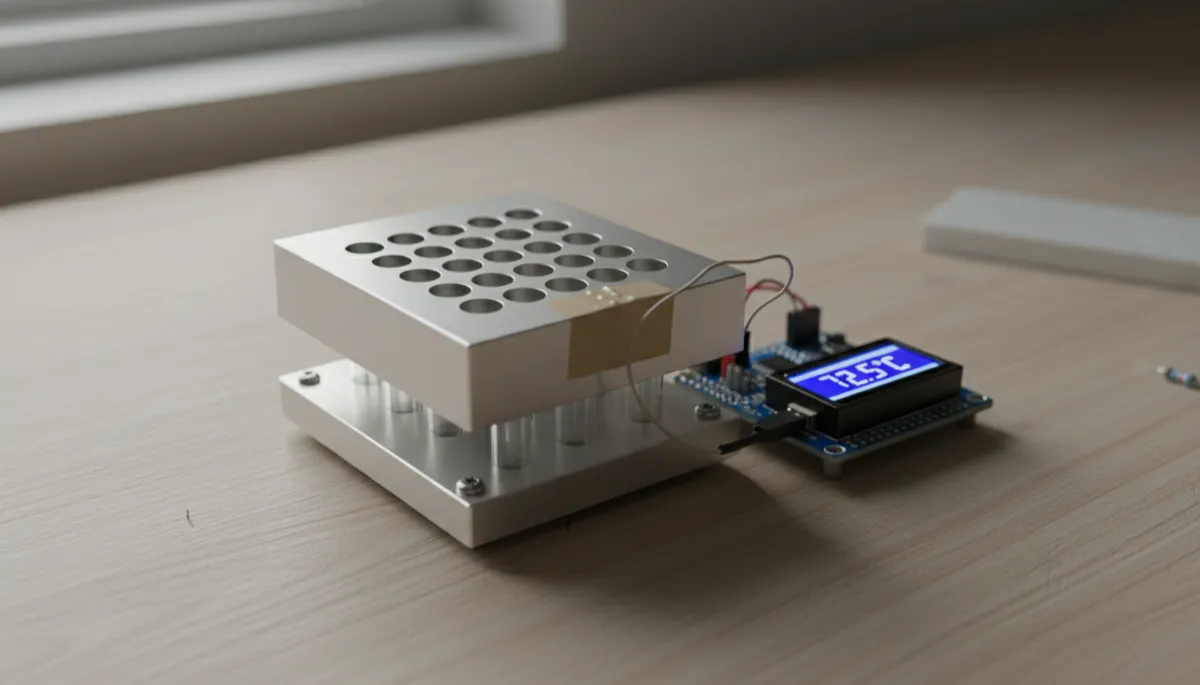
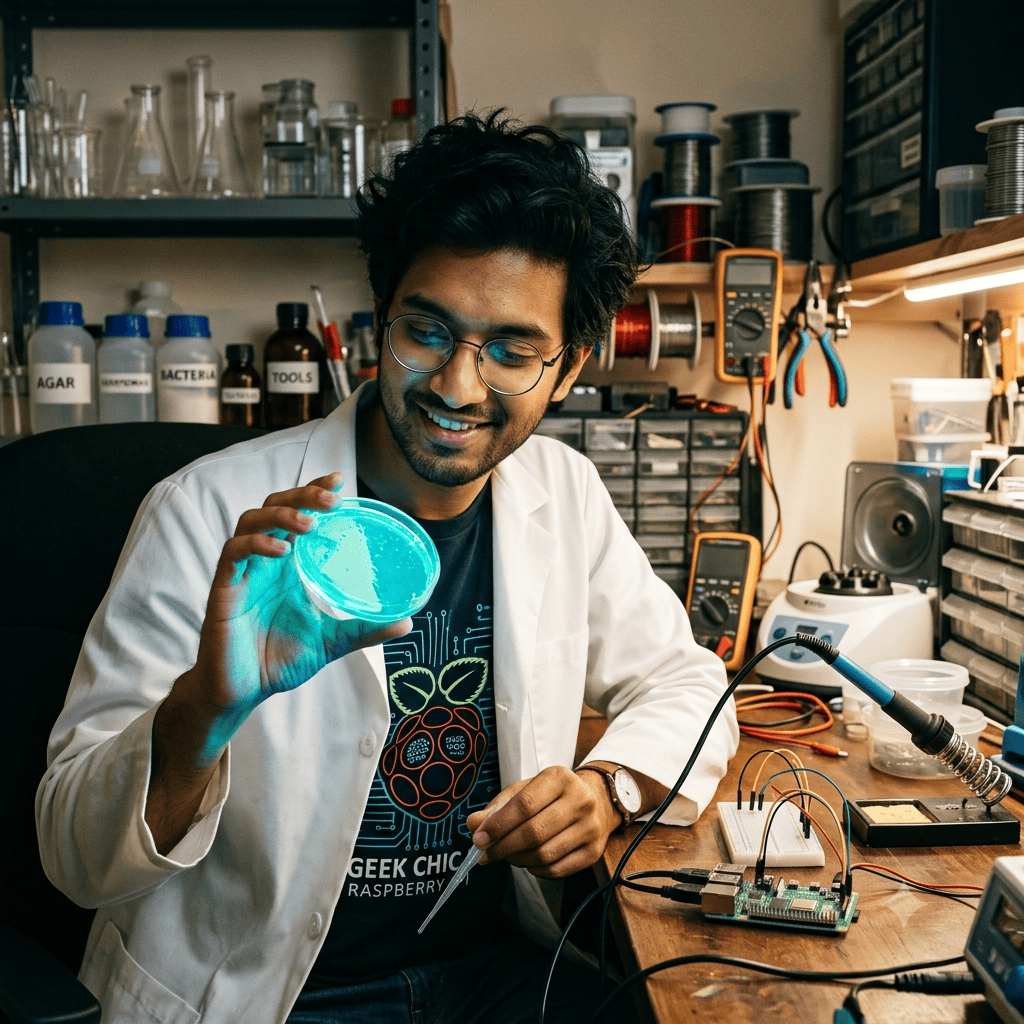
Simple electronics and a metal block can become a powerful DNA tool at home.
The Core Ingredients of a Low-Cost PCR Setup
When Maya started researching how to build her setup, she discovered a comforting truth: PCR is demanding in precision, not in luxury. You don’t need polished steel or brand-name labels to make it work. You just need four essentials that together form an affordable bio lab equipment starter kit in the US:
The thermocycler: the heart of your DIY PCR machine, a device that heats and cools DNA samples in precise cycles.
Micropipettes and tips: simple, precise tools for moving tiny drops of liquid—often found as used or budget options in the US.
Reagents: DNA polymerase, primers, nucleotides, and buffer, often available through educational suppliers that support citizen science.
A way to see results: a simple gel electrophoresis setup or even low-cost blue light viewers to visualize DNA bands.
Each of these pieces can be sourced as affordable bio lab equipment in the US if you’re willing to look beyond glossy catalogs. Makerspaces, community bio labs, online DIY biology forums, and surplus lab auctions all become treasure maps when you’re building on a budget.
💡 Pro Tip: Before buying anything, connect with a local community lab or online citizen science group. Many already share proven low-cost PCR designs and vetted suppliers in the USA.
Building the Heart: Your DIY Thermocycler
On her workbench, Maya laid out the parts: a small aluminum block drilled with wells for PCR tubes, a Peltier heating/cooling element, a cheap temperature sensor, and a microcontroller she’d programmed using tutorials from the open-source community. It wasn’t magic. It was patience, curiosity, and a willingness to fail forward.
Most DIY PCR machines in America follow a similar path. Instead of a $5,000 commercial thermocycler, builders assemble:
An aluminum block (for even heat distribution) – often under $20 from metal suppliers.
A Peltier module and heat sink – borrowed from CPU cooling technology, widely available online.
A temperature sensor (like a thermistor) – just a few dollars, but crucial for accuracy.
A microcontroller – Arduino, Raspberry Pi, or similar, acting as the brain of the system.
With open-source firmware and community-shared designs, your low-cost PCR setup for citizen science in the USA can reach the same temperature cycles as commercial machines: denaturation, annealing, extension—over and over, like a heartbeat made of heat.
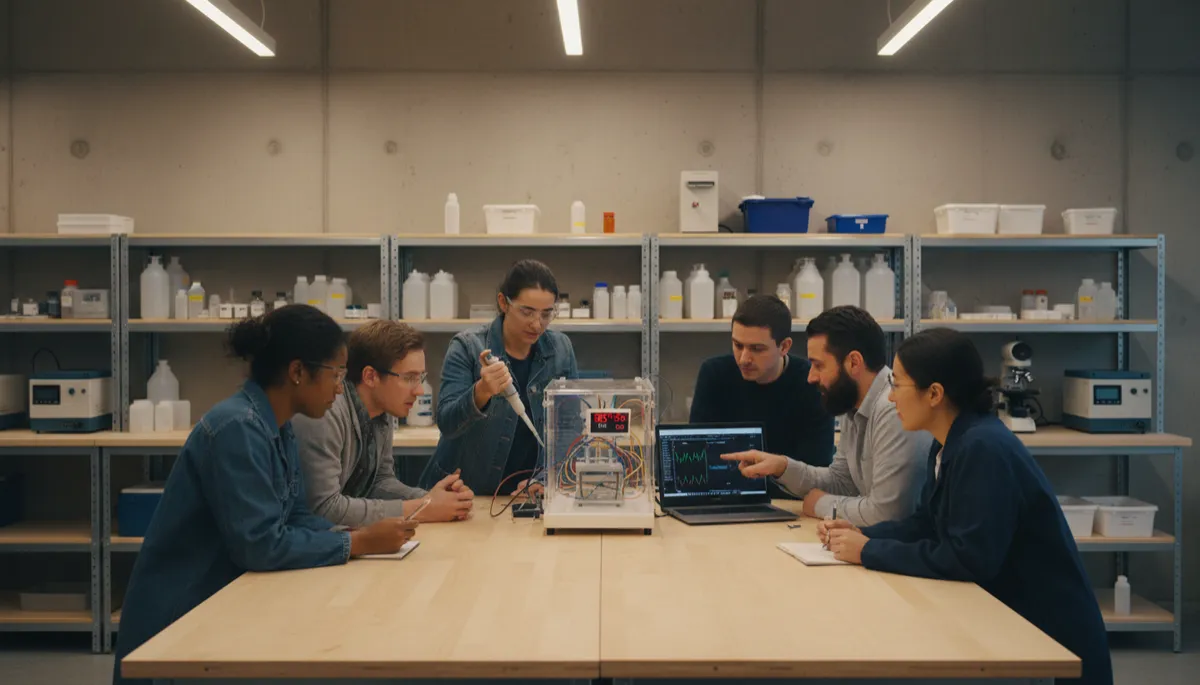
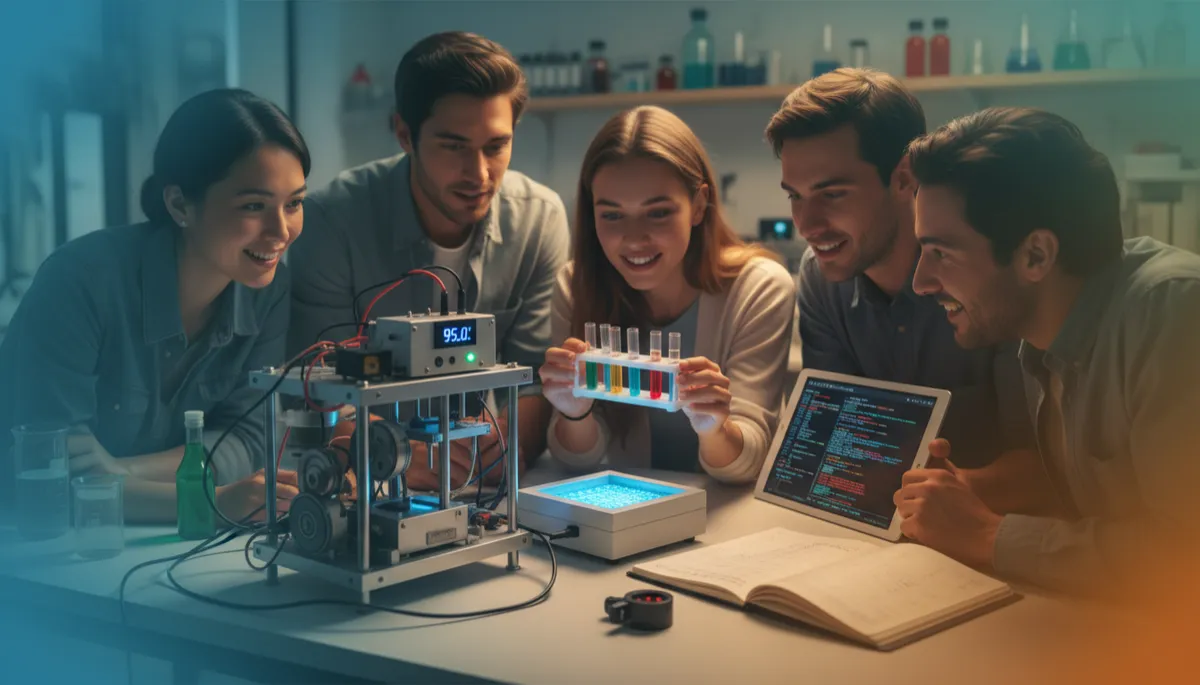
Community labs help spread PCR skills and share low-cost equipment across the US.
Sourcing Affordable Bio Lab Equipment in the US
The hardest part isn’t always the electronics. Sometimes, it’s emotional: staring at endless online listings and feeling like everything is just out of reach. But Maya learned to see the landscape differently. She found affordable bio lab equipment in the US by thinking like a scavenger and a storyteller at once, asking where each piece had been and where it might go next.
Educational suppliers: Many US companies sell classroom PCR kits and plasticware in smaller, cheaper bundles, perfect for citizen projects.
Community bio labs: Spaces like BioCurious, Genspace, and local DIYbio groups often bulk-order reagents and share them at cost for citizen science projects.
University surplus: Many American universities auction or donate used lab equipment, micropipettes, tube racks, even centrifuges, that still work perfectly for home PCR.
Piece by piece, the story changes from “I can’t afford this” to “I found a way.” That shift is what makes a low-cost PCR setup for citizen science in America powerful. It’s not just about saving money. It’s about reclaiming agency in a system that often tells us we’re not invited.
Safety, Ethics, and Respect for the Invisible
There’s a moment, just before you pipette your first DNA sample, when the excitement can blur into fear. Am I allowed to do this? Is it safe? In America, citizen science is welcomed, but it also carries responsibility. A DIY PCR machine in America must be built on respect: for biosafety rules, for neighbors, for the ecosystems we share.
That means choosing non-pathogenic samples for at-home experiments, following local regulations, and learning basic sterile technique. It means joining communities like DIYbio.org, where ethical guidelines and support networks help ensure that the growth of grassroots biology is both inspiring and safe. A low-cost PCR setup is a tool; how we wield it becomes our story.
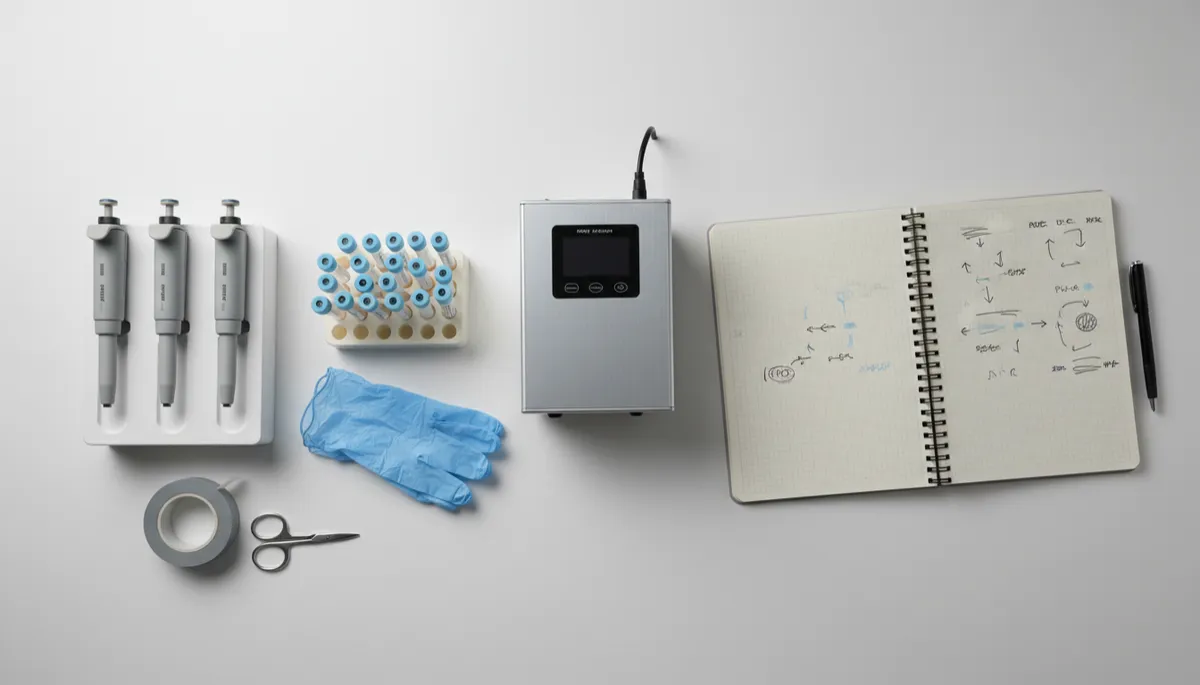
Simple organization and good habits keep home PCR projects safe and effective.
From Garage Experiments to Community Impact
Months after that first nervous night, Maya’s garage looked different. The same folding table now held a working thermocycler, a cheap blue light viewer, and rows of labeled tubes. Neighborhood kids came by after school to learn how DNA works. A local environmental group partnered with her to test creek water for bacterial contamination. Suddenly, her low-cost PCR setup for citizen science in the USA wasn’t just a personal project, it was a community resource.
This is the quiet promise of affordable bio lab equipment in the US: that knowledge and power can flow outward instead of upward, into the hands of families, students, and neighbors. When a small town in Iowa can run its own water tests, or a high school club in Texas can explore local biodiversity with a DIY PCR machine, the story of science in America changes. It becomes less about gatekeepers and more about shared curiosity.
Your Turn to Join the Story
If you’re reading this and feeling that tug, that mixture of excitement and doubt, you’re already partway there. Building a low-cost PCR setup for citizen science in America isn’t about being fearless. It’s about being willing to learn, to ask questions, to make mistakes with care, and to keep going anyway.
Start small. Visit a community lab. Join an online forum. Order a basic kit or follow an open-source design for a DIY PCR machine in America. Gather affordable bio lab equipment piece by piece. Let your kitchen table or garage become a place where DNA isn’t an abstract concept, but a story you can see, amplify, and share.
Somewhere in a neutral-toned apartment in Seattle, a basement in Atlanta, or a barn in Kansas, someone just like you is wiring a Peltier module, labeling tubes, and holding their breath as the first PCR cycle begins. The hum of the fan, the soft glow of the microcontroller screen, the quiet click of a pipette—these are the sounds of a new chapter in American science. One where the lab coat is optional, but the wonder is not.
The tools are finally within reach. The question now is simple, and deeply human: what will you discover, when the code of life is no longer out of bounds, but right there on your own workbench?