


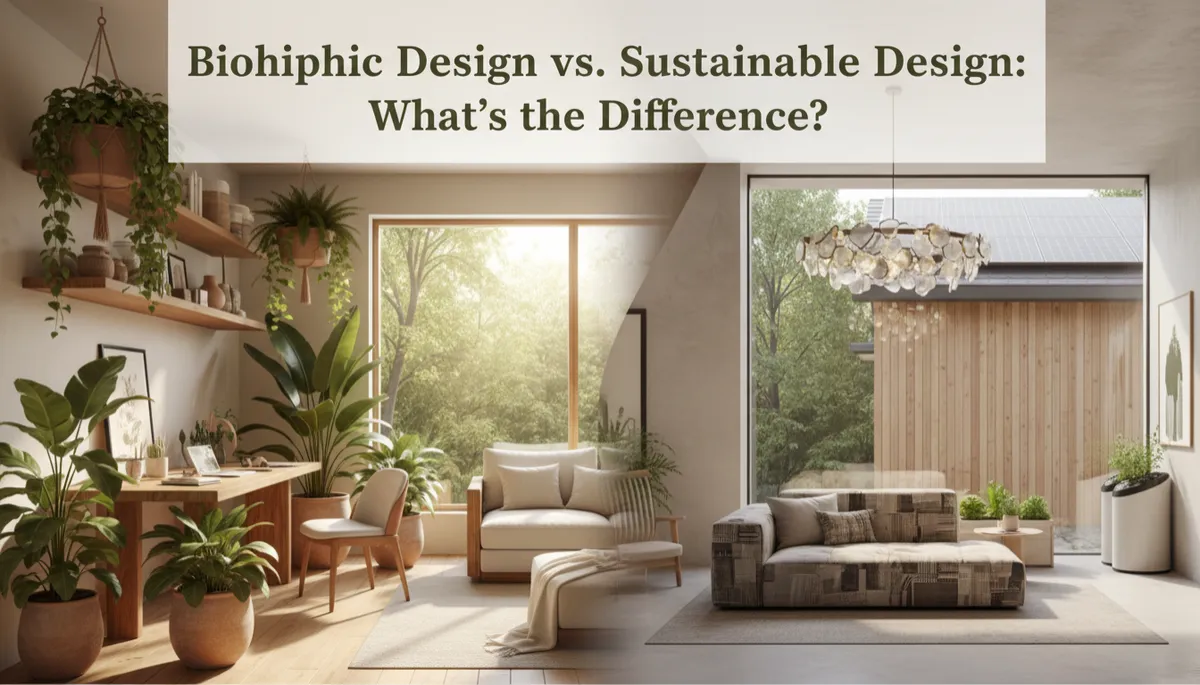
Biophilic vs. Sustainable Design: Key Differences
Interior Design, Biophilic Design, Sustainable Living
Biophilic Design vs. Sustainable Design: What’s the Difference?
The first time you walk into a space that truly honors nature, you feel it before you understand it. The air seems softer, the light kinder, the colors calmer. But is that magic called biophilic design, sustainable design, or both? Let’s walk through a story that gently unpacks the difference, so you can decide what you want your own home to whisper back to you every day.
Two Apartments, Two Very Different Feelings
Imagine you’re apartment hunting. On a rainy Saturday afternoon, you step into the first place. The agent proudly tells you it’s highly sustainable. The lights are all LED, the walls are insulated with recycled materials, and the appliances hum quietly with energy-efficient labels. It feels responsible, almost like the apartment is doing its homework for the planet. But as you look around, you realize something: it feels a little… sterile. Clean, efficient, but not exactly comforting.
Later that day, you walk into another apartment. No one mentions energy ratings at first. Instead, your attention is drawn to the way sunlight pours across a wooden floor, how a cluster of potted plants softens the corners, how the gentle sound of a tabletop fountain hushes the noise from the street. The walls are painted in warm neutral tones, the fabrics are textured like river stones and sand. You exhale without realizing you were holding your breath. This, your body tells you, feels like home. This is biophilic design in action.
💡 Pro Tip: Sustainable design speaks to the planet’s needs; biophilic design speaks to your nervous system’s needs.
What Is Biophilic Design, Really?
Biophilic design begins with a simple, almost ancient truth: humans are wired for nature. For most of our history, we lived under open skies, near water, surrounded by trees, plants, and the rhythms of daylight. Then we moved indoors—offices, apartments, malls—and something in us began to quietly ache. Biophilic design is the art and science of answering that ache by weaving nature back into our built environments in intentional, deeply human ways.
When designers talk about nature inspired interiors, this is what they mean: spaces that don’t just decorate with plants, but echo the patterns, textures, and moods of the natural world. Think of a bedroom where the headboard is crafted from warm, reclaimed wood, the linens are soft and breathable, and the view is framed by gentle greenery instead of a glowing screen. Or a kitchen where herbs grow by the window, and the sunlight shifts across the room like a quiet clock, guiding your day without a single notification ping.
At its heart, biophilic design is about indoor nature design: bringing elements like plants, natural light, water, organic materials, and even nature-inspired artwork into interior spaces. It asks questions like: How can this room feel like a forest clearing, a sunlit meadow, or a quiet lakeside—without leaving the city?
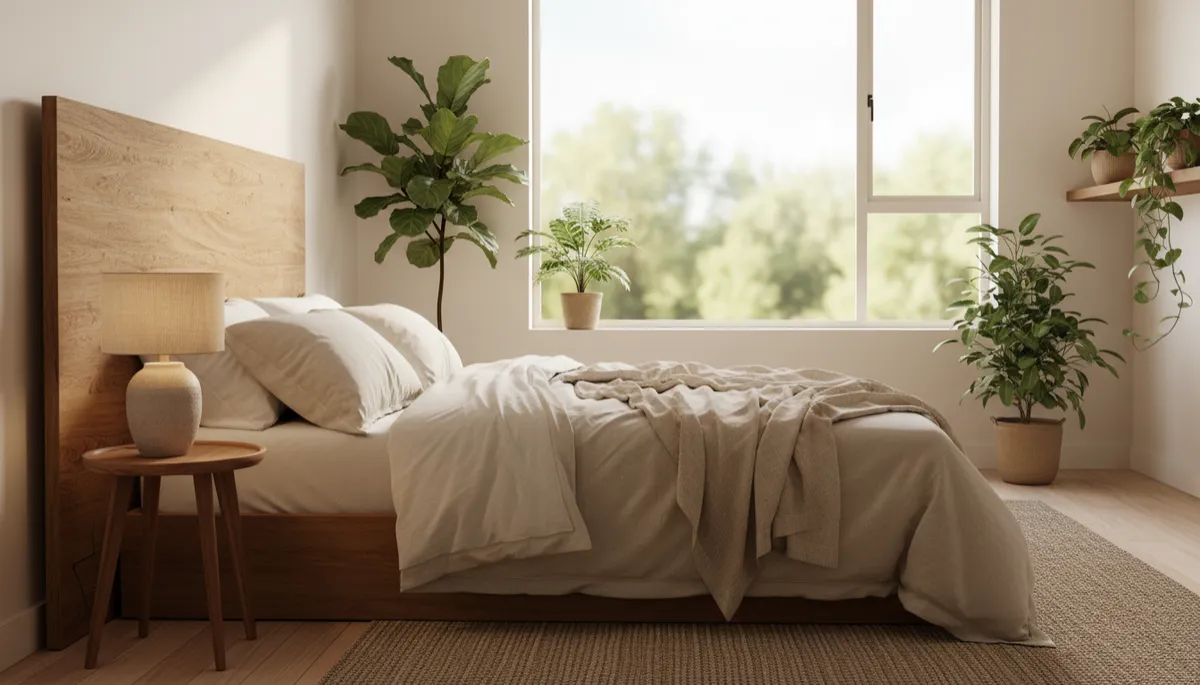
Biophilic bedrooms use light, plants, and texture to quietly calm the mind.
What Is Sustainable Design?
Now step back for a moment and imagine the building that holds that bedroom. How much energy does it use to stay warm in winter and cool in summer? What happens to the water when you shower, wash dishes, or water those plants? What materials are in the walls, the floor, the paint? This is where sustainable design comes in—a quieter hero, working behind the scenes to lighten your home’s footprint on the planet.
Sustainable design is about how a space is built and operates over time. It focuses on energy efficiency, resource conservation, low-toxicity materials, and long-term durability. A sustainably designed home might have high-performance windows that keep heat in during winter, a rooftop solar system, low-flow fixtures that save water, and paints that don’t quietly release harmful chemicals into the air you breathe. You may not notice all of these details at first glance, but the planet, and your utility bills, do.
📌 Key Takeaway: Sustainable design is about doing less harm to the environment; biophilic design is about doing more good for your well-being.
Biophilic vs. Sustainable Design: How Are They Different?
If biophilic and sustainable design were characters in a story, they’d be close friends, often appearing in the same chapter, but with very different roles. To understand the difference between biophilic design and sustainable design, it helps to look at what each one cares about most.
Focus | Biophilic Design | Sustainable Design |
|---|---|---|
Primary Goal | Support human health, comfort, and connection to nature | Reduce environmental impact and resource use |
Main Tools | Plants, light, views, textures, patterns, natural forms | Insulation, efficient systems, durable and low-impact materials |
What You Feel | Calm, grounded, restored, connected to nature | Comfortable, efficient, responsible, future-focused |
In other words, biophilic design is mostly about your experience of nature inside a space, while sustainable design is about the impact that space has on the wider world. One speaks to your senses; the other speaks to the planet’s limits. The most powerful homes and interiors combine both, like a well-written story with heart and conscience woven together.
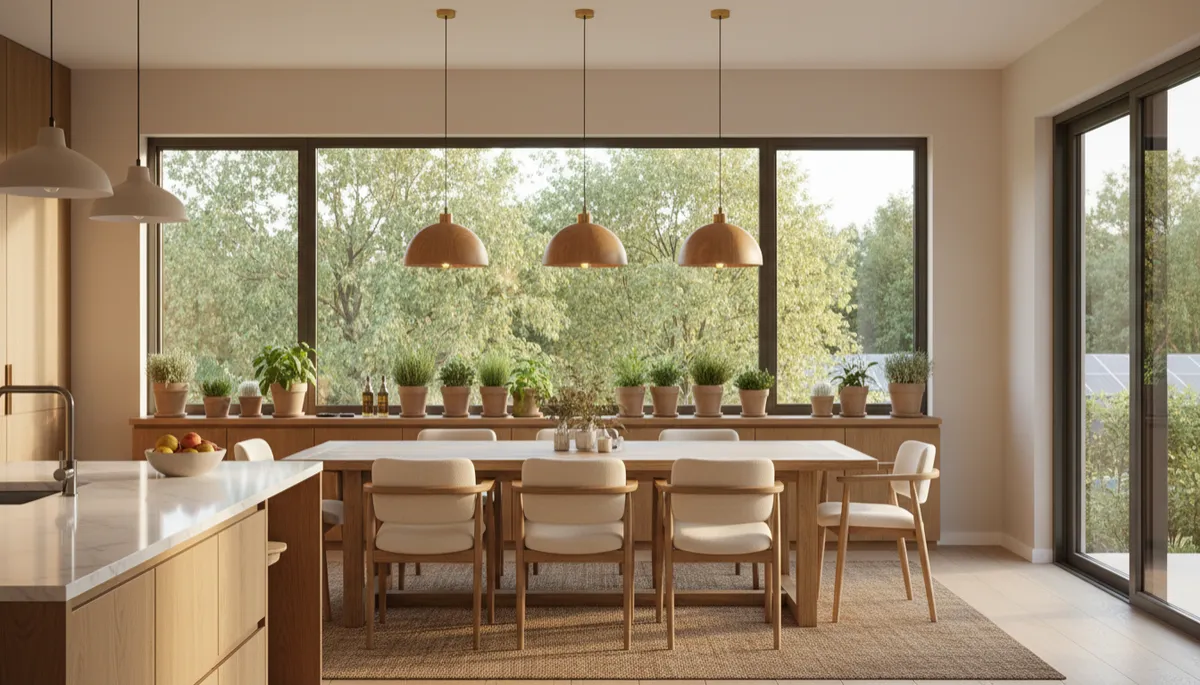
Spaces can feel deeply natural while quietly performing as sustainable powerhouses.
Nature Inspired Interiors: How It Feels to Live with Biophilic Design
Picture your morning in a biophilic home. You wake up to daylight gently filtering through sheer curtains, not the harsh glow of a phone screen. Your bare feet meet a wooden floor that holds the memory of trees, not cold plastic laminate. As you move into the living room, you pass a cluster of leafy plants, some tall like small trees, others spilling softly over clay pots. You catch the faint scent of soil after watering them the night before, and something in you relaxes.
These nature inspired interiors aren’t about perfection or Instagram-ready corners. They’re about creating a daily dialogue with the natural world, even if your view is mostly city streets. Maybe you hang artwork that echoes mountain landscapes or ocean waves. Maybe you choose a color palette of warm neutrals 'stone, sand, clay, wheat' so your home feels like a soft echo of the outdoors. Maybe you place your favorite chair where it catches the best afternoon light, turning a simple reading nook into a tiny sunlit sanctuary.
This is indoor nature design at its most personal: not a checklist, but a relationship. You notice which plants thrive in your window, which textures make you want to linger, which views help your mind wander in the best possible way. Over time, your home becomes less of a box you live in and more of an ecosystem you belong to.
Can a Space Be Both Biophilic and Sustainable?
The beautiful secret is that biophilic and sustainable design don’t just coexist, they often strengthen each other. When you choose large windows to frame a view of trees, you’re not only supporting your mental health; you may also reduce your need for artificial lighting during the day. When you select natural, durable materials like wood, stone, or wool, you’re creating a richer sensory experience while often lowering the environmental cost compared to synthetic alternatives.
Imagine a living room with a wool rug instead of plastic fibers, a sofa upholstered in breathable natural fabrics, and walls painted with low-VOC paint. Add in plants that improve air quality, and suddenly you have a space that feels alive, supports your health, and treads more lightly on the planet. The story of your home becomes one where your comfort and the earth’s well-being share the same plot line.
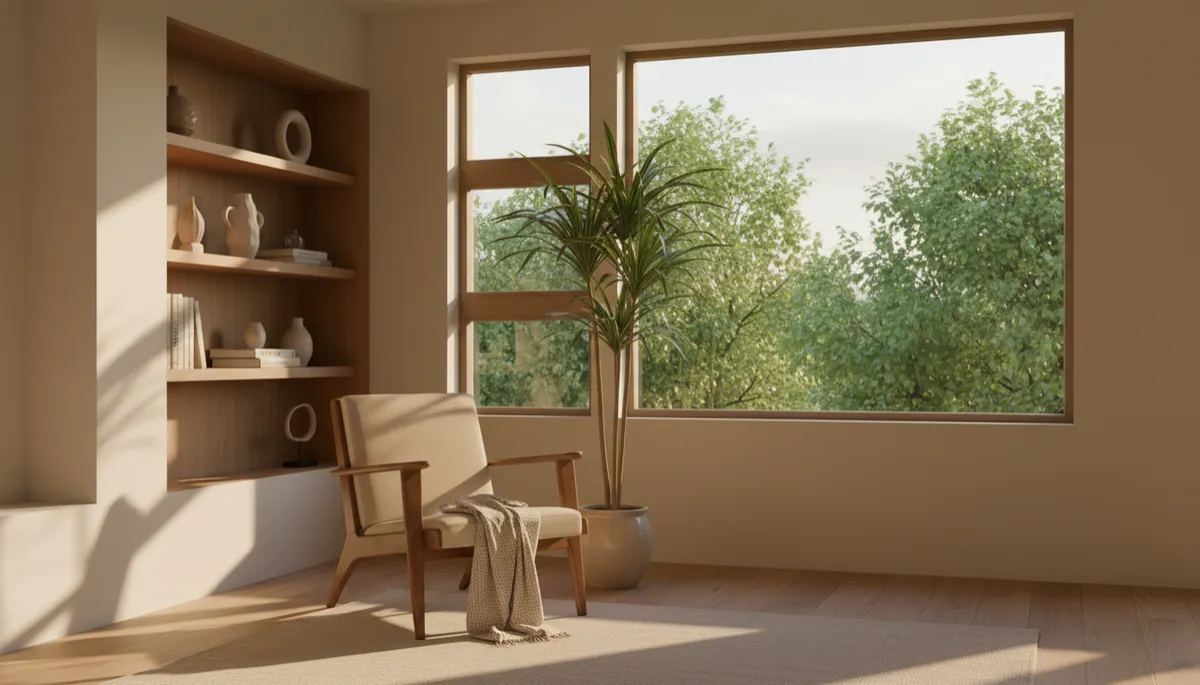
Thoughtful corners prove that small gestures of nature can transform daily life.
Bringing the Story Home: How to Start in Your Own Space
You don’t need a full renovation or a design degree to begin. Start with one room and one question: How do I want to feel here? If the answer is calm, grounded, or alive, lean into biophilic design. Add a plant (or three), let more daylight in, choose a warm neutral rug that reminds you of sand or stone, or rearrange furniture so you can see the sky from your favorite seat. Let your senses guide you toward a more nature-centered layout.
Then, ask a second question: How can this room tread more lightly on the earth? That’s your sustainable design lens. Maybe you swap out old bulbs for LEDs, choose secondhand furniture instead of buying new, or look for certifications that signal low-toxicity materials. Over time, these small decisions layer together into a story of a home that cares—for you and for the world outside your windows.
🌱 Start Small: One plant, one natural material, one energy-saving change. Every chapter begins with a single sentence.
The Ending That Keeps Evolving
In the end, the difference between biophilic design and sustainable design is a bit like the difference between how a home feels and how a home behaves. One nurtures your inner world with light, plants, textures, and views. The other respects the outer world by saving energy, conserving resources, and choosing materials wisely. Together, they tell a richer story, one where your living room becomes a quiet collaboration between your own well-being and the earth’s future.
As you stand in your home tonight, maybe you’ll notice the way the lamp light pools on a wooden table, or how a plant’s leaves catch the last of the day’s sun. Maybe you’ll turn off a light you don’t need, or open a window to let in fresh air instead of adjusting the thermostat. In those small, quiet choices, you’re already writing your own chapter of nature-inspired living, one where biophilic design and sustainable design aren’t rivals at all, but companions on the same, gently lit path.