


Biohacking for Mental Clarity: DIY Experiments You Can Try Today
Ever feel like your brain is wading through fog?
You’re not alone. In today’s high-speed world, biohacking for mental clarity has become the go-to strategy for anyone wanting to upgrade their cognitive performance without a prescription pad. I’ve spent years tweaking my own routines, sometimes failing spectacularly, sometimes unlocking laser-like focus, and I’ve learned that some of the most powerful tools are cheap, safe, and sitting right in your kitchen.
In this post, I’m going to walk you through my favorite DIY focus experiments you can start today, no lab coat required. By the end, you’ll have a practical toolkit for cognitive biohacking that actually fits a real human schedule.
What Is Biohacking for Mental Clarity?
Let’s strip away the Silicon Valley buzz.
Biohacking for mental clarity simply means making small, intentional changes to your biology and environment to sharpen how you think, remember, and create. It’s not about becoming a cyborg; it’s about using food, movement, temperature, and mindset shifts to coax your brain into its most productive state.
When I first heard “biohacking,” I pictured people implanting microchips. But the truth is, most cognitive biohacking happens in the grey area between ancient wisdom and modern science.
Things like cold showers, strategic fasting, and specific breath patterns are DIY focus experiments that cost next to nothing and can be scaled to your comfort level. And the payoff? Fewer brain farts in meetings, deeper work sessions, and the kind of mental energy that lasts all day without a 3 p.m. crash.
Internal Link Opportunity: If you’re brand-new to this world, check out our [Beginner’s Guide to Natural Cognitive Enhancers] for a gentle on-ramp.
The Science Behind Cognitive Biohacking
Before you start, it helps to know why your brain sometimes feels like a browser with 47 tabs open. Your mental clarity hinges on a handful of biological levers: inflammation levels, neurotransmitter balance, blood sugar stability, mitochondrial health, and how efficiently your brain clears out metabolic waste. Cognitive biohacking targets these levers directly.
For example, research shows that even mild dehydration can shrink brain tissue and impair short-term memory (source: Harvard Health). Likewise, chronic low-grade inflammation, often from processed foods or poor sleep, slows down the communication between neurons.
By running small DIY focus experiments, you can actively lower inflammation, boost brain-derived neurotrophic factor (BDNF) which acts like fertilizer for brain cells, and improve cerebral blood flow.
This isn’t bro-science. When I mention a technique, I’m leaning on peer-reviewed studies and my own clumsy trial-and-error. The beauty of biohacking for mental clarity is that you are the experiment. You measure how you feel, how well you perform, and you adjust accordingly.
1. Intermittent Fasting: Fueling Mental Clarity Through Meal Timing
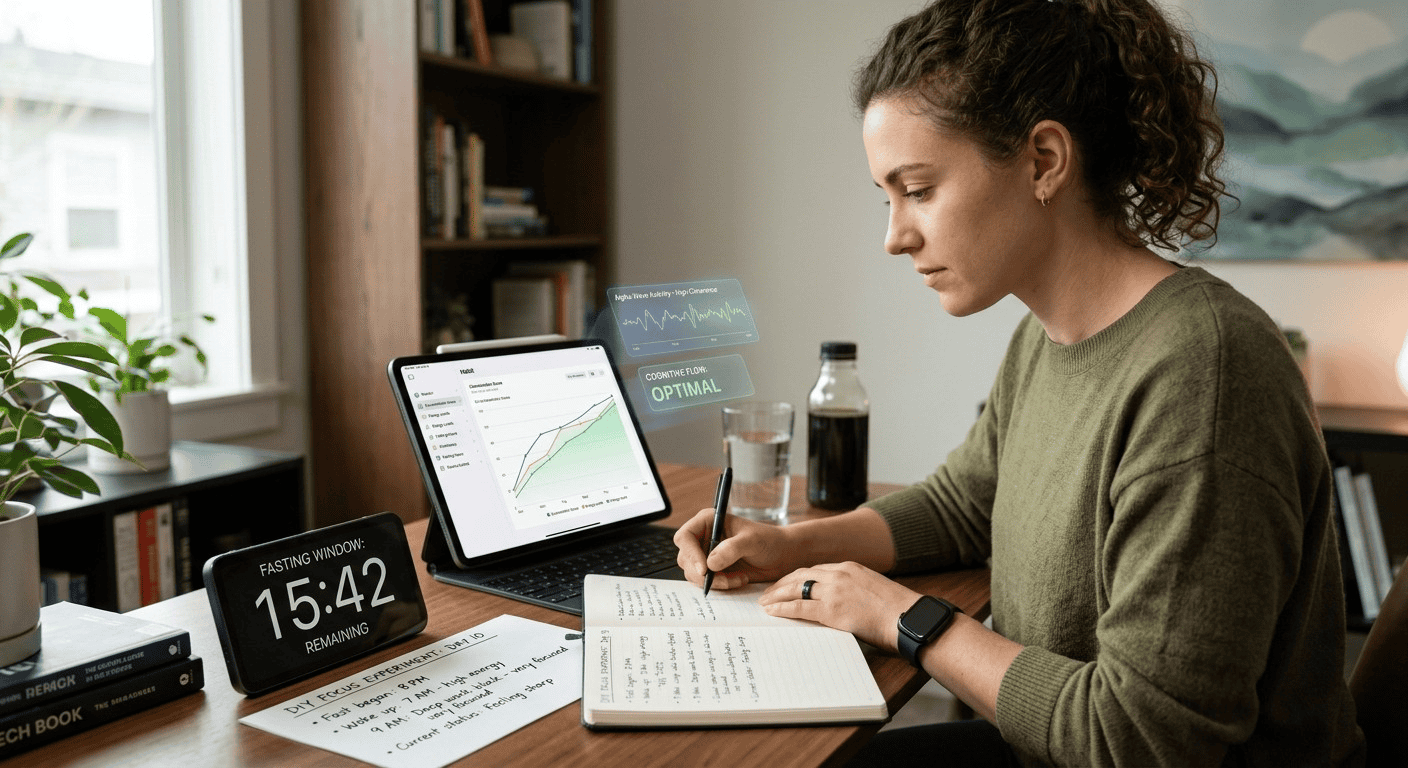
I’ll admit, skipping breakfast used to make me panic. But once I treated it as a DIY focus experiment, I was shocked. After a 16-hour fast, my mind felt sharper, words came more easily, and that mid-morning fog vanished. Why? When you fast, your body increases ketone production, a cleaner-burning fuel for the brain, and ramps up autophagy, the cellular cleanup crew that clears out brain junk.
One study published in The New England Journal of Medicine (external link: [Effects of Intermittent Fasting on Health, Aging, and Disease](https://www.nejm.org/doi/full/10.1056/nejmra1905136)) showed that intermittent fasting improves cognition and reduces oxidative stress. For a simple cognitive biohacking start, try a 12-hour overnight fast (e.g., stop eating at 8 p.m., eat again at 8 a.m.) and then gradually stretch it to 14 or 16 hours. Drink water, black coffee, or herbal tea during the fasting window. Notice how your concentration holds up. Some people pair this with a high-fat coffee to stay satiated, that’s dipping into another biohack we’ll cover soon.
Internal Link: For a deeper dive into fasting windows and brain health, don’t miss our Ultimate Intermittent Fasting for Focus Guide.
2. Cold Exposure: Shock Your Brain into High Gear
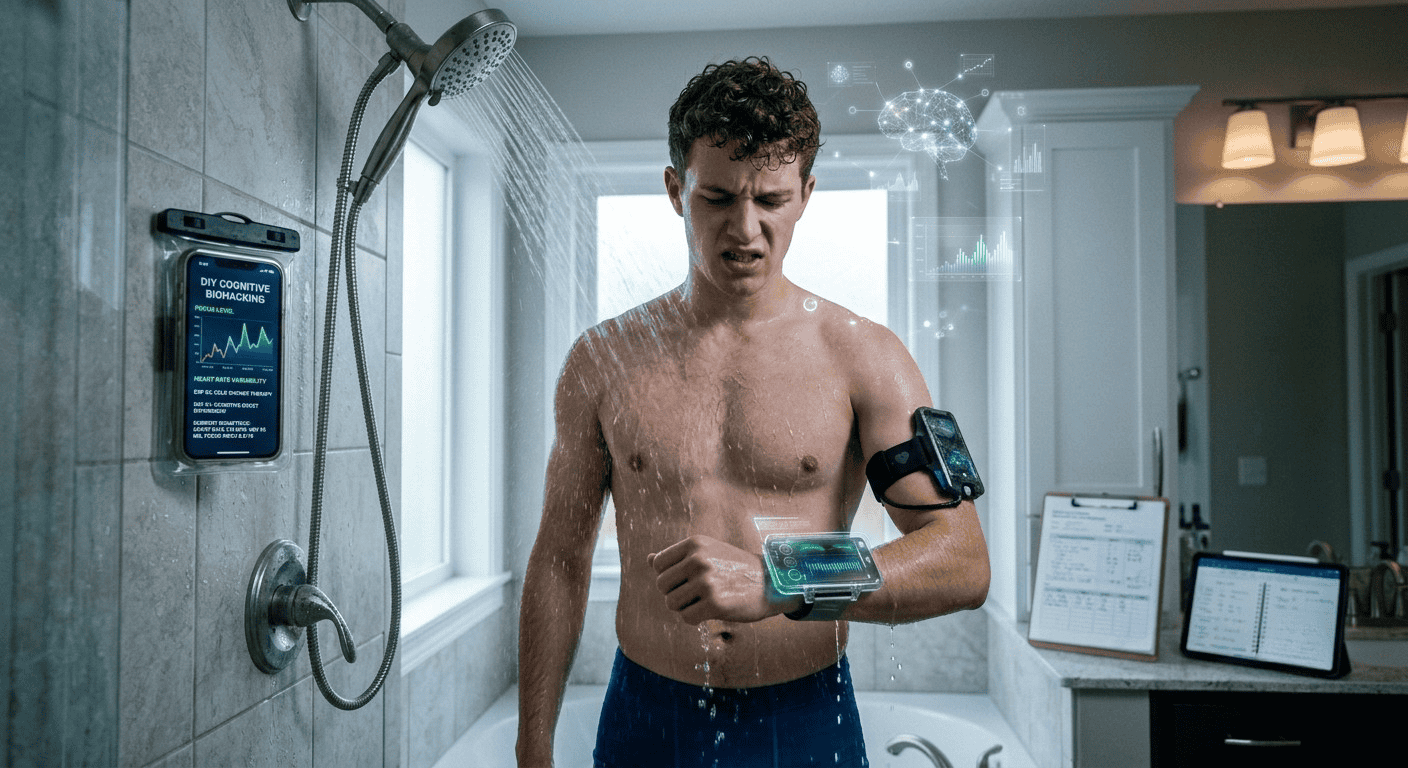
If you want an instant hit of clarity, this is it. Cold exposure, whether a 30-second blast at the end of your shower or a full cold plunge, triggers a massive release of norepinephrine, a neurotransmitter that sharpens attention, elevates mood, and reduces inflammation.
I started with 15 seconds of cold after a normal hot shower, and the jolt was so profound I’d stand there giggling like a maniac. It’s one of the most straightforward DIY focus experiments out there.
A review in the International Journal of Circumpolar Health highlights cold water immersion’s benefits for circulation and stress resilience (external link: [Health effects of voluntary exposure to cold water](https://www.tandfonline.com/doi/full/10.1080/22423982.2022.2111789)).
For cognitive biohacking, the key is hormesis: a small, acute stress that makes your brain more resilient. Start slow: end your normal shower with 20 seconds of the coldest setting. Breathe deeply, focus on the sensation, and try to stay calm. Afterward, you’ll likely feel a clean, sustained focus that can last for hours. It’s uncomfortable but ridiculously effective.
3. Nootropic Stacking: Nature’s Cognitive Enhancers
Not all nootropics come in capsules with sci-fi names.
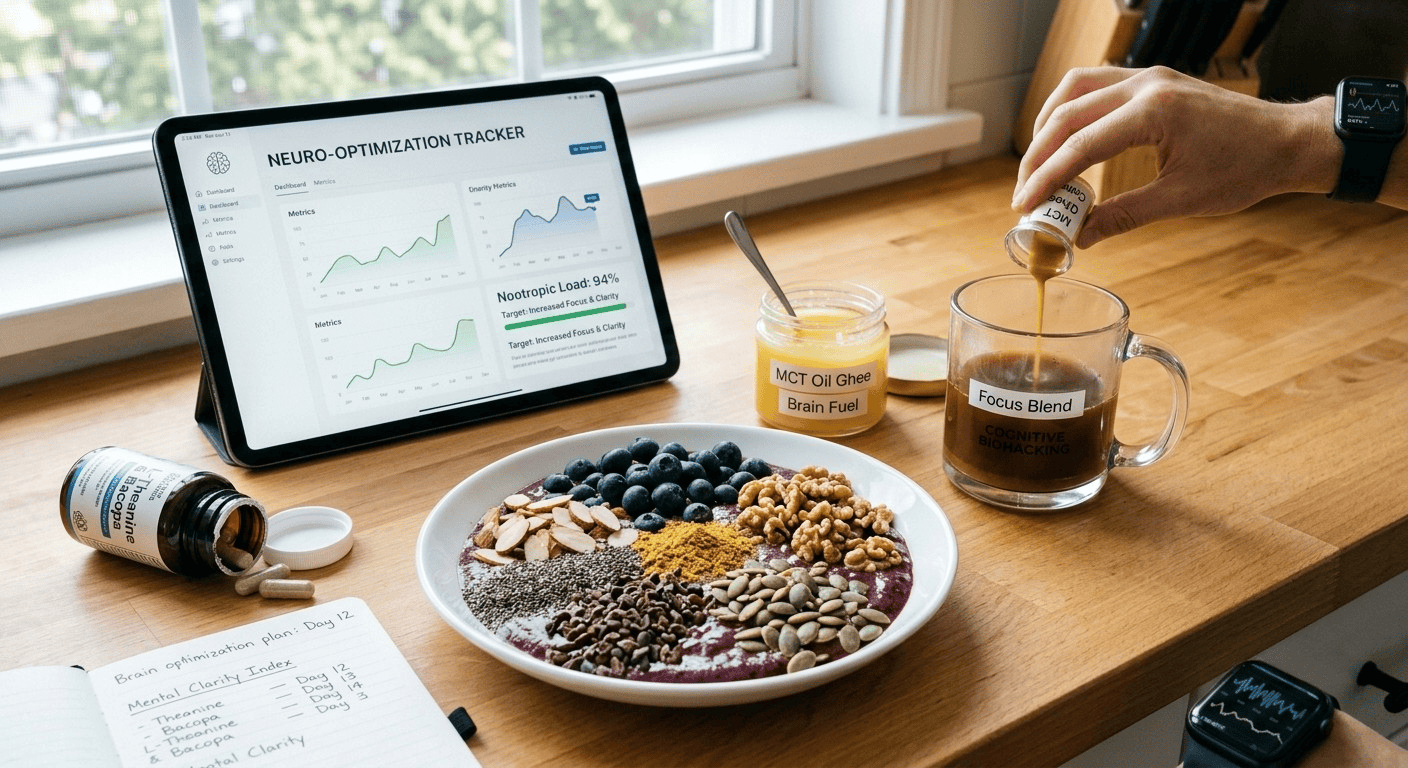
Some of the best cognitive biohacking agents are foods and herbs your grandparents would recognize. I’m talking about a morning “stack” of matcha green tea (L-theanine + caffeine) with a teaspoon of MCT oil. L-theanine smoothes out caffeine’s jittery edge, giving you a calm, laser-like focus. MCT oil provides ketones directly to your brain, mimicking some fasting benefits.
Other gentle DIY focus experiments include adding a pinch of pink Himalayan salt and a squeeze of lemon to your morning water for electrolytes, or trying Lion’s Mane mushroom powder, which some studies suggest can stimulate nerve growth factor. I’m cautious with supplements; I always start with food-state nutrients.
A smoothie with blueberries (anthocyanins), spinach (nitrates), and hemp seeds (omega-3s) is a sweet entry point. Don’t underestimate the power of breakfast as a nootropic.
Internal Link: For a full breakdown of safe, beginner-friendly stacks, read our Natural Nootropics for Beginners: Stack, Sip, Focus.
4. Breathwork and Meditation: Instant Calm, Sharp Focus
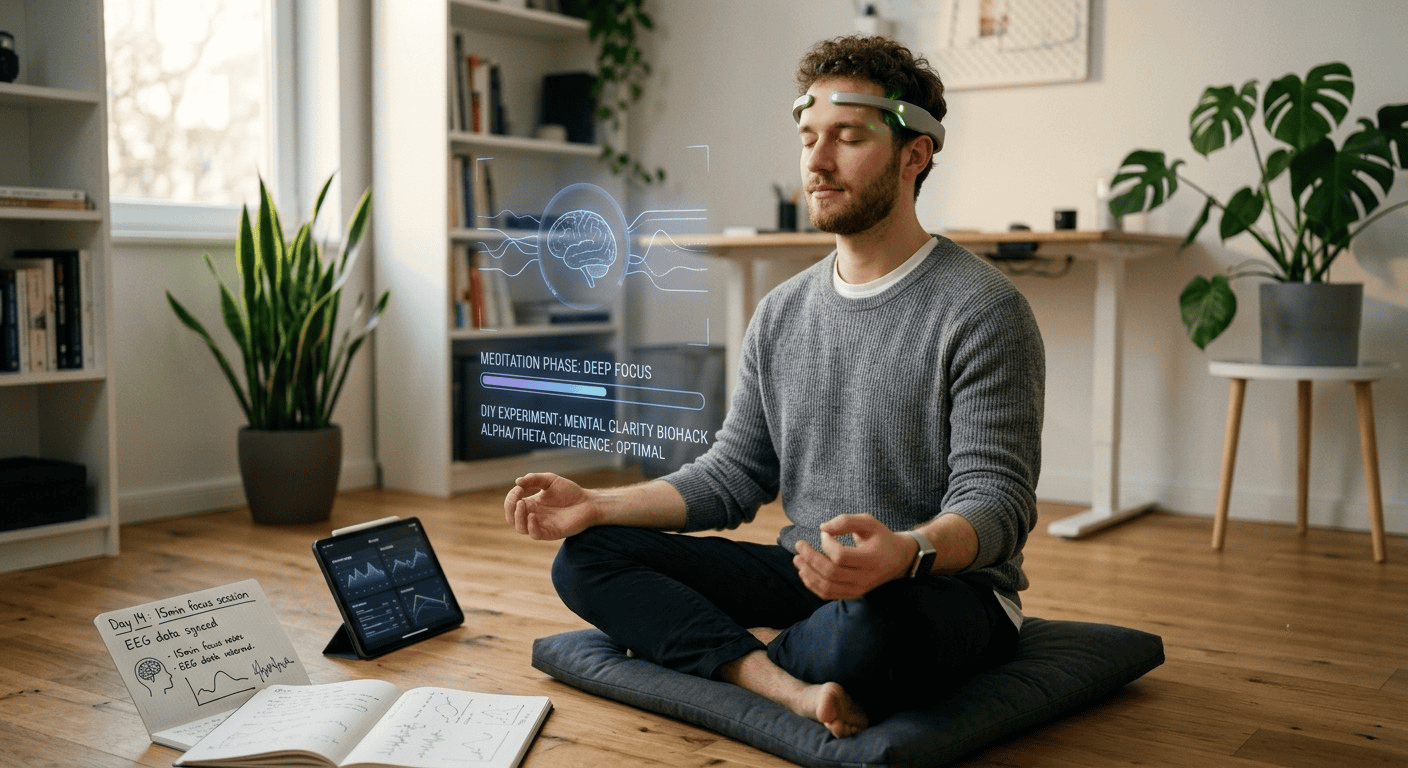
Here’s a DIY focus experiment that requires zero equipment and about five minutes: box breathing. Inhale for four counts, hold for four, exhale for four, hold for four.
This pattern, used by Navy SEALs, shifts your nervous system from fight-or-flight into rest-and-digest mode, sharpening your decision-making ability almost instantly. I use it before big calls or when my mind is spinning.
Meditation gets a reputation for being woo-woo, but from a cognitive biohacking perspective, it thickens the prefrontal cortex (the CEO of your brain) and shrinks the amygdala (the fear center).
Harvard researchers found that an eight-week mindfulness program measurably changed brain structure (external link: [Mindfulness meditation improves brain function](https://www.health.harvard.edu/mind-and-mood/mindfulness-meditation-improves-brain-function)).
Start with just five minutes of guided breath awareness. I promise you, the mental clarity that follows a brief meditation session is as real as the buzz from coffee, but gentler and longer-lasting.
5. Optimize Your Sleep: The Ultimate Cognitive Biohack
I can’t talk about biohacking for mental clarity without drilling into sleep. You can nail every other hack, but if you’re sleep-deprived, you’re essentially piloting a luxury car with a sputtering engine. During deep sleep, your brain’s glymphatic system washes away toxins like beta-amyloid, a protein linked to cognitive decline. That’s why a bad night leaves you feeling hungover.
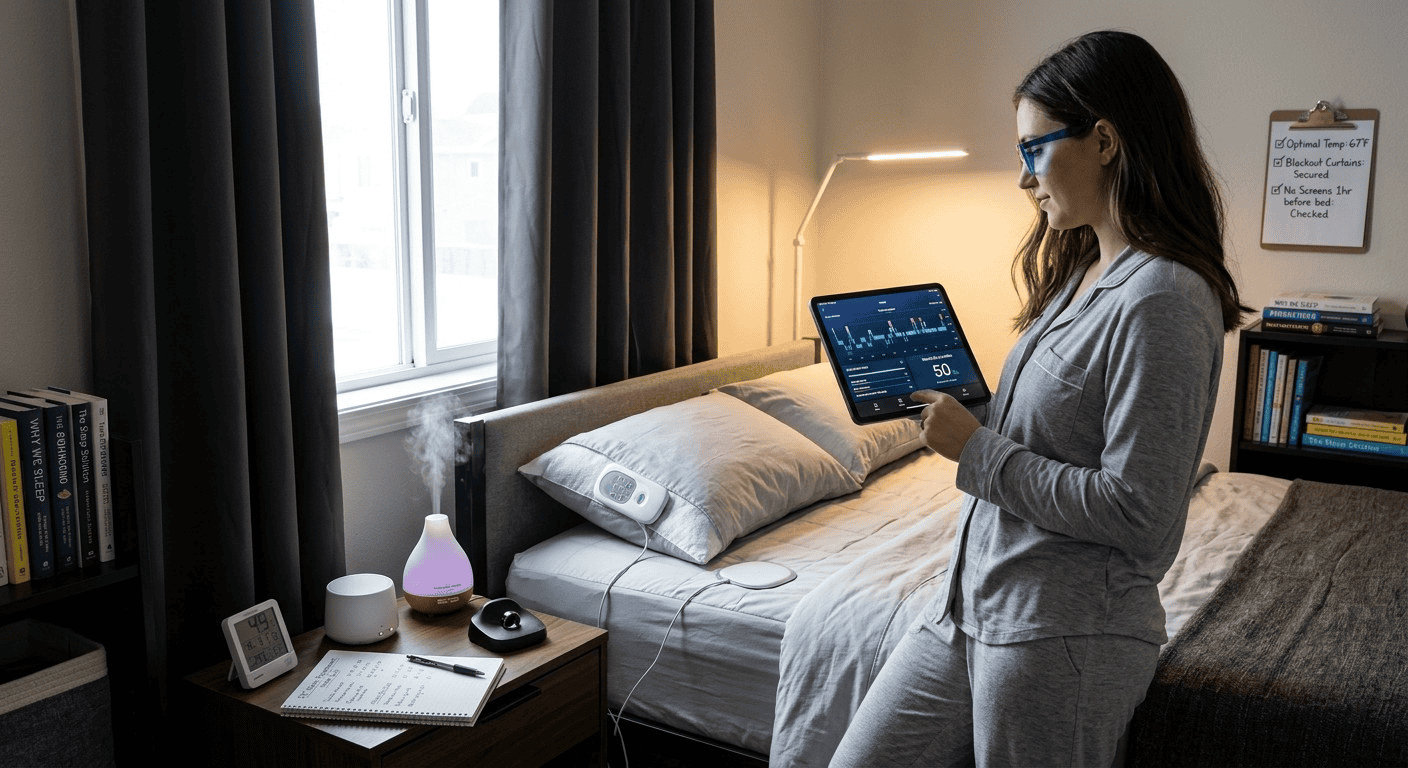
Treat your sleep as a DIY focus experiment: set a non-negotiable bedtime alarm, not just a wake-up alarm. Keep your room cool (around 65°F/18°C), pitch black, and screen-free for 30 to 60 minutes before bed.
If you want to take it further, blue-light-blocking glasses after sunset are a cheap cognitive biohacking win, they boost your own melatonin production. I also track my sleep with a wearable, not to obsess, but to see how a late meal or a stressful day impacts my recovery. The data turns into actionable tweaks.
Try a three-day experiment where you prioritize a full dark, cool sleep environment and note how quickly you find the right word in a conversation.
Internal Link: Need to geek out on this? Our Sleep Optimization for Peak Brain Performance guide has the deep dive you’re looking for.
Putting It All Together: Your DIY Focus Experiment Protocol
This might sound like a lot, but you don’t need to adopt everything at once. The whole point of biohacking for mental clarity is iteration. Here’s a simple, Monday to Friday schedule that combines these cognitive biohacking tools without overwhelming your life:
Morning: Wake up, drink a glass of water with lemon and a pinch of salt. Do a 5-minute box-breathing session. End your warm shower with 30 seconds of cold.
Midday: Break your 14-hour overnight fast with a brain-fueling meal rich in healthy fats and leafy greens. Swap your second coffee for a matcha tea.
Afternoon slump: If you hit a wall, try 20 deep belly breaths or a short walk. Hydrate before you reach for caffeine.
Evening: Blue-light blockers on at 8 p.m. Phone on airplane mode. Cool, dark bedroom by 10:30 p.m.
You can stack these DIY focus experiments gradually. Start with breathing and one meal-timing change for a week. Then add cold exposure.
Track your energy and focus in a simple journal or notes app. The body of evidence, both scientific and anecdotal, shows that these low-tech interventions yield high-definition mental clarity when done consistently.
Key Takeaways: Your Mental Clarity Action Plan
Biohacking for mental clarity is accessible. Intermittent fasting, cold exposure, mindful breathing, strategic nutrition, and sleep optimization form the core toolkit.
DIY focus experiments work by lowering inflammation, balancing neurotransmitters, and improving brain cleanup systems.
Start with one cognitive biohacking technique at a time. Notice what changes, and build from there.
The best biohacks are cheap, rooted in science, and endlessly customizable to your life.
Ready to wake up your brain? I’d love to hear which experiment you try first, or answer any question that pops up along the way.
For inquiries, thoughts, or to share your own weird biohacking wins, reach out directly at [email protected]. Let’s build this curious, clarity-chasing community together.